KI findet die fehlerhafte Funktion in Smart Contracts
Once a smart contract is live, nobody can open it up and fix it. The code that moves the money is frozen, and a single programming mistake becomes a door that stays open for attackers. A research team at the Japan Advanced Institute of Science and Technology (JAIST), led by professor Le-Minh Nguyen and doctoral student Ngoc-Minh Nguyen, has built an AI that finds that door inside the code and explains it in plain language. The study was published on Sept. 15, 2026, in ACM Transactions on Software Engineering and Methodology.
Smart contracts are programs that run on blockchains and carry out agreements automatically, like a vending machine that releases a product once payment is made. They now power cryptocurrency payments, online lending, exchange services and digital collectibles, often holding large sums directly. Automated tools already exist to catch their flaws before release, but most judge only whether an entire contract looks risky, leaving developers to search the faulty part by hand. Most return terse warnings without saying why the code is dangerous or how to fix it. And no large data set had labeled flaws at the level of individual functions, the building blocks developers actually write and review.
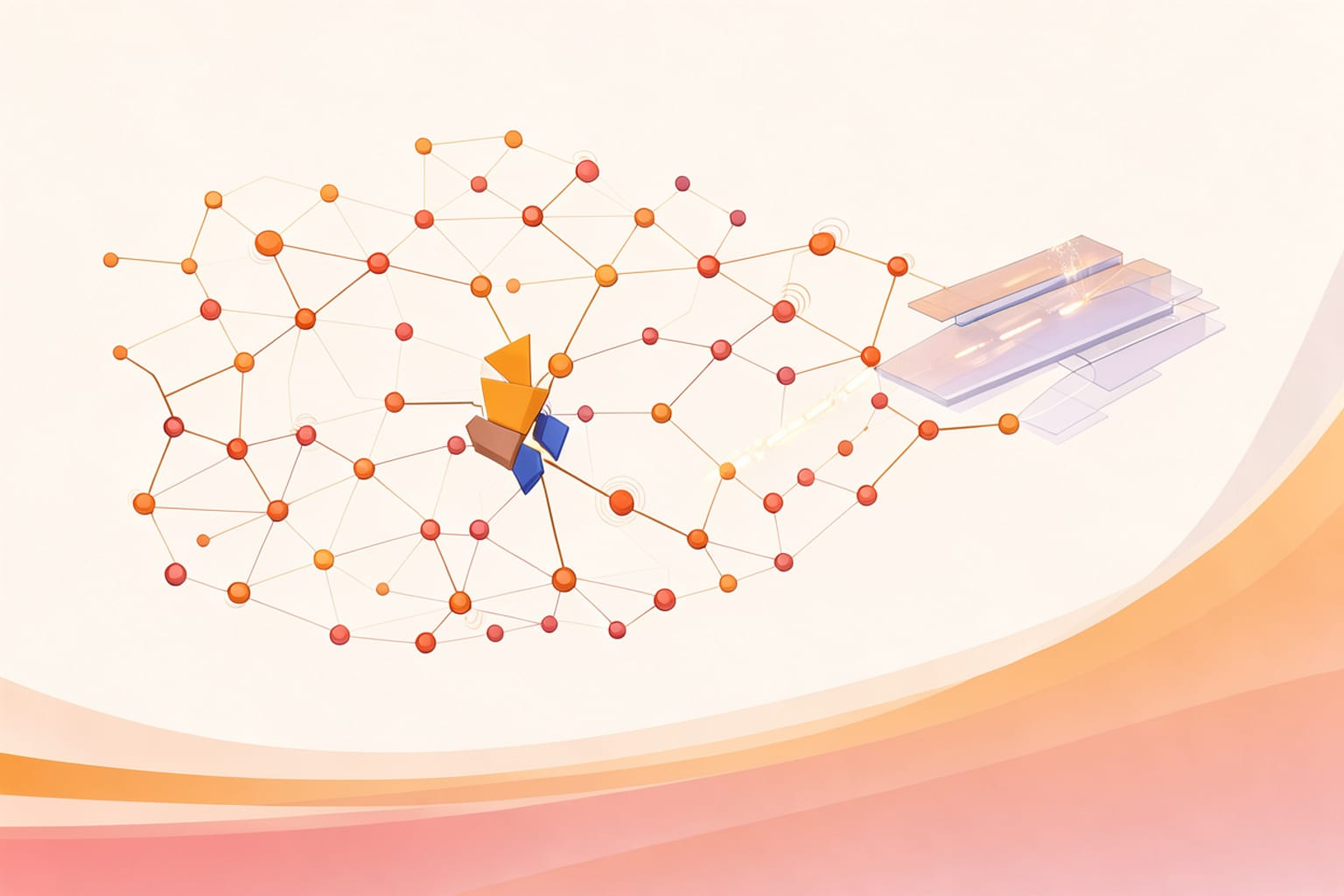
The JAIST framework works in three steps. First, a tool inserts realistic flaws into real contracts, producing a publicly available data set of 4.208 contracts and more than 118.000 functions across eight vulnerability types. Second, a graph neural network, called HCA-SGNN, represents each contract as a network of connected code elements. It analyzes each function on its own and also models how functions interact, which matters for reentrancy attacks that exploit several functions at once. Third, large language models, the systems behind chatbots, write structured reports on each flaw's type, location, cause, impact and fix. Those abilities are then distilled into compact models that run on ordinary hardware.
On 242 real-world contracts, HCA-SGNN outperformed existing detection methods and general-purpose language models fine-tuned for the same task. It also detected several vulnerability types absent from its training data. The compact explanation models reached 97 %–98 % of the quality of large commercial models. These figures come from the paper itself, and no deployment in a live product is reported.
For developers and security auditors, the change lies in where the review starts. Instead of a warning on a whole contract, they would get the exact function and a written explanation before release, which the team sees serving prerelease security audits, developer tools, and faster, lower-cost reviews for blockchain-based financial services. The study names those uses but gives no date for them. „Damit KI im Bereich Sicherheit wirklich nützlich ist, müssen Menschen verstehen, warum sie Alarm schlägt“, sagt Nguyen. „Wir glauben, dass diese Art erklärbarer KI der Schlüssel zu Software ist, der Menschen vertrauen können.“
Quellen — die Originale lesen(Pariser Zeit)
Weiterlesen
Kommentare
Der Thread wird geladen…
Melden Sie sich an, um einen Kommentar zu schreiben. Anmelden