A $450 3D printer builds 100-layer living structures
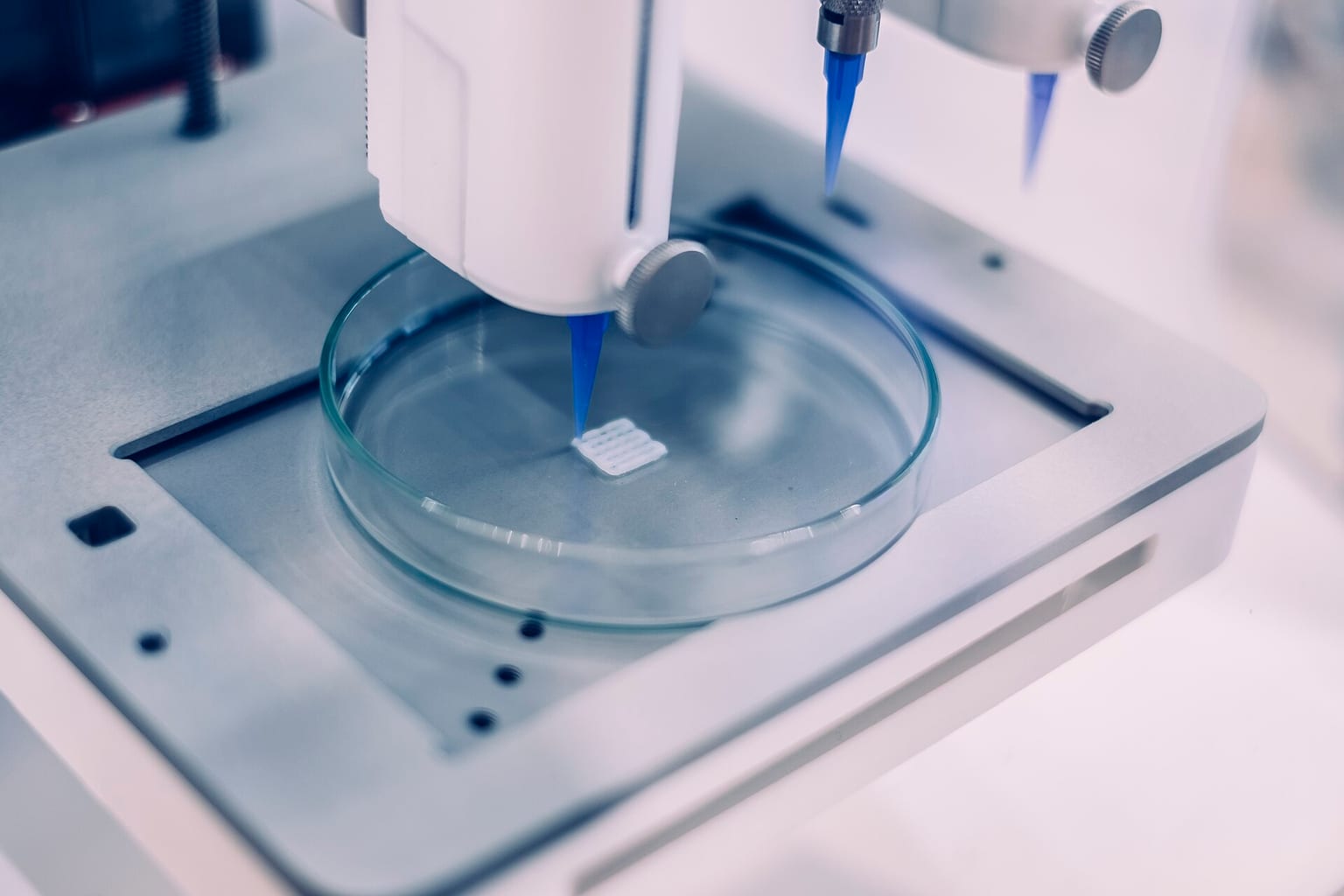
In Anne S. Meyer's lab at the University of Rochester, a standard plastic 3D printer has been turned into a machine that prints living bacteria. The modified device builds structures more than 100 layers tall, and the team says the parts cost about $450. Commercial bioprinters, which place living cells in precise shapes, can cost upward of $100,000, and their soft structures can collapse before they set.
The change is in the print head. The team removed the filament extruder, the part that feeds plastic into the printer, and fitted a syringe pump that squeezes out bio-ink: a mix of living cells and a polymer solution that hardens into a gel. A second gel, the slurry, surrounds the print while it sets and holds its shape at any height. A syringe that can also pull back prevents the material from oozing at the edges, which gives crisp shapes with well-defined edges.
Earlier DIY bioprinters were limited to structures of fewer than 20 layers. The new setup also makes hollow cavities and overhangs, and the team's paper reports a 100-layer print standing 21.8 mm tall, with a variation of ±1.3 mm. The slurry changes the biology as well: microbes in the prints stayed alive for four weeks or more, where earlier methods saw printed bacteria start to die after about nine days. Taller, more open shapes let embedded bacteria receive nutrients and signals from their surroundings and release useful products more quickly, Meyer says.
The $450 cost and the layer figures come from the team's own study, published in ACS Applied Polymer Materials, and from its prototypes. Meyer and colleagues from Rochester and Cornell University report them, and the work is still at the laboratory stage.
For biofilm research, the slurry matters most. Biofilms, communities of microorganisms that stick to surfaces, can harm or help people, and the slurry lets researchers keep them alive and study them in three dimensions for weeks. Meyer's group can choose between two incubation conditions, one that yields biofilms closer to medically relevant ones and one that produces materials with stronger mechanical properties. The instructions are on GitHub, so a lab can build its own printer for $450. The team gives no timeline for moving beyond the lab. Meyer names two directions for the slurry: biofilms for testing medically relevant questions, or stronger materials for applications.
Sources — read the originals(Paris time)
Pages consulted while writing
Read next
Comments
Loading the thread…
Sign in to leave a comment. Sign in