A 5 cm robot takes tight pipe bends that stopped cameras
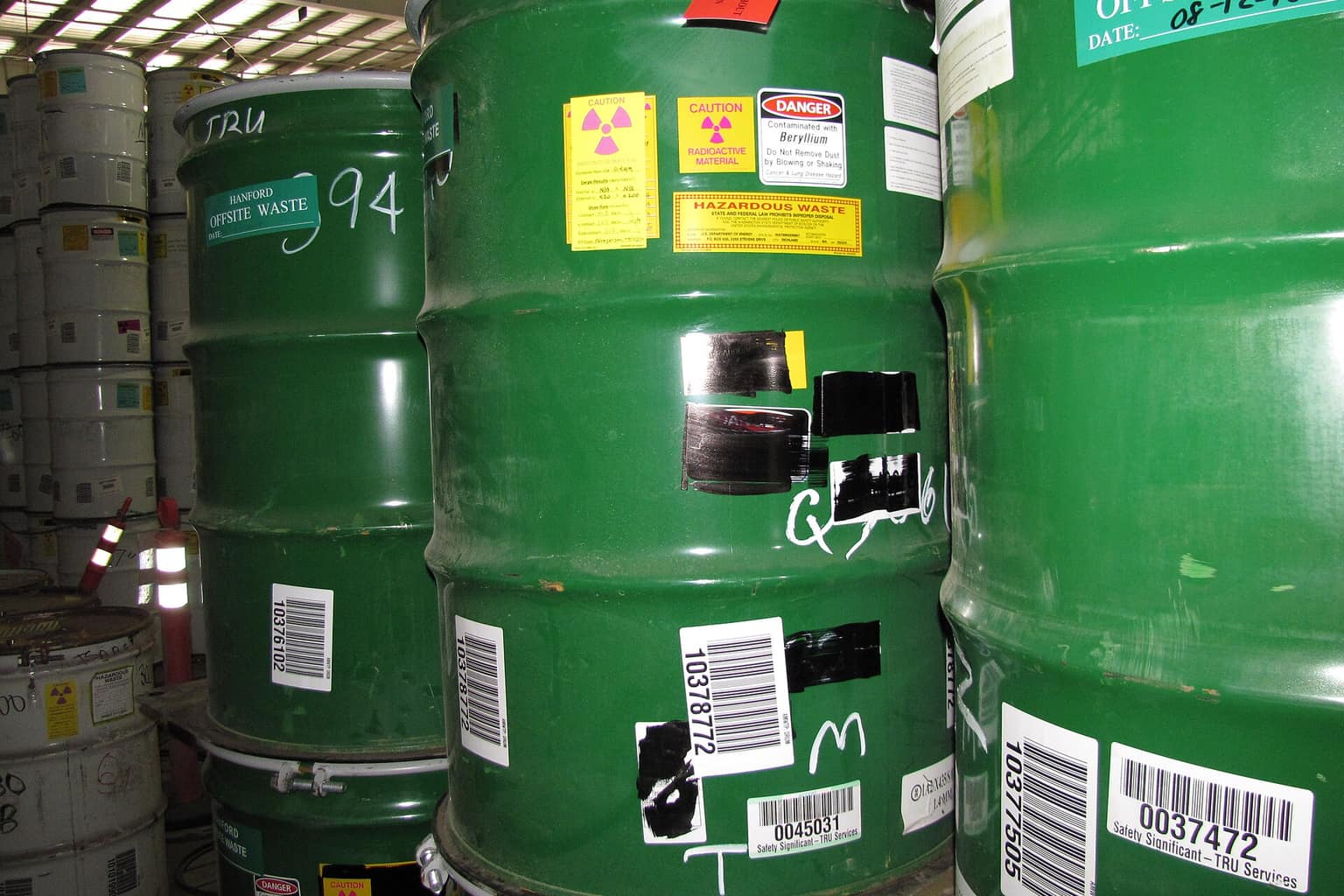
At the Hanford Site, a decommissioned nuclear production complex on the Columbia River in Washington state, radioactive waste sits in underground tanks linked by a network of pipes. Some of those pipes run more than 60 metres, are double-walled and measure as little as 5 cm across. Nobody can dig them up to look inside. A robot built at Sandia National Laboratories now aims to do that job: in lab tests, it has passed through the tight bends that stopped earlier tools.
The problem is old and the tools were weak. Checking these pipes matters because they are decades old and can't be inspected from the inside without a method that works in narrow spaces. Digging them up is neither realistic nor cost-effective, and Sandia says that approach cannot show whether a pipe is corroding from within. Push cameras reached only about 3 metres at a time and could not get around 90-degree bends. Conventional ultrasound probes, which test pipe walls with sound, were often too bulky for small pipes with sharp turns.
The robot, called SPIINE (Self-Propelled Interior Inspector for Non-destructive-testing Examination), measures 5 by 15 cm. Non-destructive testing means checking a material for damage without cutting it open. SPIINE carries a high-resolution camera with adjustable LED lighting, and an operator steers it with a standard video game controller. Its key feature is a flexible body. Buerger, the mechanical engineer who led the work, said the team "wanted a flexible body to let the pipe sort of guide the robot." Six wheels grip the wall, and in the paper describing the design, the robot crossed a 90-degree elbow with a radius as small as 76 mm at eight tested entry orientations. In straight steel pipe, it pulled more than eight times its own weight, which could let it tow sensors. The team sent power and video over tethers up to 110 metres and drove the robot through more than 60 metres of pipe running both horizontally and vertically.
The work was carried out by a Sandia team that includes Daniel McArthur, Derya Tansel, Clint Hobart and Josh Ortiz. The project began more than two years ago, and the robot has been updated several times since. Its results were published in the journal Robotics; Interesting Engineering gives 22 October as the publication date, while the OSTI listing for the paper gives 30 September.
For the people who must check these pipes, the first gain is a view. McArthur said the first goal is simply a camera image from inside the pipe, to look for corrosion, cracks or other damage. A robot that fits in a 5 cm pipe and turns a tight elbow could reach places where the old push cameras, limited to about 3 metres at a time, could not go. The benefit is not yet proven on site; it could add a way to see inside pipes that are hard to reach.
The robot has not yet been tested at Hanford. Sandia says lab tests have been successful, but real pipes could reveal new challenges. Hanford's pipes may hold liquid sludge and caked deposits, and some have obstacles protruding from their walls. The team wants a self-cleaning function for the camera lens, a fail-safe recovery system in case the robot gets stuck, and smaller ultrasonic sensors able to pass a 90-degree turn. The electronics still sit on a separate trolley that is to be built into the body later. The paper describes its experiments as a test of feasibility and first-order model accuracy, not full statistical performance, and it lists wheel endurance under repeated high-load elbow crossings as future work.
The next step is a field test at Hanford, in the pipes themselves.
Sources — read the originals(Paris time)
Pages consulted while writing
Read next
Comments
Loading the thread…
Sign in to leave a comment. Sign in