A folding phone's screen shows a PIN mainly to its owner
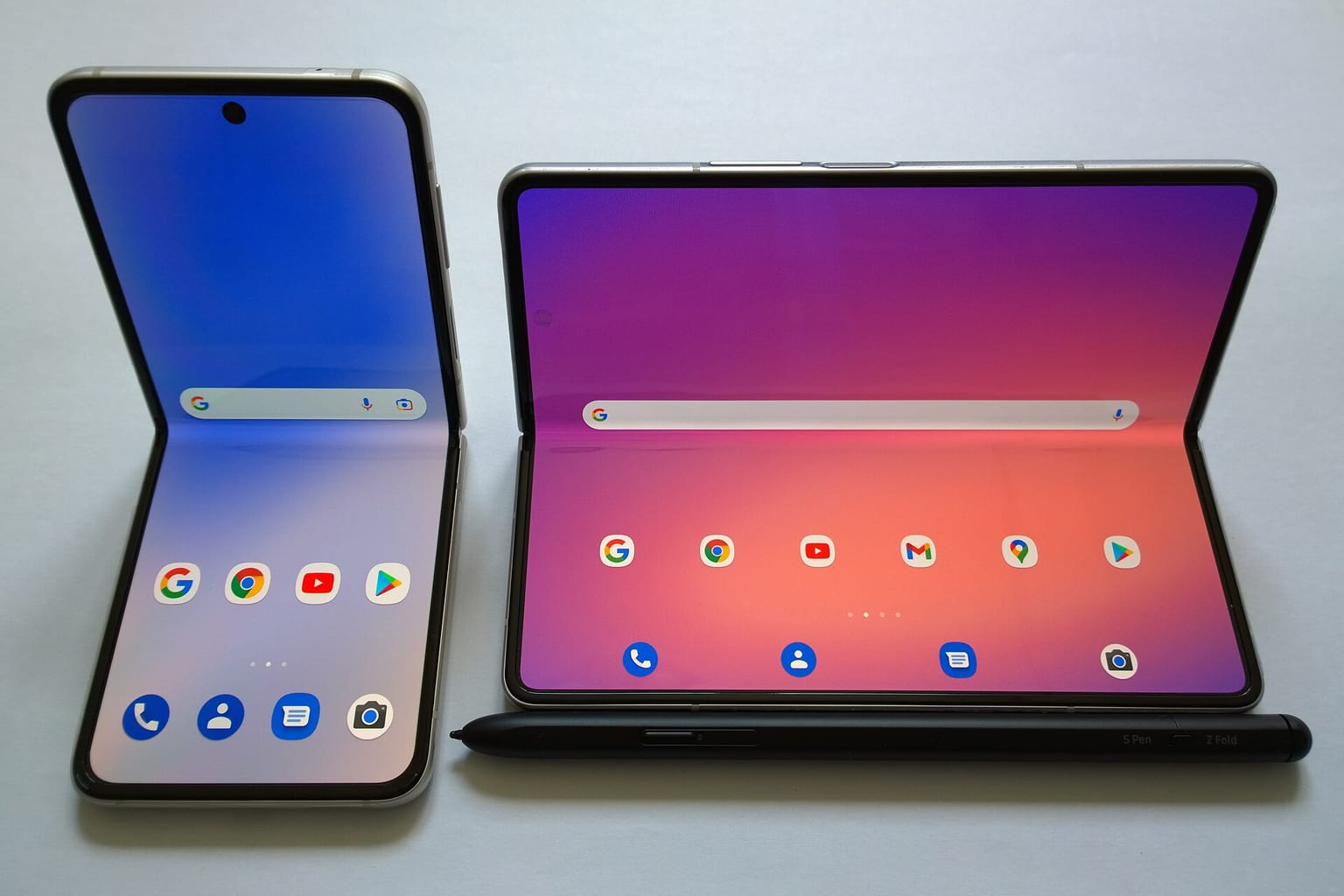
Anyone who has typed a bank password on a crowded train knows the small unease: the stranger beside you might be looking. Researchers at POSTECH, a university in Pohang, South Korea, working with professor Jun Han of KAIST, have built a way to make a phone's screen readable for its owner and hard to make out for everyone else, using only the phone's own folding. They call it Fold2Unfold. The team is led by professor Inseok Hwang and researcher Kyoosik Lee, and presented the work on November 5 at ACM UIST 2026, a user-interface conference in Detroit.
The threat has a name: shoulder surfing, which means watching someone's screen over their shoulder to capture a password or a private message. Privacy filters, the films that narrow the angle from which a screen can be seen, help against someone across the aisle. They do nothing against the person sitting right next to you or behind you. Reflections, for their part, were long seen as a nuisance, because they wash out a display.
The trick starts with the fold. When a foldable phone is half-open, like a laptop, light from one screen bounces off the opposite screen, much like a mirror. Fold2Unfold cuts each digit into two image shares, and neither share means anything on its own. One is shown directly, the other reaches the eye through the reflection. Only from the user's position do the two overlap and rebuild the digit, like two halves of a torn map that match only when aligned. From any other angle, they fall out of step and look like random patterns.
Keeping that alignment as the user moves is the hard part. The phone's front camera tracks the user's eyes in real time and takes the folding angle into account, repositioning and reshaping the two images continuously. The software also corrects the brightness gap between the direct image and the reflected one, so the result looks like one coherent screen. The team stresses that it needs no extra hardware and runs on commercially available foldable phones.
In the team's tests, the digits became nearly unrecognizable from viewpoints just 7.5 degrees away from the user's line of sight. The protection is narrow: someone positioned very close to the user's own viewpoint can still make the digits out. Conventional privacy protectors, by comparison, left most digits readable at angles of 30 degrees to either side. In a PIN-entry experiment, nearby observers correctly identified an average of 0.65 out of the 10 keypad digits. These results come from the team's own user studies, carried out on a commercial foldable.
Huawei has taken another route: it announced its Mate XT2, which it says is the first three-panel foldable with a built-in privacy display, a claim the company makes for its own device.
For someone checking a bank balance on public transit, the practical gain is simple: the person beside them sees a jumble. The team sees the method as a possible privacy feature for future foldable phones, since it requires no added parts. The sources announce no product, price or release date. The work is a research paper presented at a conference, and the authors hope it will encourage other privacy technologies that draw on the physical features of devices.
Sources — read the originals(Paris time)
Pages consulted while writing
Read next
Comments
Loading the thread…
Sign in to leave a comment. Sign in