A prototype checks battery health in 3 minutes, not 10 hours
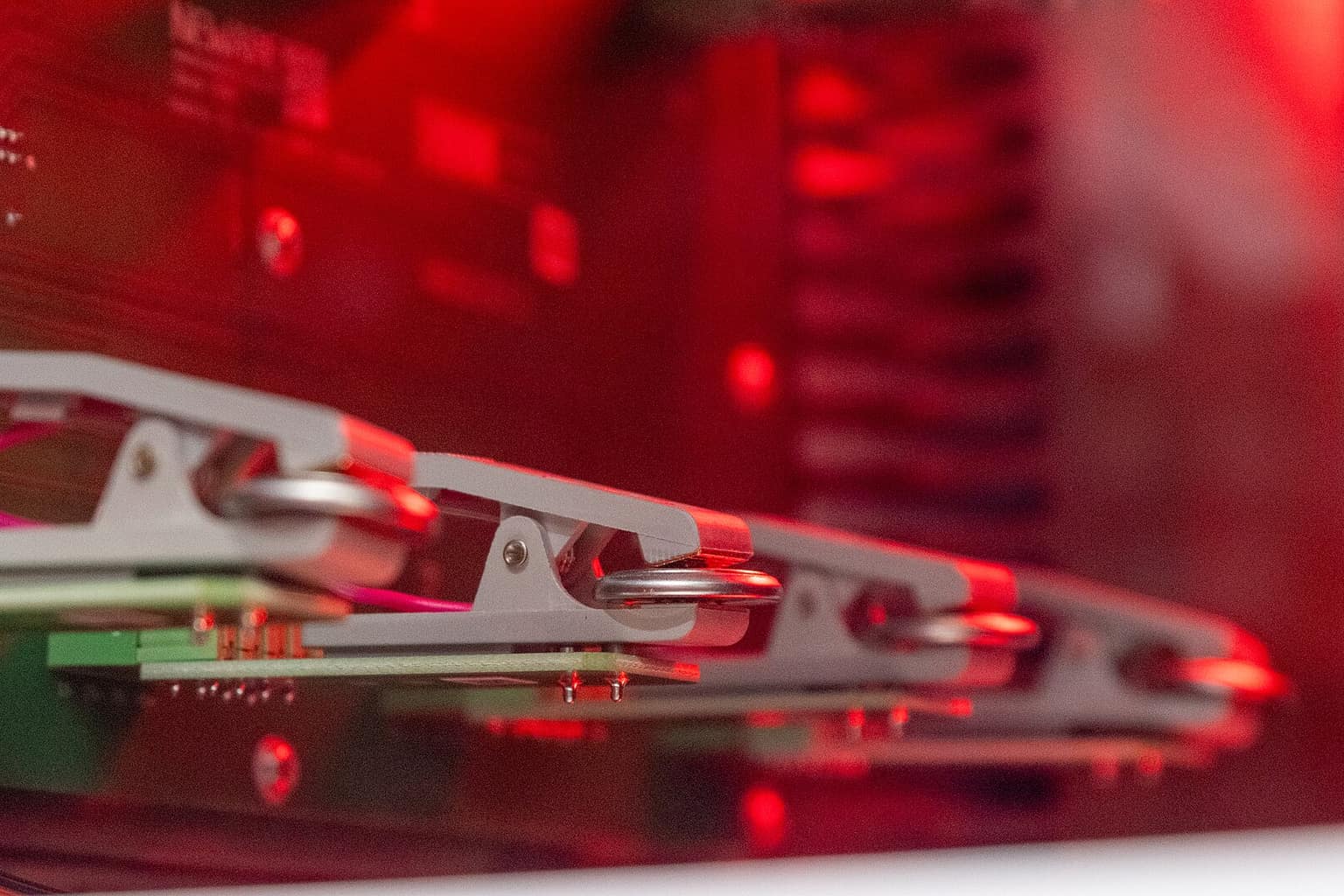
Checking whether a retired electric-vehicle battery is still healthy currently takes about 10 hours. The standard method runs a full charge-and-discharge cycle, and for a battery that is already damaged, hours of high-stress cycling can lead to overheating and fire. At the University of New South Wales (UNSW) in Sydney, a team has built a prototype that answers the same question in under three minutes per cell.
The trick is to stop cycling the battery. The prototype sends short electrical pulses through each cell and measures how it responds. Statistical models then estimate the battery's health from that response. The platform is designed to work with the management systems that recyclers and energy storage operators already use, and to assess the three main lithium-ion chemistries found in electric vehicles and storage: LFP, NCA and NMC. The test is 95.5% faster than existing methods and more than 80% cheaper, according to the researchers. In lab tests, it reaches more than 90% accuracy.
This is not the first step. Earlier work by Associate Professor Huadong Mo, under the Australian Economic Accelerator Ignite program, had already cut testing time to five minutes. UNSW itself notes that industry needs to see the technology work on the factory floor and in working energy storage systems before adopting it.
The stakes lie in what happens after a car's first life. Mo says up to 95% of a battery's components can be recovered, some even to make new batteries, yet only a small fraction of lithium-ion batteries in Australia are collected for recycling today. Retired batteries could also support grid and community energy storage. Ziyang Lyu, research lead at UNSW's School of Mathematics and Statistics, points out that recyclers rarely receive neatly sorted batches: "One day it might be LFP cells, the next a mix of nickel-based chemistries from different manufacturers."
For recyclers and storage operators, the change would be a check that takes minutes instead of about 10 hours, and that can be run on the batteries they actually receive. No commercial date has been announced. The next stage is a AUD 1.3 million project with Malaysia-headquartered DY New Energy, which will test the technology on more than 500 batteries in real-world conditions. The partners will then develop a machine-learning engine that recommends whether each retired battery should be reused or recycled, and a battery management module called iBMS to feed those results into battery systems in real time, before piloting in recycling facilities and second-life storage systems. The project is also supported by the TRaCE Lab to Market Fund, and DY New Energy said on 13 November that it will partner with the Australian Research Council's Fire Resilience Infrastructure, Assets and Safety Advancements (FRIASA) Hub to advance safe and scalable battery recycling.
Sources — read the originals(Paris time)
Pages consulted while writing
Read next
Comments
Loading the thread…
Sign in to leave a comment. Sign in