A retinal implant helped over 80% of blind-spot recipients read again
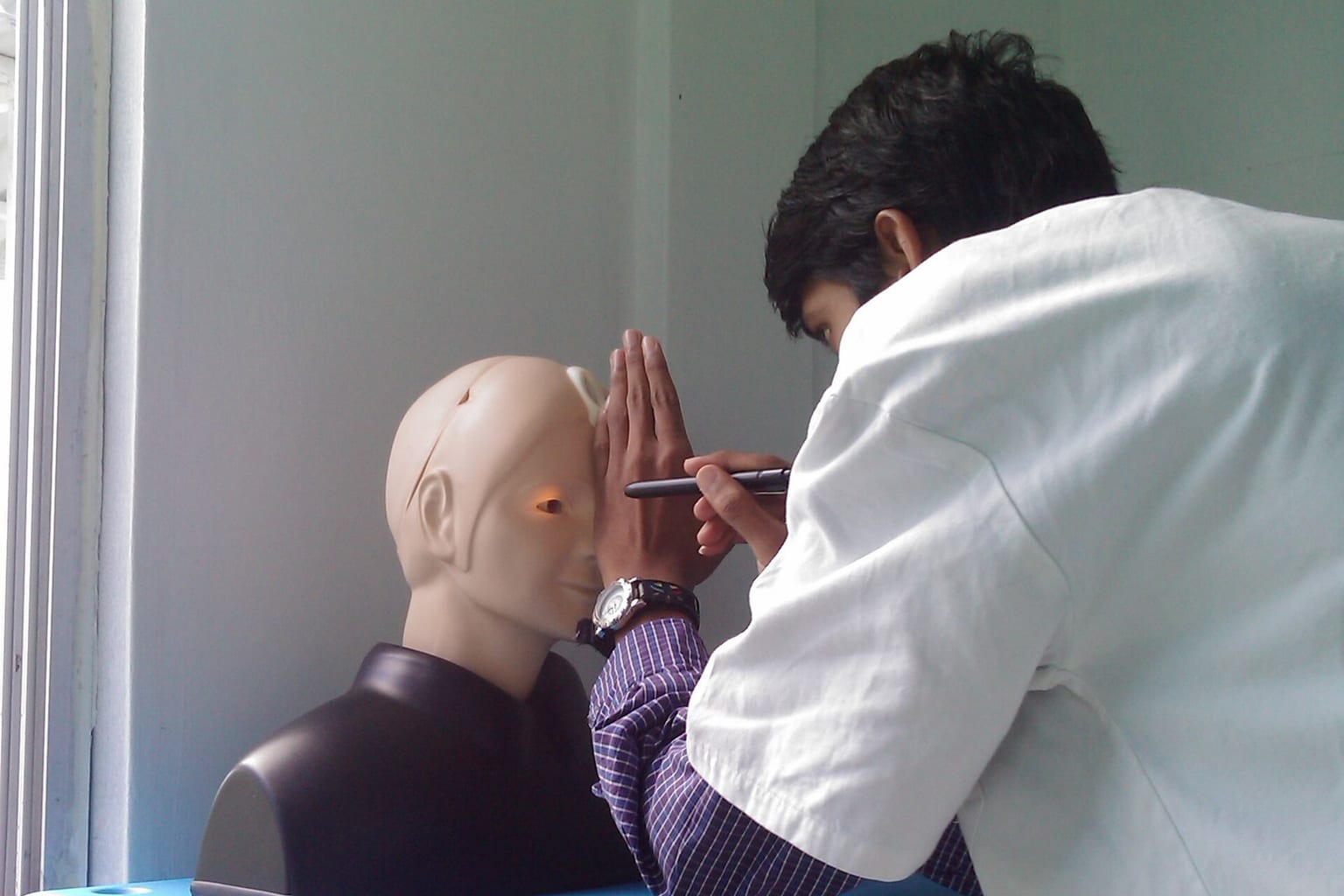
A blind spot in the middle of the visual field, and nothing to fill it. For patients who develop one, PRIMA now gives back something that no treatment could restore until now: reading. Fitted with a retinal implant and worn alongside camera-equipped eyeglasses, they can read, do crosswords and use their phones. More than 80% of recipients reached that point after training sessions, according to MIT Technology Review.
The condition is geographic atrophy, an advanced form of age-related macular degeneration (AMD), in which retinal cells die off. More than 5 million people have it. For them, the central part of vision is lost, and the damage has so far been beyond what medicine could repair.
PRIMA targets that blind spot with two parts: the retinal implant and the camera-equipped glasses. The report presents them as one system, but it does not explain how the two parts exchange information, and that is the first question a specialist would ask.
The results also come with limits. The report does not say how many patients were tested, nor what the comparison group was. The reading ability appeared after training sessions, not as an immediate effect, which means that the result comes after training.
For the people concerned, what changes is concrete: reading, finishing a crossword, using a phone. The report announces no price and no launch date, and it does not say when patients outside the study could access the system.
Sources — read the originals(Paris time)
Read next
Comments
Loading the thread…
Sign in to leave a comment. Sign in