AI Agent Completes Brain Injection Surgery in a Mouse
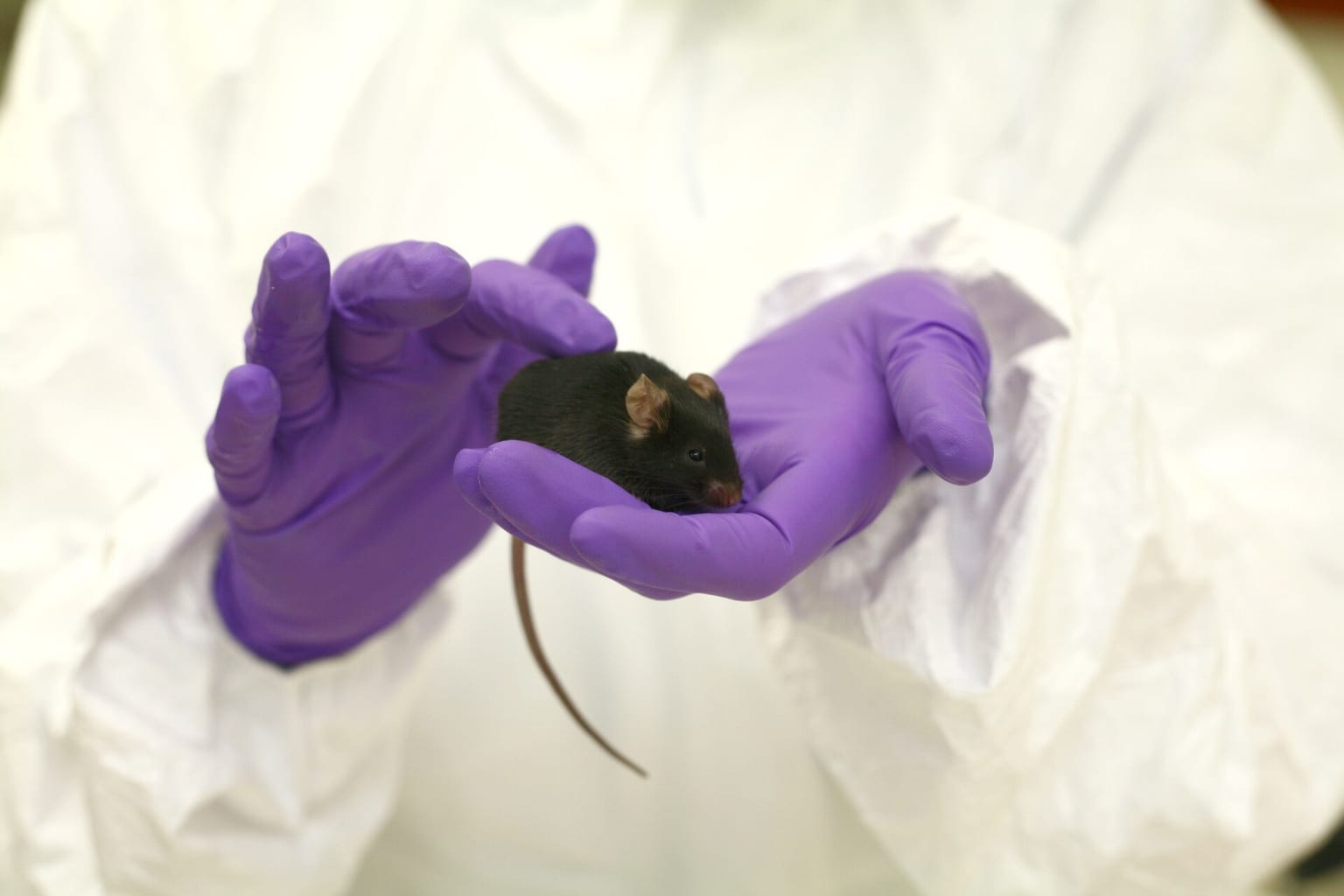
According to Ifanr, at a startup called Exin Therapeutics in San Francisco, an electric surgical platform built from the open-source Arduino control board was aimed at the head of a mouse. The team gave the AI agent (an intelligent agent) very little: a spreadsheet listing 19 gene therapy vectors, a mouse known to have seizures, a platform equipped with a camera, and a single task instruction to reduce seizures. The platform was built by the team itself, and the link between the camera and the motors was designed and wired in by the team. This time, the agent performed a brain injection.
The agent first analyzed how seizures spread in the model and selected a vector that strengthens inhibitory signaling in GABAergic neurons. It set the injection site in the lateral entorhinal cortex, because the literature describes this area as the origin point before seizures spread outward. It also evaluated the classic target, the substantia nigra, but recorded reservations: the effect depends on the subregion targeted, results are inconsistent across different epilepsy models, and some studies report it failed to suppress tonic-clonic seizures, precisely the problem this task was meant to solve. After weighing these factors, it set aside this more familiar option.
The coordinates were derived from the averages of three papers, and each paper was checked to confirm that depth was measured from the brain surface, as on this device. The final values were set at 3.90 mm posterior, 4.00 mm right lateral, and 4.30 mm ventral, relative to bregma (a landmark on the skull). During surgery, the agent maneuvered the stereotaxic arm to advance into brain tissue while using the camera to check the injection site for bleeding. Within five minutes, it slowly pushed 250 nanoliters of solution, containing roughly 500 million viral genome particles, deep into the tissue. Throughout the operation, it took 32 screenshots to monitor for bleeding, whether the solution was flowing back, and whether progress matched expectations. It also independently decided the movement speed, waiting times, and the pace of needle withdrawal.
However, this was not an independent robotic operation. Human surgical staff performed the craniotomy, which the agent is not currently permitted to do. All irreversible steps had manual checkpoints. A licensed veterinarian was present throughout, holding a physical emergency stop switch that could cut power to all motors at any moment. In addition, the platform had a cap on injection volume, fixation verification, and an approval step. According to the report, there was also one refusal during the surgery: after a connection dropout, the controller calculated a Y-axis target position 34 mm off from the bench, beyond the safe range. The agent refused to move. After the team reset bregma to zero and the values matched exactly, it again refused to retry. By then the mouse was already anesthetized, so the founder, Gabriel Ocana Santero, had no choice but to modify the code manually. He wrote on social media that the experience made clear how much they had come to depend on these models.
Exin was founded in 2024 by several neuroscience researchers from the University of Oxford. It initially focused on epilepsy, with the goal of finding treatments that correct abnormal neural circuit activity. Its focus is not on individual molecules but on the activity state the neural circuit ultimately displays: whether an intervention can push that state back into a relatively normal range. The company connects AI research and development in San Francisco with experimental facilities in Manila, Philippines. It collects neural electrical activity, behavioral, and other biological data in its own Data Foundry. The new data then feeds back into the models, helping to refine their judgments and decide what to test in the next round. Y Combinator calls this approach lab-in-the-loop, meaning experimental results continuously feed into the AI's discovery process.
Exin is not the only company on this path. In May 2026, Robin, a multi-agent system published in Nature, was already able to integrate literature search and data analysis, generate hypotheses, propose experiments, interpret results, and update its hypotheses based on new findings. The research team used it to search for potential candidates for dry age-related macular degeneration and carried out in vitro validation on some of those candidates.
For patients, this step has not yet changed anything directly. It is still being carried out in mice, and the team itself calls it the first step toward a closed-loop lab. For researchers, the change is that the agent could bring decades of accumulated drug development experience directly to real experimental benches for testing. A company in Boston has already launched an autonomous lab product, aiming to plug AI directly into chemistry and materials R&D workflows and eliminate the back-and-forth of human intermediaries. Academia is also debating how to set capability benchmarks for agents and where to draw safety boundaries. How much decision-making authority will be handed over can only be tested one surgery at a time.
Sources — read the originals(Paris time)
Read next
Comments
Loading the thread…
Sign in to leave a comment. Sign in