AI-designed surface absorbs 98.3% of solar light
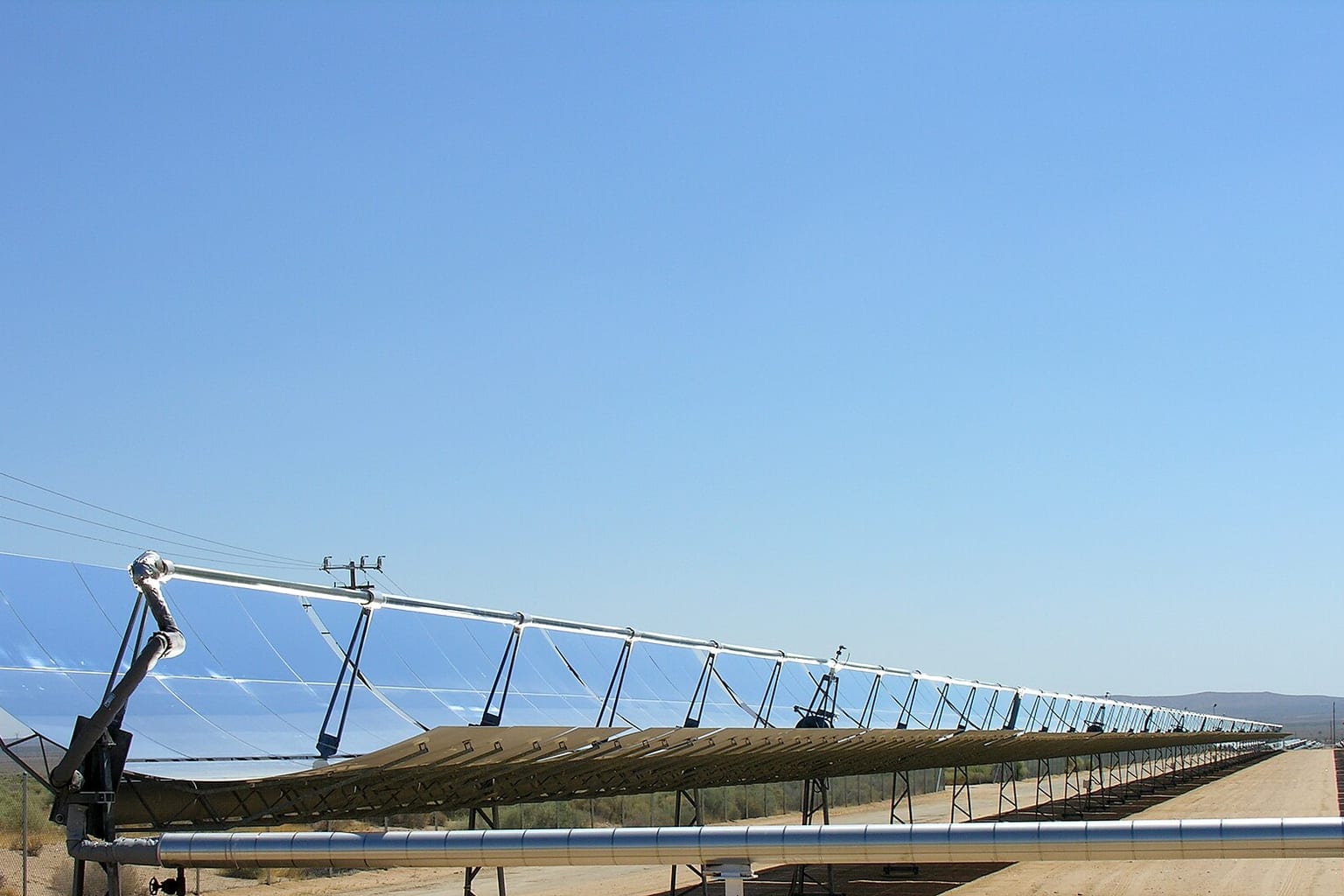
Almost all the light that reaches this surface gets absorbed. In simulations run by a team at the Changchun Institute of Optics, Fine Mechanics and Physics of the Chinese Academy of Sciences, a tungsten surface absorbed 98.3% of light on average between 350 and 1,000 nanometers, the band that covers visible light and part of the near-infrared. In the 450 to 700 nanometer range, the figure rose to 99.8%.
The surface is built for solar thermophotovoltaic systems, or STPV. In these systems, sunlight heats an absorber, the absorber gives off thermal radiation, and photovoltaic cells convert that radiation into electricity. The difficulty lies in selectivity. Conventional absorbers capture light over a limited range, depend on the angle at which light arrives, and lose performance under demanding conditions. The team chose tungsten for its favorable optical absorption and its suitability for high-temperature use.
The design is a metal–insulator–metal stack topped with nanoscale resonators, tiny disks and rings arranged in a pattern. To find the right layout, the researchers combined electromagnetic simulations with machine learning, which they used to study how each structural parameter affected absorption. They compared six algorithms, and XGBoost predicted absorption best and guided the optimization. Analysis of the electromagnetic fields showed that the disks and rings together produced strong light interactions across a wide spectrum.
For whom, and when? The authors frame the work as a way to improve solar thermophotovoltaic conversion, making better use of sunlight, and they say the approach could also contribute to photodetectors and optical sensors. The surface kept more than 90% absorption at incidence angles up to 60° under both main polarization conditions. As a selective emitter, its calculated spectral conversion efficiency reached 99.4% at 2,000 K, which the study presents as a way to direct thermal radiation toward wavelengths useful for silicon photovoltaic cells. Neither the study nor its coverage gives a date for a working device.
The limits are clear. These are calculated results from simulations, not measurements on a fabricated surface. A separate preprint on arXiv, describing refractory metasurfaces for the same solar thermophotovoltaic use, reports in-situ measurements at high temperature, a step this simulation study does not include. The study's main claim is methodological: machine learning can guide the design of such surfaces, and the authors present it as a way to accelerate the development of high-performance optical materials.
Sources — read the originals(Paris time)
Pages consulted while writing
Read next
Comments
Loading the thread…
Sign in to leave a comment. Sign in