AI model predicts B-cell rescue factors, confirmed in mice
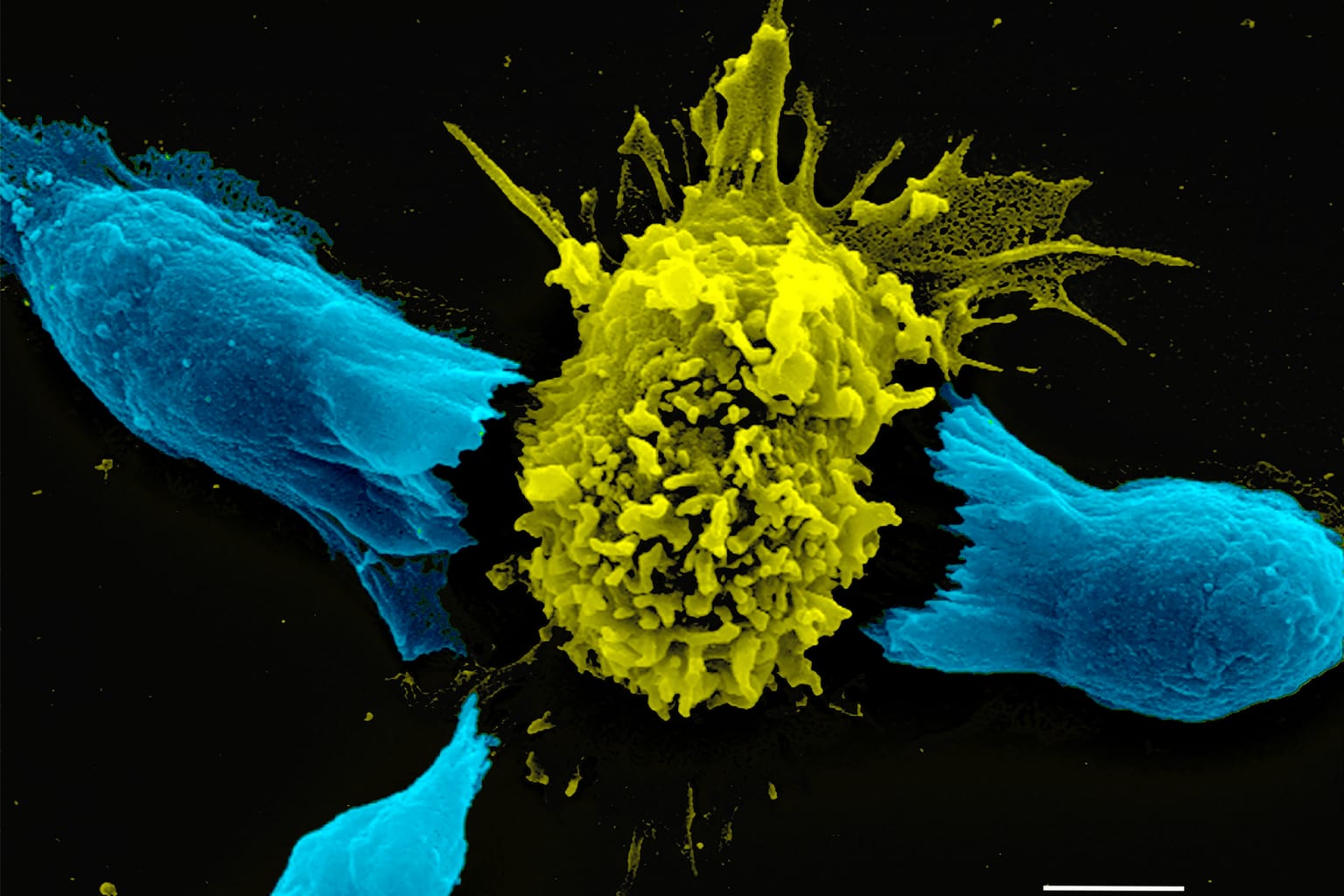
Imagine one photograph of immune cells, taken in a single instant. That is the raw material most single-cell experiments give biologists: a frozen moment, with no record of where each cell is going next. A team has built DynaVelo to reconstruct that movie from the still image, and its work is published in Nature Biotechnology, online on 21 October 2026.
DynaVelo works from two kinds of single-cell data. The first is partial RNA velocity, an estimate of the direction in which each cell's gene activity is moving. The second is TF motif accessibility, a readout of how open the stretches of DNA that transcription factors can bind are in each cell. The authors chose this readout because it is interpretable and derives from chromatin accessibility. A neural network then models how gene expression and accessibility change together, cell by cell.
The model was applied to germinal center B cells from mice, across three genotypes, one of them wild type. Once trained, it can perform what the authors call in silico perturbations: switching a gene or a factor off inside the model and reading the predicted effect. The paper reports that DynaVelo predicts the impact of loss-of-function genetic changes, and identifies transcription factor perturbations that rescue them. It also infers dynamic, cell-state-specific gene regulatory networks, the maps of which genes switch which others on or off.
The predictions were then checked in living animals. Using double heterozygous mutant mice, the team confirmed the rescue of the Arid1a dark-zone phenotype in all cases, according to the abstract. That is the strongest evidence in the material available: a prediction made by the model, then seen in a living organism.
What changes, and for whom? For researchers studying B cells, the model offers a ranked list of candidate factors to test in mice, instead of testing them one by one. The paper does not describe any clinical application, and it gives no timeline for one. The results come from mice, and the model's predictions need to be reproduced in other settings before they can be called reliable beyond this study.
Sources — read the originals(Paris time)
Pages consulted while writing
Comments
Loading the thread…
Sign in to leave a comment. Sign in