AI predicts how bioplastics react to heat, in a research study
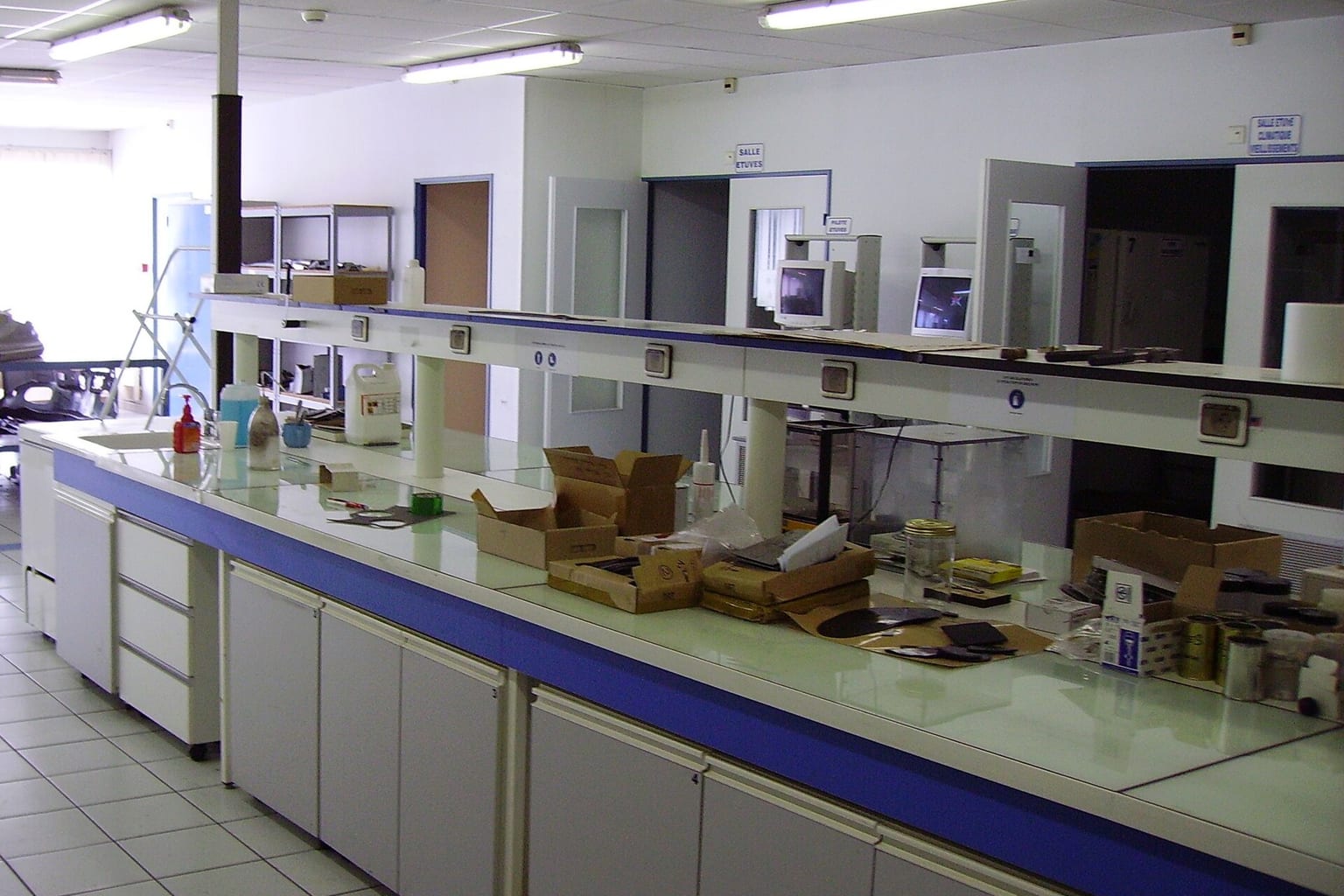
Heat a bioplastic a few degrees too far and it starts to break down. For PHB, a plastic made by bacteria rather than refined from oil, the safe window is especially narrow: it begins to degrade chemically just above its melting point. Researchers at the Agricultural University of Athens, a partner of the ANIPH project, have now built machine-learning models that predict how PHB and its copolymer PHBV respond to heat.
The problem is practical. PHB is naturally brittle, and manufacturers shape it by extrusion or injection molding, where it must be melted and formed inside that narrow band. Adding a different comonomer, a plasticizer or a filler, all ways of tuning a plastic, can shift the thresholds noticeably, which makes trial-and-error recipe design slow and costly. The study targets three temperatures: the glass transition (Tg), where the material turns from rigid to flexible; the melting temperature (Tm), where its internal structure melts; and the crystallization temperature (Tc), where it solidifies into an ordered structure on cooling.
To train the models, the team assembled a database of 572 data points: 109 scientific studies and 14 experiments run in-house with CETEC. Each entry records a sample's composition, molecular weight and additives, so the models could learn how those choices change thermal behavior. Two machine-learning methods, random forest and XGBoost, were compared. After tuning and testing, the best models explained about 82% of the variation in melting temperature, about 77% of the variation in glass transition and about 76% of the variation in crystallization.
The models also match what chemists expect. A higher share of hydroxyvalerate, the second building block of PHBV, lowers the melting and crystallization temperatures, because it disrupts the orderly packing of the polymer chains. Higher molecular weight pushes those temperatures up, since longer chains tangle and become harder to melt. Additives behave as intended, whether they add flexibility, encourage crystal formation or improve heat stability.
The limits are real. Thermal tests are not reported the same way across studies, so the team kept a smaller, higher-quality subset for the final models, between roughly 120 and 200 samples per property, and defined the formulation ranges within which the predictions can be trusted. The authors present the work as showing potential rather than a finished design tool.
For manufacturers and researchers, what changes is the ability to screen a formulation on a computer before melting material on a line. The curated dataset and modeling code are openly available, in line with ANIPH's open-data principles, so other teams can build on them to design bioplastics with the processing behavior they need. The study does not put a date on industrial use.
Sources — read the originals(Paris time)
Pages consulted while writing
Read next
Comments
Loading the thread…
Sign in to leave a comment. Sign in