Atom-scale model tracks silicon carbide vapor in growth furnaces
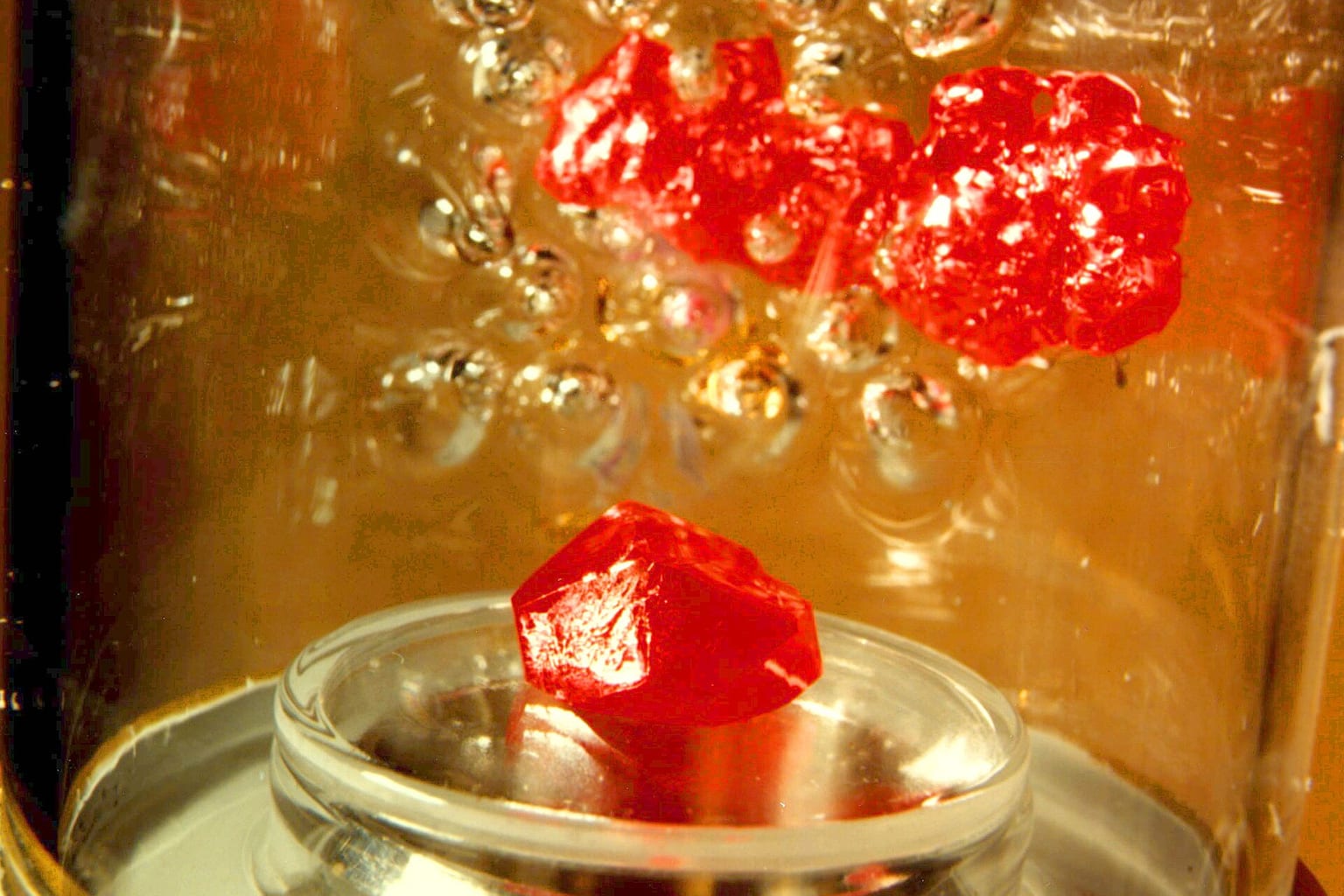
Silicon carbide grows inside a sealed furnace, at temperatures so high that nobody can watch the first moments of the process. The solid is heated until it turns straight into vapor, and that vapor drifts onto a seed crystal and builds it layer by layer. What happens in those first moments has stayed largely hidden, and it is exactly where a crystal can go wrong.
A team at Penn State has now built a model that follows the process at the scale of individual atoms. Led by Yun Kyung Shin, a research professor of mechanical engineering, the researchers refined ReaxFF, short for reactive force field. A force field is a set of mathematical rules that calculates how atoms interact, and ReaxFF can also simulate chemical bonds breaking and forming over time. An earlier version had been built mainly for oxidation, so the team re-parameterized it for sublimation, the direct change from solid to vapor, using an extensive set of quantum mechanical calculations.
The model shows that the vapor changes its makeup as the temperature rises. At lower temperatures, silicon-rich species such as silicon and silicon carbon escape first, because they need less energy to evaporate. The solid left behind becomes richer in carbon, a prediction that laboratory experiments supported. The model's results closely matched more detailed quantum calculations. The ratio of silicon to carbon that reaches the seed crystal matters: too much silicon can produce droplets or large defects, while excess carbon can cause graphitization or an unwanted crystal structure.
For manufacturers, the practical gain is in how they find good growth conditions. The team calculated temperature-dependent reaction rates that could be built into computational fluid dynamics models, which simulate heat transfer, gas flow and temperature gradients across a whole furnace. Shin says that combining atom-scale reaction data with furnace-scale simulations could let companies adjust furnace geometry and heating recipes on a computer before running a furnace, reducing reliance on costly trial-and-error growth. The study does not give a timeline for such tools, and it does not measure any gain in crystal quality on a production line. It is the first publication from the Silicon Carbide Innovation Alliance, an industry-university partnership. A companion study from Morgan Advanced Materials, a founding member of the alliance, models the equilibrium vapor composition above the source material, and together the two papers cover sublimation from single atoms to the whole growth environment.
Sources — read the originals(Paris time)
Read next
Comments
Loading the thread…
Sign in to leave a comment. Sign in