Australian plant makes seaweed film 38% stronger
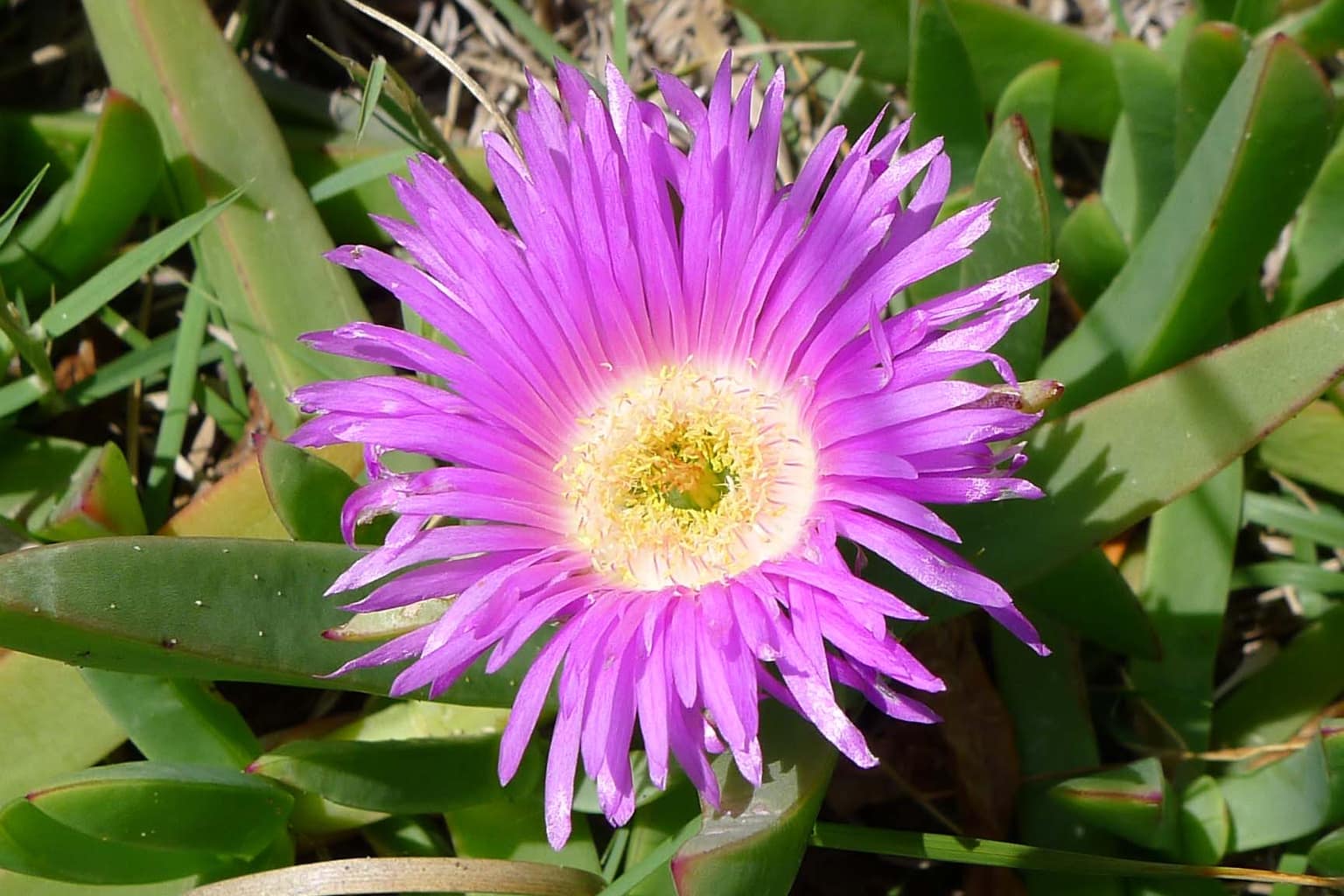
Plain seaweed film, Naik says, is hard to use in practice. "If you just use agar by itself, it will just break in your hand; it will crumble." In a set of lab tests reported in the Journal of Polymers and the Environment, a film containing an extract from pigface was 38% stronger than the agar-only version and could stretch nearly twice as far before breaking. It also cut water vapor permeability by about 57%, so less moisture passed through it.
The mechanism is the familiar one. Agar films need plasticizers, additives that let a material bend instead of snapping. Pigface leaves contain sugars, organic acids and polyphenols, compounds the team suspected could do the same job. They mixed the extract into agar in nine proportions, and the results were not linear: the middle range worked best, while heavier doses weakened the films. Naik says the team had expected more extract to mean better results. "It didn't," he says. The films also kept some of the plant's antioxidant activity.
The limits are real, and the researchers state them plainly. The films still dissolved substantially when immersed in water, which makes them unsuitable for most conventional packaging, especially anything that stays damp. Naik calls the study "just like a stepping stone" and stresses that the uses he describes are potential future applications, not products ready for commercial use. Safety is a separate question: the team detected arsenic in the plant material, and Naik notes that heavy metal levels were higher in pigface from more contaminated areas. Food contact would require further testing.
The project began in an unexpected way. At a food conference in Coffs Harbor in 2025, Naik attended a dinner of native Australian ingredients presented by Mindy Woods, a Bundjalung woman and former MasterChef Australia contestant. One dish was a pigface salad. Naik, who knew little about the plant, began researching it and connected with IndigiGrow, an Indigenous-led nursery specializing in Australian native plants.
For a material that would otherwise end up as plastic waste, the appeal is clear: a seaweed-based film that is stronger and less permeable, and that could dissolve in use, which Naik suggests would leave no microplastic traces in detergent pod applications. The next steps the team describes are to understand how the plant's compounds work together and to complete safety testing before any food-related use. For now, the result is a lab-scale improvement in a material that could one day be packaging.
Sources — read the originals(Paris time)
Pages consulted while writing
Read next
Comments
Loading the thread…
Sign in to leave a comment. Sign in