Boeing uses the Frontier supercomputer to model wing airflow
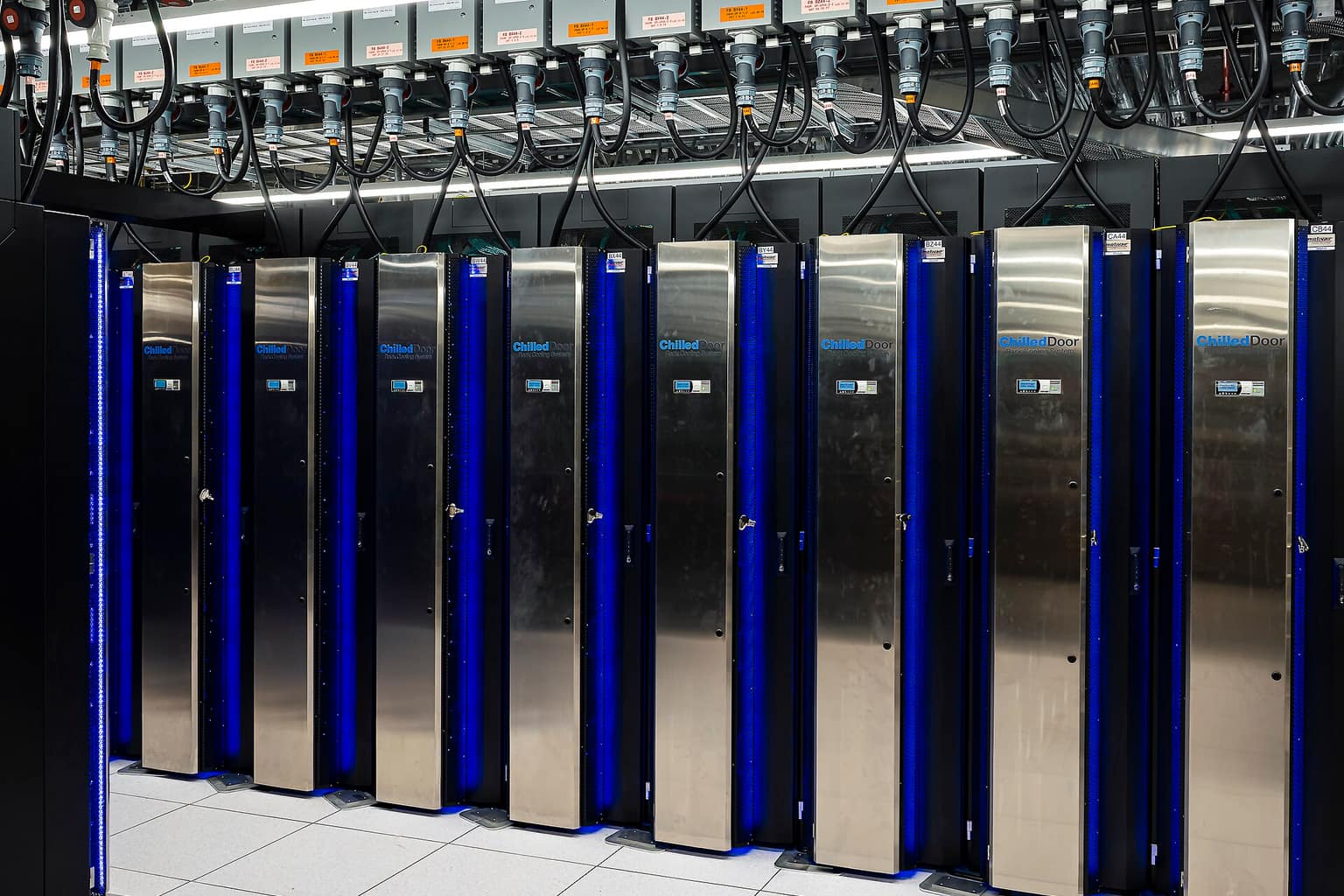
On a landing approach, the wing is surrounded by air that is anything but smooth. Boeing's engineers have now simulated that air on Frontier, a Department of Energy supercomputer at Oak Ridge National Laboratory. The model shows airflow along the leading edge of a wing moving from unstable flow to turbulent bursts, then to fully developed turbulence. The team's goal is to predict how ice buildup and small-scale turbulence affect flight performance in complex landing configurations. The work is published in the Journal of Fluid Mechanics.
Turbulence is a chaotic system, and it is one of the few problems traditional physics cannot fully solve. The thin layer of air closest to the wing, the boundary layer, is where friction creates drag, which slows the aircraft and increases fuel consumption. Boeing's research puts the stakes in plain numbers: reducing drag by 1% in cruise conditions lowers fuel consumption by about 0.75% on a flight. The obstacle is computing power. Simulations need meshes so dense that Boeing aerodynamics engineer Konrad Goc says the work cannot be done effectively without more powerful computers. Frontier, the world's most powerful supercomputer for open science, enabled Boeing's researchers to enhance their simulation capabilities.
Engineers have long relied on Reynolds-averaged Navier-Stokes equations, which model turbulence statistically. That approach is fast and practical for a full aircraft, but it is limited when flows are complex and unsteady. Higher-fidelity methods, such as wall-modeled large eddy simulation, resolve larger turbulent structures and finer scales near the wing surface, at a much greater computational cost.
For airlines and passengers, the chain is direct. Adam Clark, an aerodynamics engineer at Boeing, says that flying in the smooth laminar regime for as long as possible is the most fuel-efficient way to fly, and lower fuel consumption reduces operating costs, which “could also translate to less expensive tickets.” The simulations are expected to guide aerodynamic design improvements, help address issues found in flight testing and support efforts to build more fuel-efficient aircraft. No timeline or specific aircraft program has been announced.
Simulations do not replace wind tunnels or flight tests, and the team does not claim they do. Over the last 20 to 30 years, Clark says, computer modeling has cut the number of wind tunnel experiments needed per wing variation from more than 20 to just a couple. “Oftentimes, in physical testing, we see things that we can’t explain,” he said, “things that we literally have no data for, and that’s what CFD simulations can shed light on.”
Sources — read the originals(Paris time)
Pages consulted while writing
Read next
Comments
Loading the thread…
Sign in to leave a comment. Sign in