Brain implants let paralyzed patients speak again, in clinical trials
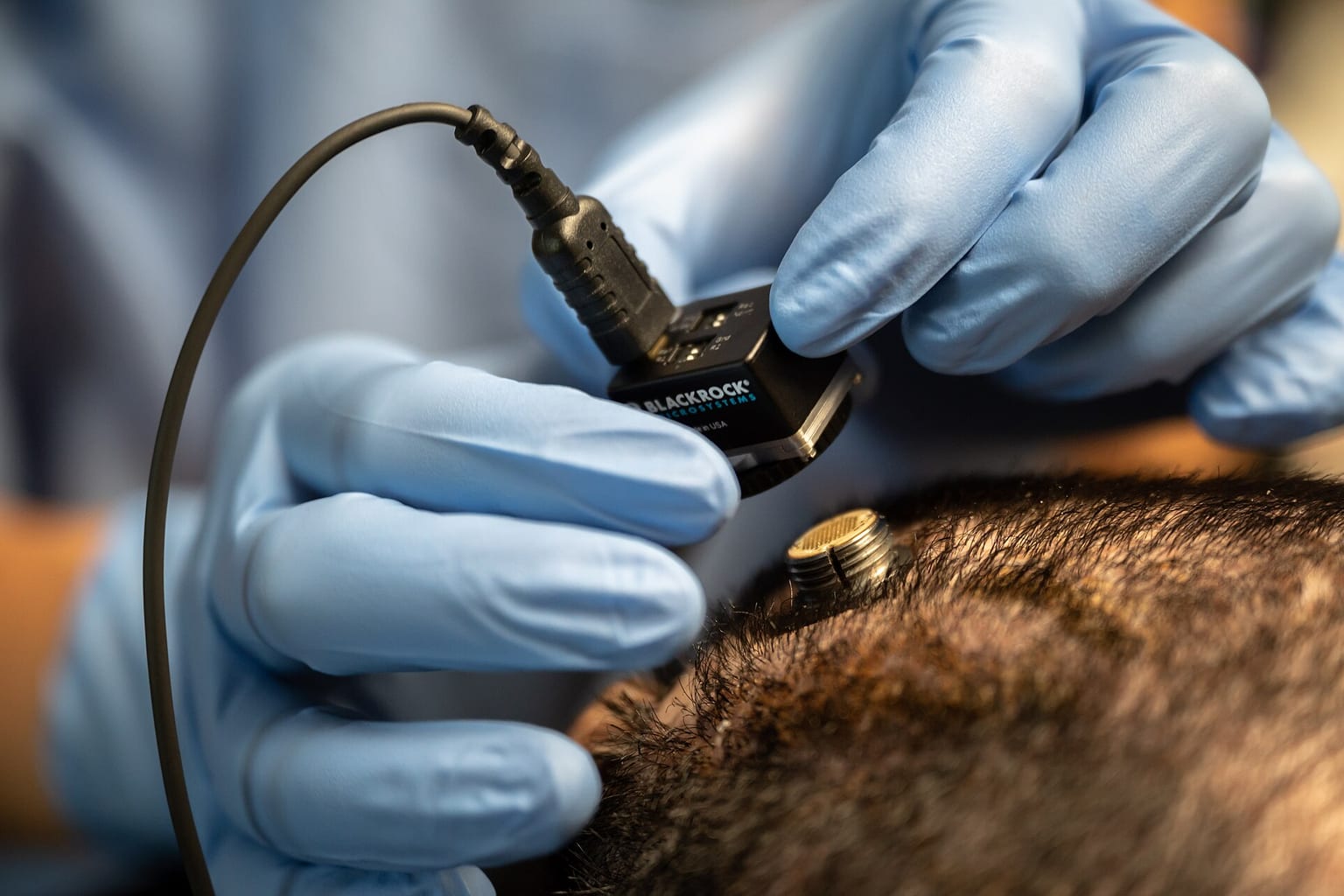
A brain implant can now give a synthetic voice the rises and falls of pitch that make speech expressive. At Neuroscience 2026, the annual meeting of the Society for Neuroscience, researchers reported that brain-computer interfaces (BCIs) are restoring communication for people who have lost the ability to speak or make voluntary movements. A BCI records brain signals and translates them into commands for computers, prosthetic limbs or other devices. The technology is still largely experimental, but it shows promise for functions lost to amyotrophic lateral sclerosis (ALS, also called Lou Gehrig's disease), stroke and other neurological disorders.
The most striking result comes from the University of California, Davis, where Maitreyee Wairagkar's team built a synthetic voice able to capture pitch variations. The voice improved listener comprehension, and it allowed one patient to sing. Other teams worked on text rather than sound. Chethan Pandarinath's group at Georgia Tech and Emory University decoded brain activity into written words with a portable system that, according to the team, offers accurate, efficient and reliable decoding, even on an iPhone. Their approach rests on electrodes placed in parts of the brain linked to speech, which can still pick up activity when a person has lost the ability to talk.
Endurance is the other test. A study published in Nature followed a man with severe paralysis who used an intracortical BCI, an implant that sits inside the cortex, nearly every day. He communicated 183,060 sentences, totaling 1,960,163 words, at an average of 56 words per minute. Separately, researchers at Massachusetts General Hospital reported a person in a completely locked-in state, unable to make voluntary movements, who communicated independently for more than a year through a BCI that decodes intended movement from brain activity. A study from Mass General Brigham and Brown University describes an investigational implantable BCI that enables rapid communication for two people with paralysis.
The most precise voice figure comes from a preprint on bioRxiv. Listeners who had not heard the system before transcribed the voice of Brain2voice 2.0 with a word error rate of 5.24%, an 8× improvement in intelligibility over previous systems. A preprint is posted before journal review, and several of its authors have patent applications on speech BCIs, which readers should weigh alongside the numbers.
For people who can no longer speak, the change would be a voice that carries intonation, or written words produced faster than before, and for those with ALS or stroke, the question is when such devices could leave the trial setting. The findings come with no date for use beyond trials. The closest thing to a timeline is Cynthia Chestek's assessment, a University of Michigan biomedical engineer, who says the work brings brain-to-voice and brain-to-text technologies closer to reaching people outside clinical trials. The next step is already registered: a study posted on ClinicalTrials.gov in July 2026 is assessing the feasibility and efficacy of a chronic BCI for speech rehabilitation in people with locked-in syndrome.
Sources — read the originals(Paris time)
Pages consulted while writing
Read next
Comments
Loading the thread…
Sign in to leave a comment. Sign in