China's prototype 100-channel photon detector for quantum networks
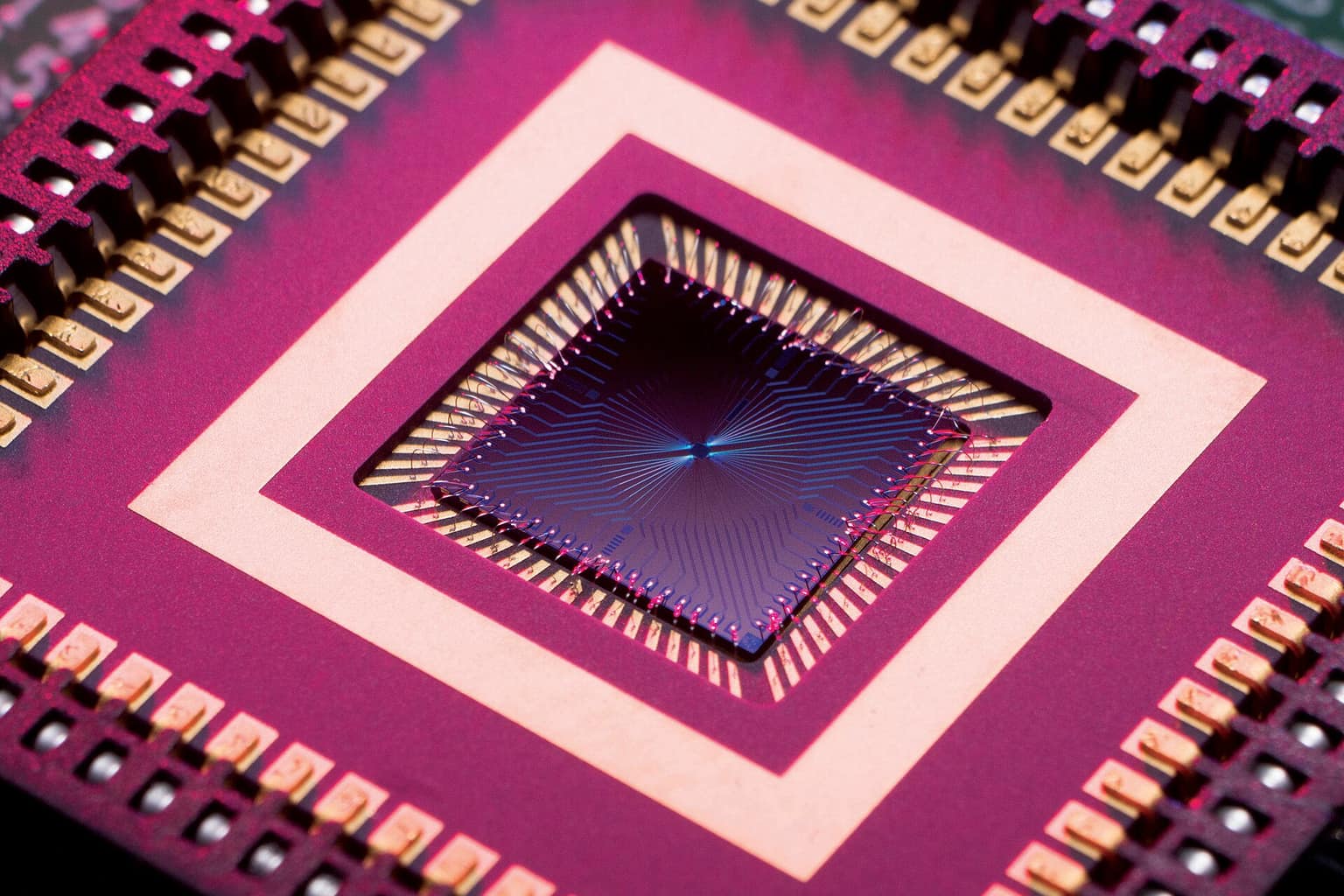
For seven days, the detector ran round the clock in a chamber that stayed below 2.1 kelvin, a hair above absolute zero, or −273.15 °C. That cold is where the high-end detectors work. Researchers at the Shanghai Institute of Microsystem and Information Technology (SIMIT) used the run to show that a 100-channel version can hold steady there.
Quantum networks would carry information encoded in single particles of light, so they need detectors that catch those particles one at a time. Two kinds exist. Superconducting nanowire detectors, known as SNSPDs, are extremely precise but must be kept ultracold. Single-photon avalanche diodes, or SPADs, work at room temperature but are less accurate, which is why SNSPDs are preferred. The catch is wiring. The instruments that read the signals sit at room temperature, and the thick coaxial cables linking them to the detector carry heat into the cold chamber. This is the thermal load. Each added channel adds cables, and so adds heat. The workaround had been to cap detectors at 32 channels, the standard for such devices.
The SIMIT team rebuilt the SNSPD and swapped those cables for flexible, high-density multi-core microstrip lines. They are ultrathin and thermally insulating. According to the team, the heat entering the system was one twenty-first of what traditional cables let in. That margin allowed more independent channels without a significant increase in the detector's size. In tests, the channels reached 80 percent detection efficiency with very few false positives, according to the paper.
To go beyond a single device, the researchers built a five-user quantum entanglement distribution network with 10 two-way quantum links. Entanglement is the correlation that ties two particles together, and it is what such networks distribute. Each user received photons through the new channels, and communication fidelity, meaning how well the quantum information survives the trip, stayed above 90 percent. The team describes this network as a prototype, with no deployment beyond it.
For Chinese teams building quantum links, the change is practical: a single detector can now read 100 channels instead of 32, with far less heat leaking into the cold chamber for each channel added. The researchers say the work opens the door to broadband quantum networks in China. They give no timeline for when such networks could reach users, and the efficiency and fidelity figures are the team's own, published in Laser & Photonics Reviews.
Sources — read the originals(Paris time)
Read next
Comments
Loading the thread…
Sign in to leave a comment. Sign in