Chitosan-based coating cuts grape weight loss to 15.5%
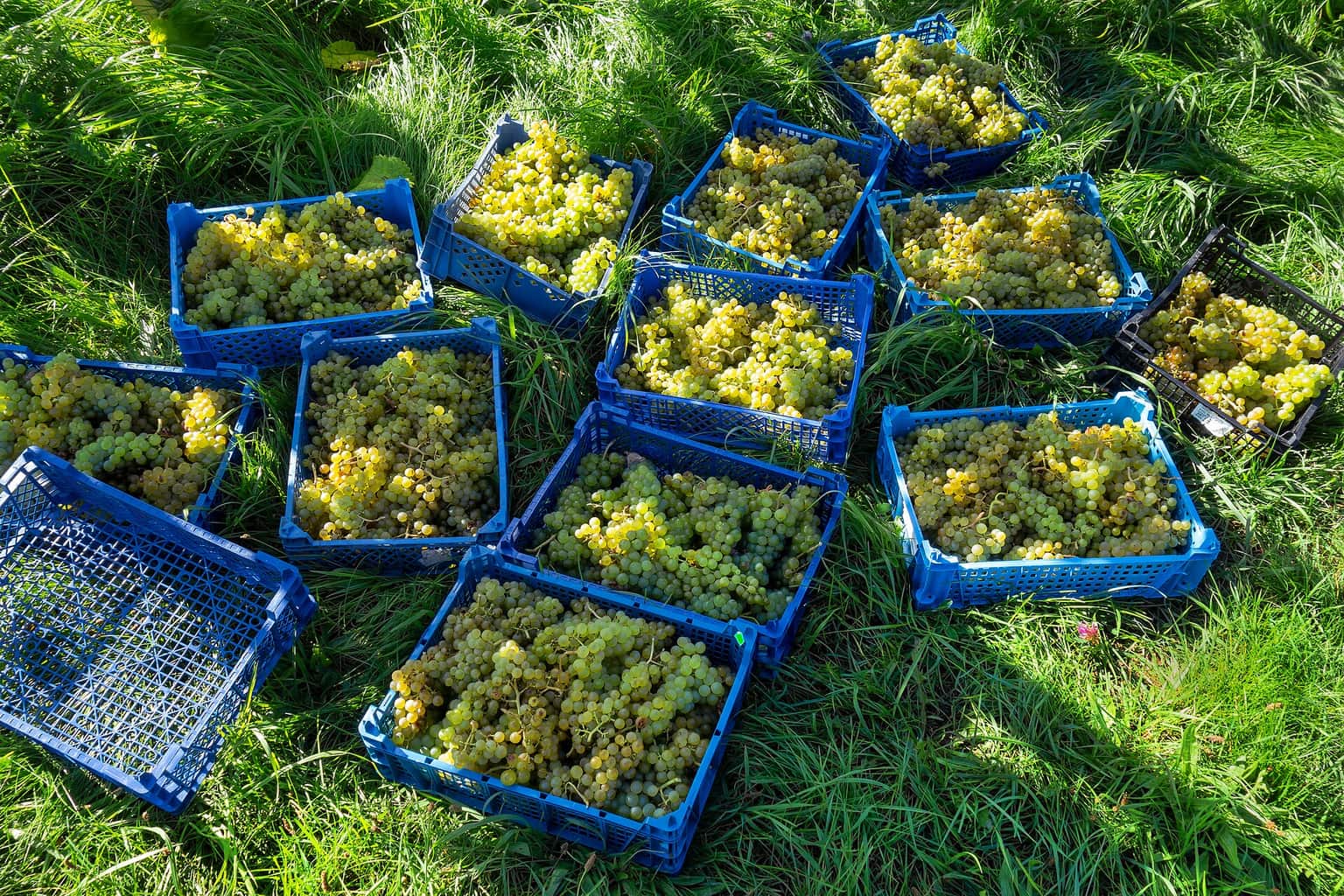
Pick a grape and the clock is already running: it keeps breathing and reacts to ethylene, the plant hormone that speeds ripening and rot. In one case the review cites, a chitosan and nanocellulose coating held grape weight loss to 15.5% after 18 days of storage, while the control lost 40.4%. The review comes from a team at the South China Botanical Garden of the Chinese Academy of Sciences, and was published in Comprehensive Reviews in Food Science and Food Safety. Its first author is Yuci Li.
Ordinary plastic packaging, made from petroleum, is a passive barrier that cannot respond as the fruit changes. Functional packaging works differently: it adjusts the air inside the pack and releases active agents that act on respiration, ethylene signalling, oxidative stress and microbial growth. The review groups these strategies around one chain, "material structure–physicochemical property–fruit physiological response", and covers moisture and gas regulation, edible coatings, antioxidant and nutritional quality, antimicrobial packaging, intelligent packaging and shelf-life prediction. Among its reported results, a platinum-based catalyst (Pt/CeO₂-P) removed over 99.9% of ethylene and kept bananas firm for 14 days, and a machine-learning sensor array judged fruit ripeness with 99.09% accuracy.
The journal's abstract presents the work as a critical analysis of how natural biopolymers and multi-component layers control oxygen, carbon dioxide and ethylene inside the pack. The Phys.org summary adds a finding that the abstract excerpt does not show: moisture and gas regulation are governed by the same microstructural parameters, which produce both synergies and trade-offs. The review therefore concludes that no universally optimal solution exists, and that fruit type decides which functional layer should come first.
The distance between a lab bench and a packing line is wide, and the review measures it. Stimulus-responsive metal–organic framework carriers (porous materials that release their load on a trigger) and AI-enabled intelligent packaging remain confined to the laboratory or early prototypes. Obstacles include insufficient microstructural stability, safety assessments that lag behind, and cost: cellulose nanocrystals cost roughly 13 times as much as polypropylene. Regulatory frameworks also diverge across China, the United States, the European Union and other jurisdictions.
For packers and growers, the practical change is in design: the choice of layer depends on the fruit, so a solution built for grapes is not automatically right for bananas. The authors give no timeline. Their roadmap calls for low-cost, self-healing bio-based materials, and for combining flexible sensors, radio-frequency identification (RFID, tags that let items be read remotely) and machine learning into closed-loop packaging built on a "sensing–communication–prediction" architecture.
Sources — read the originals(Paris time)
Pages consulted while writing
Read next
Comments
Loading the thread…
Sign in to leave a comment. Sign in