DeepSeek releases open-weight V4.1-Flash-1017 with stronger coding
Ask a language model for a 3D model of the Palace Museum, a browser racing game or a recreation of Portal 2 in the Godot engine, with a short prompt and almost no reference material, and DeepSeek says it can return something you can run. That is the demonstration the Chinese AI lab put forward with V4.1-Flash-1017, released on October 17 as a minor update to its V4.1 Flash model. The demos, a cross-era 3D scene called Valley of Ages among them, were each built in very few interaction rounds inside DeepSeek Harness, the company's own agent environment.
DeepSeek calls the capability wish-style programming: building a complete project from scratch from a brief request. The company credits reinforcement learning based on self-feedback, a training method in which the model critiques its own end-to-end output. The update is also presented as a Pareto improvement, a term meaning better on several measures at once: higher benchmark scores, but also shorter run times and shorter outputs, which lowers the overall cost of each call. TechNode's report adds gains in reasoning and visual understanding.
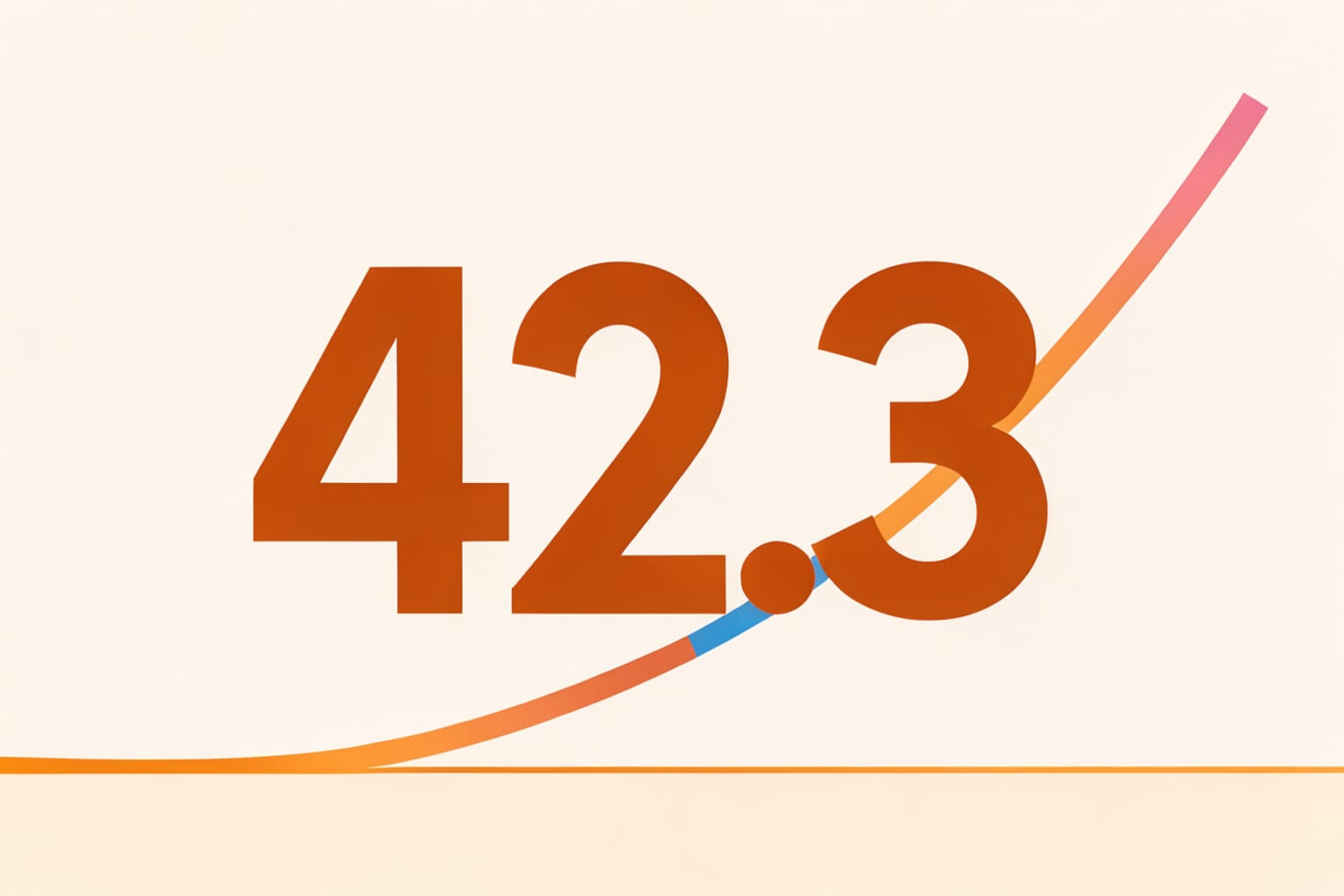
The numbers are the sharpest part of the claim. On Terminal-Bench 4.0, run with the Claude Code harness, the score rose from 31.2 to 42.3. ProgramBench went from 20.3 to 29.1, DeepSWE v1.1 from 74.2 to 77.0, NL2Repo-Bench from 65.4 to 68.2 and Automation-Bench from 54.8 to 60.5. These figures come from the Hugging Face model card, that is, from DeepSeek itself. No independent evaluation appears in the sources, so they should be read as the company's measurements until outside testers reproduce them.
The context is also worth keeping in view. On the morning of October 15, two days before the release, users found DeepSeek unavailable for close to five hours. A report on Tencent News counted 44 incidents so far this year on DeepSeek's public status page, ranging from brief slowdowns to partial outages, including one lasting about 12 hours in late March. DeepSeek has not linked that outage to the model update, and the sources do not say whether the model itself changed the service's reliability.
For developers, little changes on day one. API users keep the same model name, deepseek-flash, and the same pricing, and the weights are on Hugging Face and ModelScope under the MIT license, the same terms as V4.1 Flash. Teams that want to host the model themselves get inference code and deployment instructions. Users of DeepSeek Harness need version 0.2.1-rc.1 or later for full support, and the model was also adapted for Tencent's CodeBuddy and WorkBuddy tools. DeepSeek opened its in-house search engine to developers as standalone Search and Fetch APIs at the same time. Available now, the update is worth testing for agent-style coding work, where the company's own benchmarks say the gains are largest.
Comments
Loading the thread…
Sign in to leave a comment. Sign in