Diraq's 8-qubit quantum computer goes live in a Sydney data center
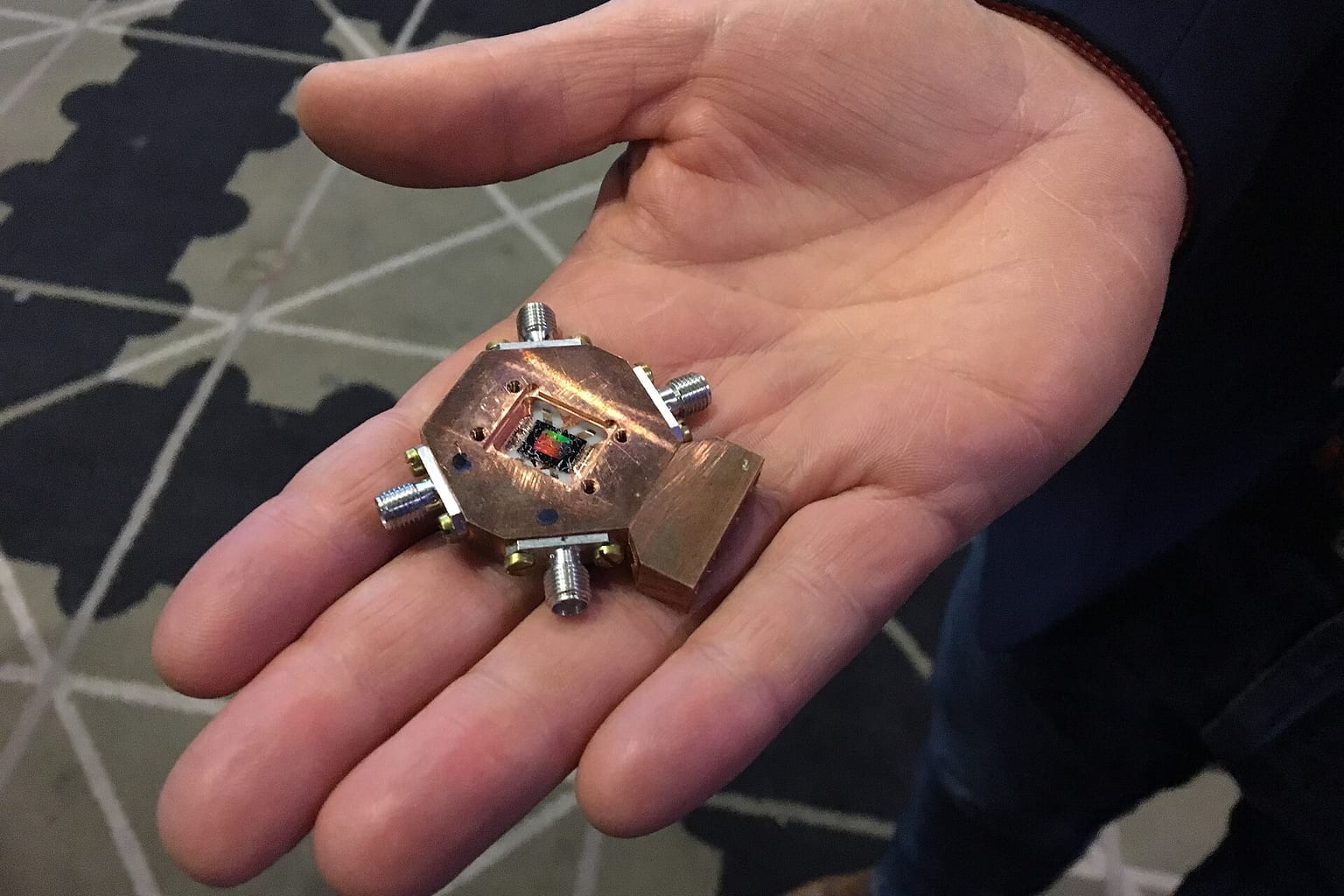
Inside an Equinix data center in Sydney, a quantum computer now runs alongside a conventional machine humming at room temperature. Australian startup Diraq has switched on its eight-qubit system there, in what AFP describes as the first field test of its kind worldwide. Founder Andrew Dzurak posed beside the cooling enclosure for AFP's photographers. The test is built to answer a narrower question than a breakthrough would: can the machine run under commercial data center conditions?
The problem it targets is power. Large AI data centers, warehouse-like buildings full of servers, draw gigawatt-scale energy, which means new power plants or more pressure on electrical grids, and that pressure has sparked community backlash. Quantum computers work with the rules of quantum mechanics, the physics of atoms and subatomic particles, to process information in ways classical computers cannot. They usually need extremely cold cryogenic temperatures. Diraq's self-contained system, by contrast, draws less than 20 kW and sits beside an ordinary room-temperature computer. Dzurak has also said the company expects its future machines to draw considerably more power than this one.
The numbers depend on which account you read. The Sydney machine has eight qubits. AFP reports that Diraq will upgrade it gradually to 150,000 qubits by 2029, then build a system of 2 million qubits on a silicon chip that reaches the Defense Advanced Research Projects Agency (DARPA) definition by 2031. QAtrial, covering the same installation, reports a target of as many as 256 qubits. eWeek frames the Sydney deployment as a test of commercial conditions rather than of scale. Diraq's own announcement says it has been selected to advance to Stage B of DARPA's Quantum Benchmarking Initiative. AFP places Diraq among six companies at the third stage, while another report counts 11 firms advancing, and a third describes four early winners moving to Stage C. The reports do not agree on the counts or the stage names, and according to one of them, DARPA says the program is not a contest to pick a single winner.
For data center operators, the gain would come only once the machines are cheap to run and build. Dzurak told AFP that quantum computing will be ready to take on that load within five years. Diraq's estimate for drug development is more specific: quantum calculations could raise trial success by 10% and cut the cost of bringing a new medicine to market by a third, if the machine runs for under $100 million a year. 'It will only happen if we can build quantum computers that are cost-effective,' Dzurak said.
The wider Australian effort is moving too. PsiQuantum, another Australian company on DARPA's list, is building a different kind of quantum computer in Queensland with AU$1 billion of government backing; construction began in June. AUKUS, the defense partnership between Australia, Britain and the United States, has reduced security barriers to sharing quantum technology, which Dzurak calls essential for Diraq's work across Australia and its US offices. Cathy Foley, president of the Australian Academy of Technological Sciences and Engineering, counts more than 50 quantum-related businesses in the country, yet says that 'commercialization is certainly one of our biggest challenges.' The next checkpoint is 2029, when Diraq plans to upgrade the Sydney machine to 150,000 qubits.
Sources — read the originals(Paris time)
Pages consulted while writing
Read next
Comments
Loading the thread…
Sign in to leave a comment. Sign in