Fabri skips steel tooling in metal casting with 3D-printed patterns
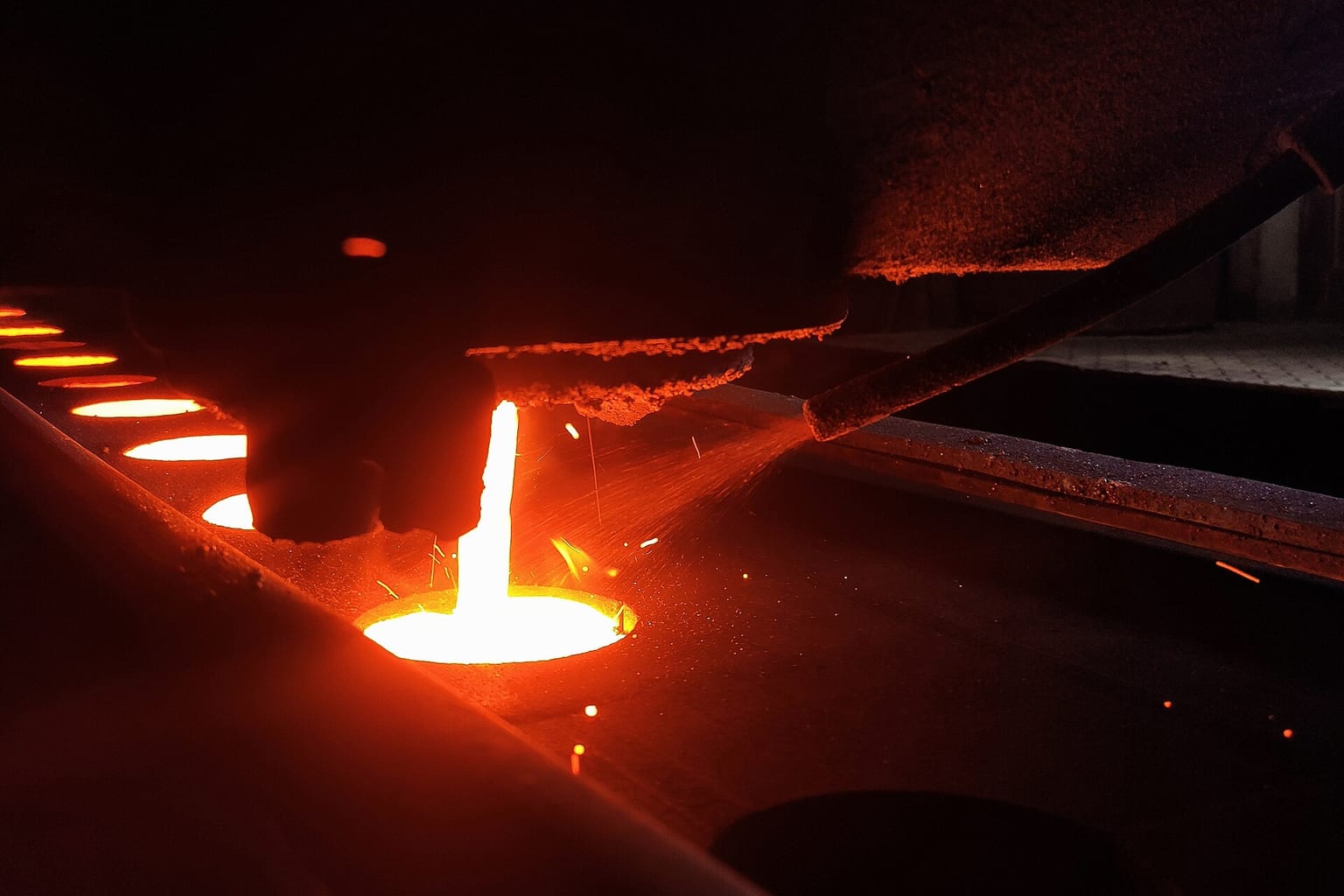
In a conventional foundry, a new part starts with a hard tool cut from steel. Steven Davis, a co-founder who graduated from MIT in 2024, says tooling for complex designs can cost upward of $1 million and take many months. Fabri, the startup he co-founded, starts instead from a computer-aided design (CAD) file. Its software designs a pattern for each part, and the company prints that pattern. Davis says the process takes a design to a finished part in as little as a week.
In investment casting, the pattern is the stand-in for the part. Traditionally, wax patterns are injection molded in a steel tool, glued into a cluster called a tree, then dipped in ceramic slurry and sand seven or eight times to build the mold. Fabri prints its patterns in resin using stereolithography, a method that cures liquid resin with light, and then casts metal into the ceramic shell. Because the patterns are printed rather than cut into steel, Davis says the team can iterate on a part in days. The software also feeds data from each step into machine learning models that the company says improve later castings.
The stakes sit in a shrinking industry. The MIT News feature reports that more than 70% of US casting plants have closed since the industry peaked in the 1950s, while China and India now lead global production. Davis also cites the American Foundry Society as reporting that workers retire at a 3-to-1 rate. Fabri runs a 1,500-square-meter plant in Billerica, Massachusetts, after opening its first foundry in Ashland in 2025.
For buyers, the practical question is time and labor. On lead times, the MIT feature says turbine blades can currently have four-year wait times, and it cites no independent data for that figure. Fabri works with customers including Raytheon and Lockheed Martin, but qualification for critical aerospace and defense parts is still under way. The MIT feature gives no production volumes, per-part prices or measured lead times beyond Davis's own estimates.
The next steps are larger. Fabri plans to begin casting nickel superalloys in early 2027, and customer demand is pushing it to build a larger plant the same year for bigger parts at higher volume. Qualification for critical aerospace and defense parts is still under way.
Sources — read the originals(Paris time)
Pages consulted while writing
Read next
Comments
Loading the thread…
Sign in to leave a comment. Sign in