Fingertip touch lifts robot insertion to 67%
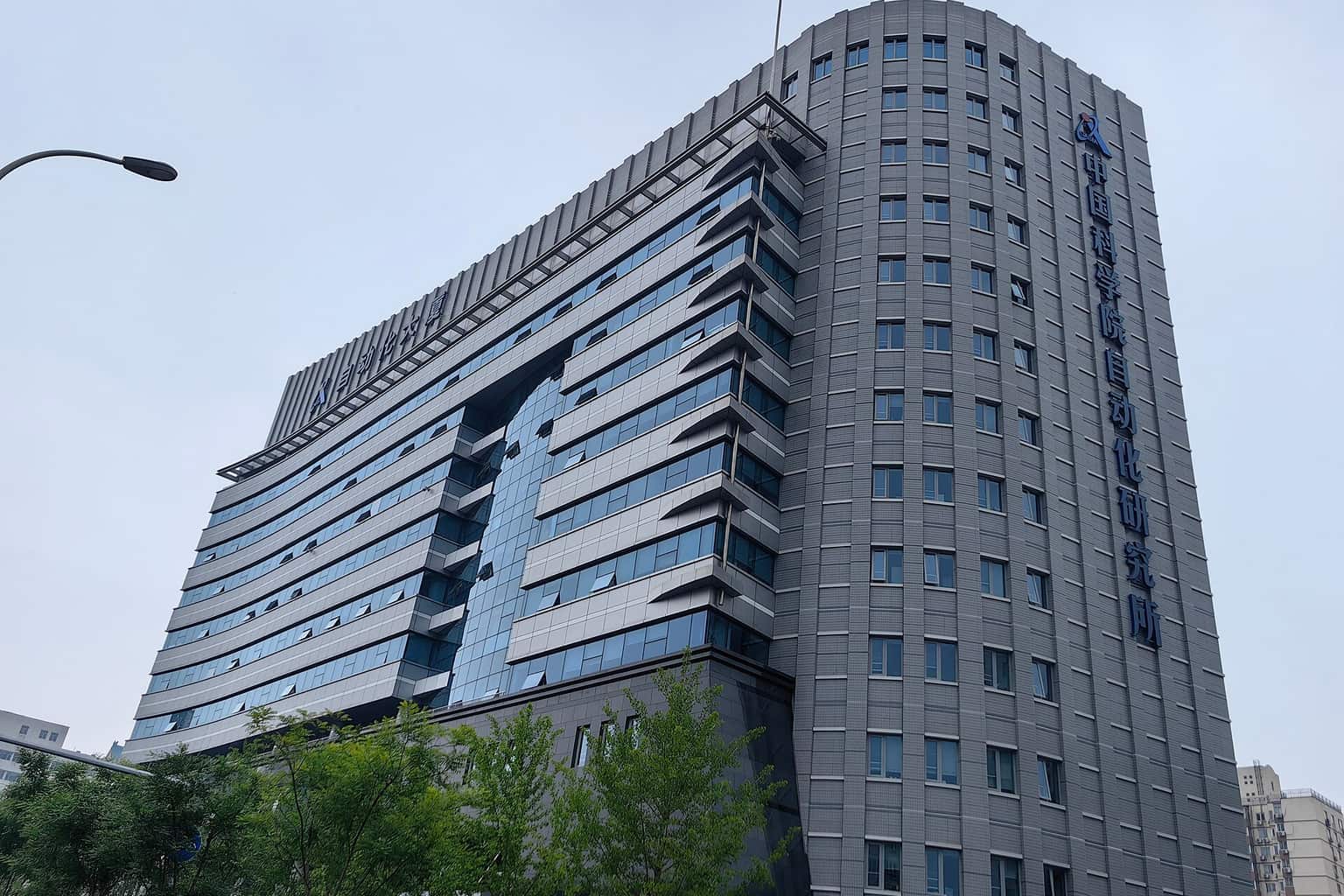
A peg that has to slide into a hole with 0.05 millimetres of clearance leaves almost no room for error. Tilt it slightly and it jams; push too hard and the contact force spikes. At the Institute of Automation of the Chinese Academy of Sciences (CASIA), Long Cheng's team has found a way to give a robot arm that margin back by giving its fingertip a sense of touch. In lab tests, adding tactile feedback raised insertion success at 0.05 mm from 52% to 67%.
The difficulty is partly one of sight. Just as the peg reaches the hole, the gripper and the part block the cameras, so the robot loses the view it needs most. The team therefore splits the task in two. A reaching policy, trained by imitation with a method called Diffusion Policy, grasps a peg placed at random and brings it near the hole. A reinforcement-learning policy, built on Soft Actor-Critic, then performs the insertion and can recover from failures during contact. The actor that runs the robot relies mainly on vision, so the system stays efficient in use; the critic, which judges actions during training, also receives tactile readings. Because each grasp leaves the sensor with a different starting value, the system records a baseline after grasping and before contact, and the critic works on the change from that baseline.
The experiments used a 7-DoF Franka Emika Panda arm fitted with a six-axis PaXini PX-6AX GEN3 tactile sensor at the fingertip, plus two RealSense cameras, one on the wrist and one giving a global view. The sensor was supplied through a research collaboration with PaXini Tech. The team tested five hole shapes (square, round, hexagonal, L-shaped and triangular) at clearances of 1 mm, 0.25 mm and 0.05 mm. Pure imitation learning averaged 76% at 1 mm, but fell to 24% at 0.25 mm and 0% at 0.05 mm. At 0.05 mm, imitation plus reinforcement learning without touch succeeded 52% of the time. With the tactile critic and grouped sampling, which spreads training samples evenly across groups of torque readings so the policy meets a wider range of contact conditions, success rose to 67%, peak interaction force fell 60% and peak torque fell 44%.
For assembly lines working to tight tolerances, the gain shows most clearly at the tightest clearance, where the vision-only approach gave nothing and the tactile version reached 67%. Lower peak forces and torques are the other side of the same result, since the robot pushes less hard when it can feel the contact. The work has been accepted at IROS 2026 and posted on arXiv, but the figures come from the team's laboratory tests, and no date for industrial use has been announced.
The result is a sharper answer to a narrow question: how a robot can feel its way into a hole it can barely see. For now, it is the 0.05 mm figure that carries the story.
Sources — read the originals(Paris time)
Read next
Comments
Loading the thread…
Sign in to leave a comment. Sign in