Finland to test battery-hydrogen hybrid truck on long-haul route
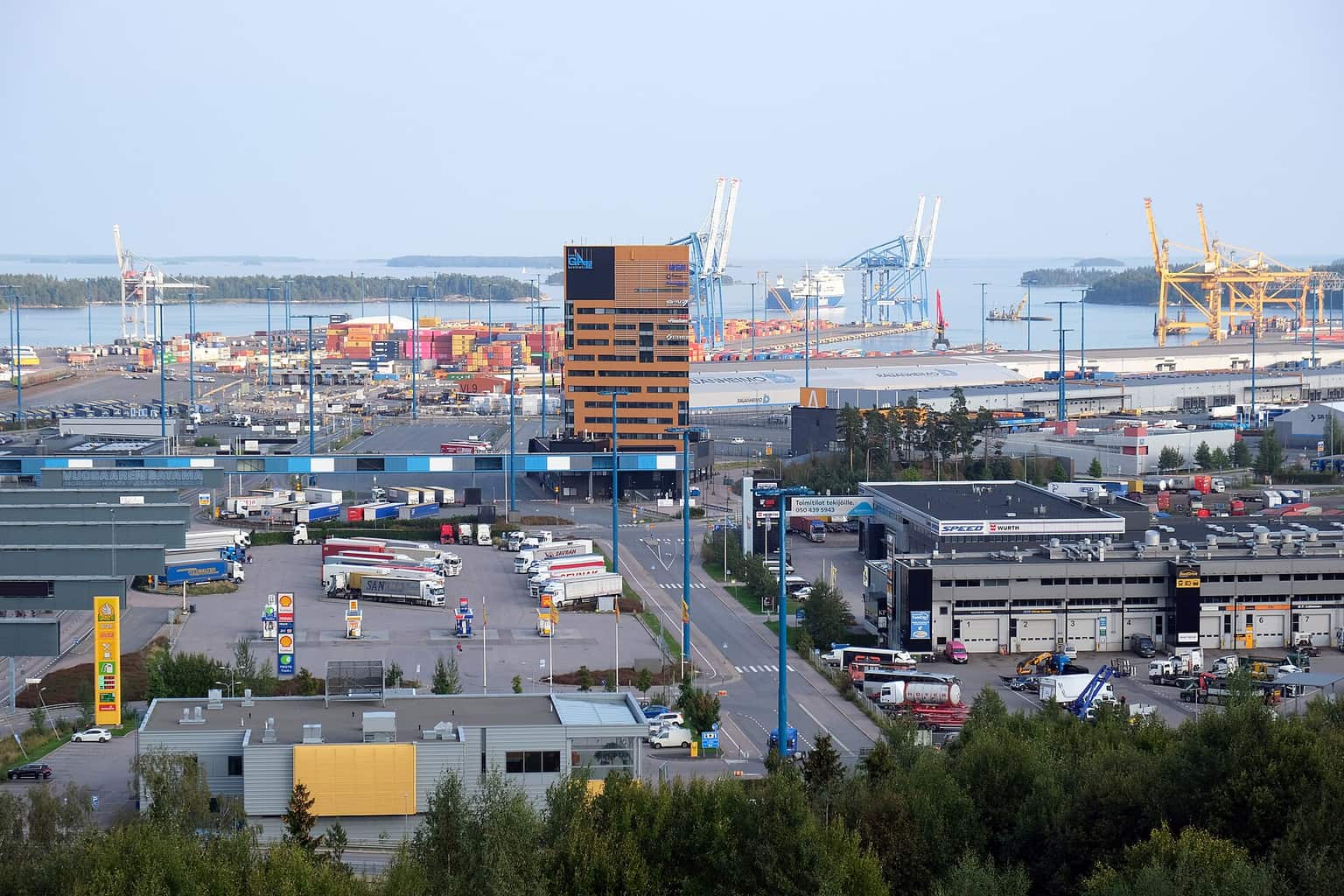
In late 2026, a truck loaded with freight will leave Vuosaari harbor in southern Finland for Jyväskylä in the centre of the country, and every kilometre it drives will be logged. The vehicle is a SISU Escalate, built by Sisu Auto, and it runs mainly on electricity. It carries hydrogen fuel cells as a second source of power, and the pilot project led by VTT Technical Research Center of Finland will track how much of each it uses. The truck will drive 540 kilometres a day, and the team will monitor it for six months through vehicle data and a digital twin.
The design rests on a simple split. The battery is the primary source, with a capacity of 650 kWh. The fuel cell, rated at a maximum of 120 kW, generates electricity from hydrogen and serves as an alternative source for quick refuelling on long-haul assignments. The truck will also take on regional distribution work in the Helsinki metropolitan area. The project brings together several Finnish partners: Sisu Auto builds the vehicle, IONCOR supplies the battery system, Kempower provides the MCS charging equipment and Hevtec handles the vehicle-side charging and the electric powertrain integration. The pilot is part of the EU-funded ESCALATE project, which aims to prove that a zero-emission heavy vehicle can operate reliably in real driving conditions, in support of the EU’s goal of emission-free heavy road freight transport.
Finland is a demanding place for this test. Finnish and Swedish trucks can weigh up to 76 metric tons (84 tons), while articulated trucks elsewhere in Europe tend to weigh about 40 metric tons (44 tons). The pilot limits the gross combination weight to 68 metric tons (75 tons). Among the four trucks piloted across Europe, the SISU Escalate is the heaviest and longest, and Pihlatie, VTT’s research professor, calls its operating environment the most demanding of the four. A vehicle of this size on a winter route is exactly where the battery and fuel cell combination has to prove itself.
For the companies involved, the value lies in the data rather than in a product on sale. Kananen of Sisu Auto says the truck is “not a product that will be launched in the market,” but a test bench for choosing the best solutions for a series developed later. He adds that “hydrogen is, after all, the more expensive fuel,” which is why the team wants to maximise the distance covered on electricity. Kelkka of IONCOR says the pilot aims to show that a lithium-ion battery is viable in these conditions. For logistics operators and charging networks, the six months of readings will indicate where stations are needed and how to plan energy purchases. Neither a series production date nor a price has been announced, and the pilot will only show whether the hybrid approach holds up after the test period ends.
Sources — read the originals(Paris time)
Read next
Comments
Loading the thread…
Sign in to leave a comment. Sign in