GM bets on sodium-ion cells for grid storage, not EVs
The next battery cell GM is developing will never go into an electric car. It is designed for the grid: the large storage batteries that utilities add to support renewable energy and to meet rising electricity demand. GM and Peak Energy announced their partnership in June 2026. GM will develop the sodium-ion cells in its Michigan battery labs and keep exclusive manufacturing rights, while Peak Energy will integrate the cells into its battery storage systems as it ramps up manufacturing in the United States.
Today, most stationary storage runs on lithium-iron phosphate (LFP) batteries. Conventional LFP systems need active cooling equipment to keep temperatures safe, and that equipment adds cost and complexity. Peak's pitch is a passively cooled platform that, according to the company, eliminates those cooling systems entirely. For grid storage, the trade-off is different from cars: energy density matters less than cost, reliability and safety. Sodium-ion can be made from more abundant, lower-cost materials than lithium, which is why GM and Peak see it as a strong fit. Its energy density is too low for EVs, so the bet stays on stationary storage.
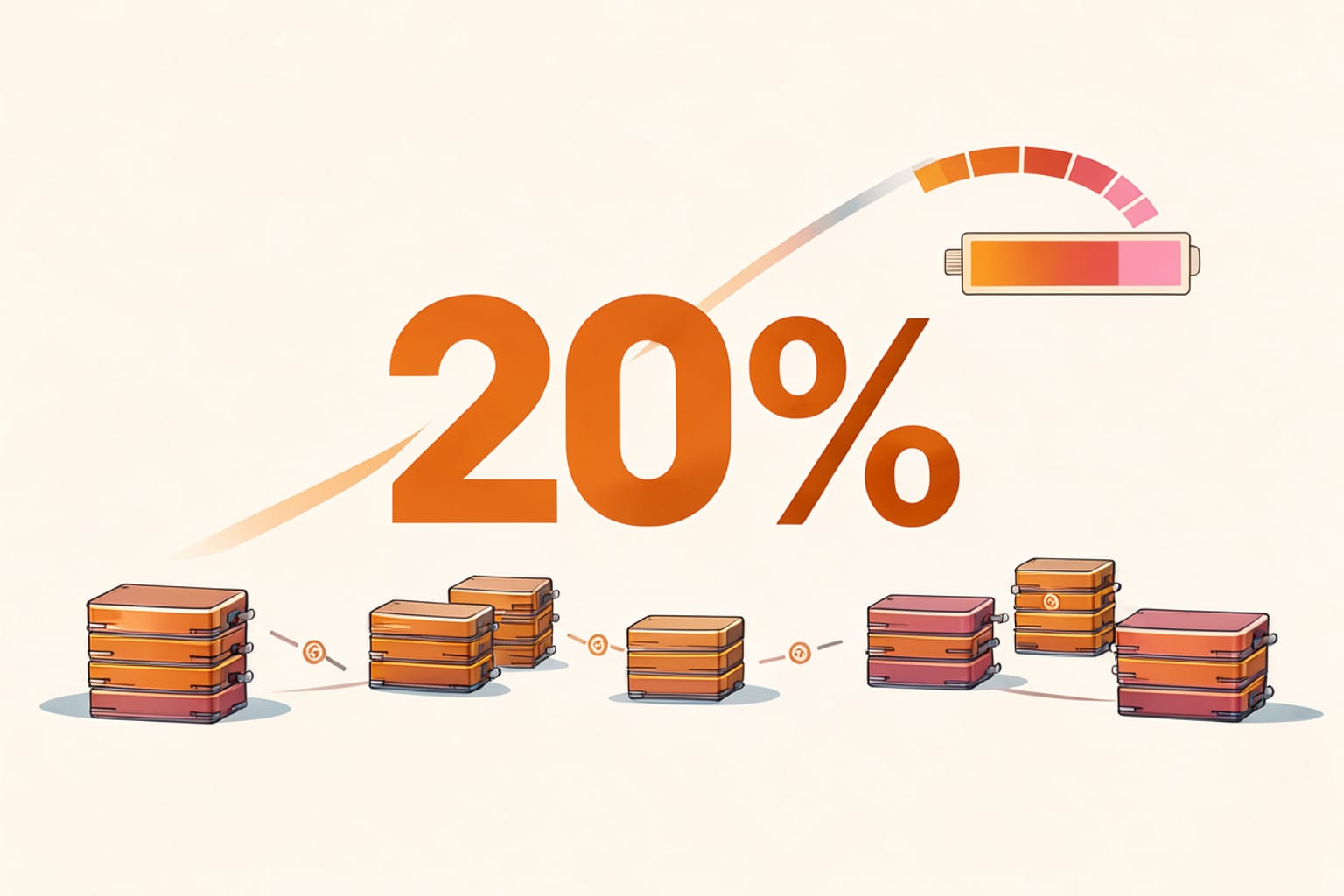
Peak's own figures are the headline. The company claims its platform cuts energy storage costs by 20% compared with conventional systems, while delivering more than 99% uptime. It also estimates that replacing conventional LFP storage with its passively cooled technology could reduce annual battery-storage energy waste in the US by up to 2 terawatt-hours (TWh), enough, in its comparison, to power a mid-sized city for a year. These numbers come from Peak itself.
For utilities, the promise is cheaper storage at a time when demand is growing. Peak also wants to bring its systems to data centers. The startup has raised $108 million in an oversubscribed Series B round led by GM Ventures, with backing from LG Technology Ventures and other investors. The money will go to expanding US manufacturing, fulfilling more than $1 billion in existing customer orders, and entering the data-center market. Neither company has given a date for when the sodium-ion cells themselves will reach the market.
The next milestones are the ones the companies name: scaling US production and delivering the orders already on the books.
Sources — read the originals(Paris time)
Read next
Comments
Loading the thread…
Sign in to leave a comment. Sign in