Greek CubeSat ERMIS-3 completes first laser link to ground
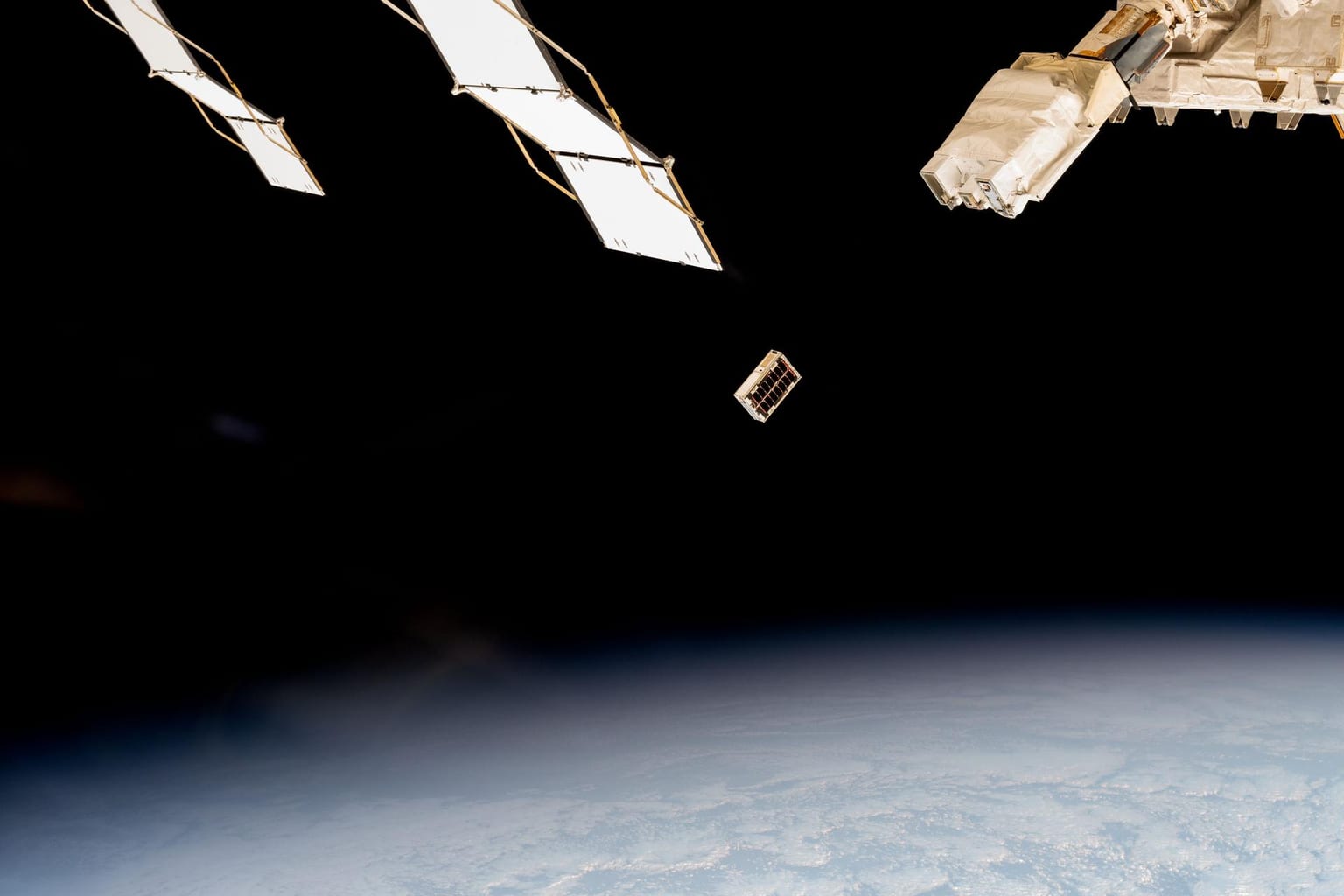
Only weeks after its commissioning, the ERMIS-3 CubeSat made contact. The 8U satellite, developed by the National and Kapodistrian University of Athens, locked a laser beam onto a ground station in Greece, and the link was established quickly.
Unlike conventional radio-frequency links, optical links use a narrow laser beam, which enables high data rates but makes the connection hard to hold. The satellite moves through orbit at several kilometers per second, so the beam has to be aimed precisely at the receiver, and both terminals must acquire the signal and track each other during a limited communication window. Clouds can block the link entirely, and turbulence in the atmosphere can degrade signal quality. One of the mission's main objectives was precise pointing, acquisition and tracking (PAT), and the link demonstrated it.
The satellite carries Astrolight’s ATLAS-1 optical terminal, from the Lithuanian company Astrolight, paired with a terminal at the ground station. The ground station, HolOGS-1, is the Holomondas Optical Ground Station, developed by the Aristotle University of Thessaloniki. ESA supported the mission with environmental testing and optical alignment at its ESTEC center in the Netherlands, and the mission is part of Greece’s National Space Program, implemented by ESA on behalf of the Greek government. ERMIS-3 was launched on March 30, 2026, alongside ERMIS-1 and ERMIS-2, as part of an in-orbit demonstration program testing communication technologies for small satellites. “This is an important milestone for AUTh and for optical communications in Greece,” said professor Kleomenis Tsiganis, head of SSA and OGS activities at the university, adding that it marks the first successful optical link with a LEO satellite from Greece.
The demonstration matters beyond the record. Earth observation missions now produce high-resolution and hyperspectral imagery that must be sent to the ground, and optical links could help move that growing volume of data. The announcement does not give a data rate, the duration of the link, or the number of passes achieved, so the size of that gain remains to be measured. What the result does show is that a laser terminal can be carried by a CubeSat and lock onto a ground station in orbit. The announcement presents it as an important step in validating optical communications on small satellites. The principal investigators, Vaios Lappas and Antonis Paschalis, said the link opens “new capabilities and opportunities for secure communications for small satellites within the European ecosystem.”
Sources — read the originals(Paris time)
Read next
Comments
Loading the thread…
Sign in to leave a comment. Sign in