Harvard team sets battery target for solar planes at 500 Wh/kg
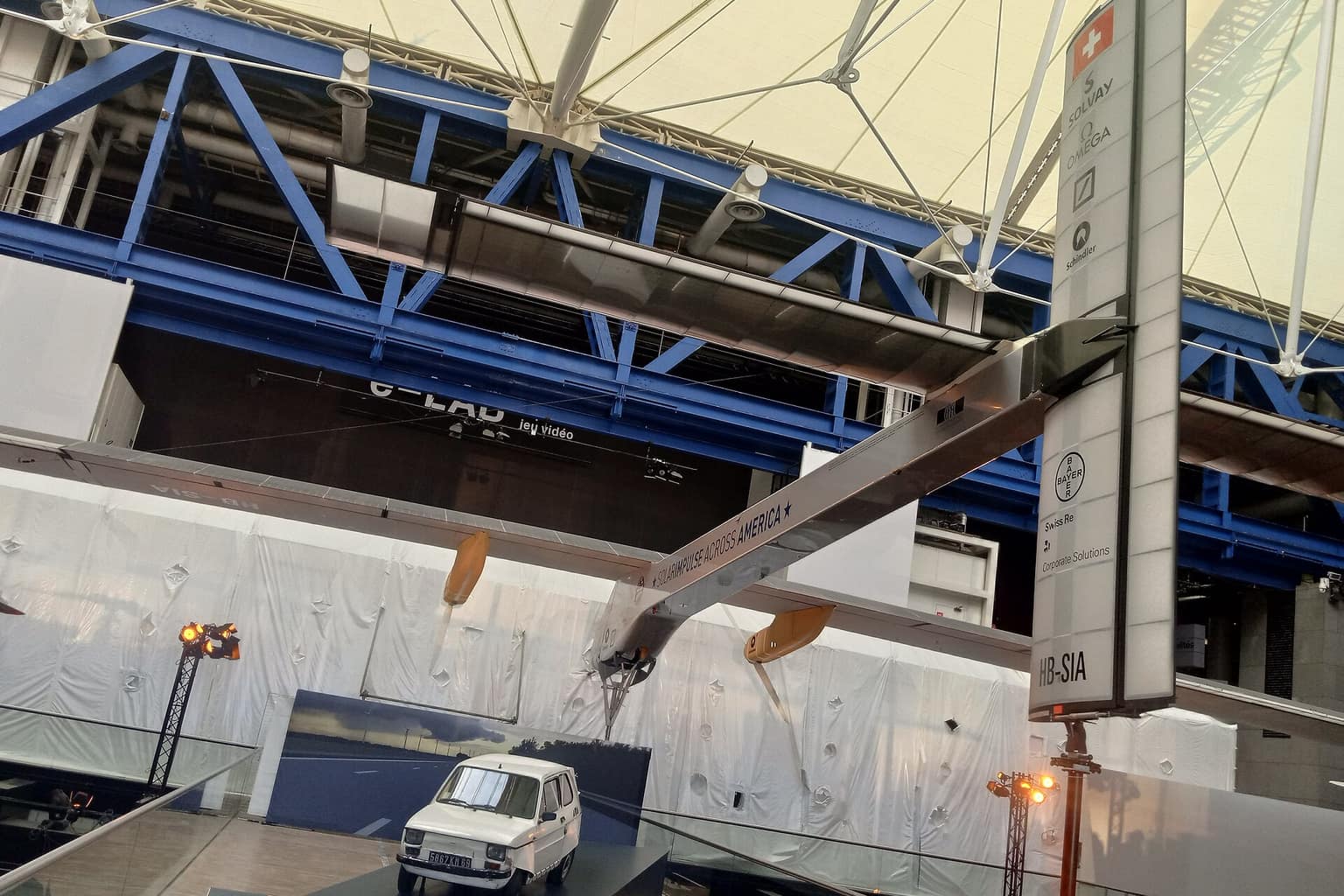
A pilotless airplane, powered by sunlight, cruises through the stratosphere for weeks or months and watches the planet from above. Not long ago it was only an idea. Now these high-altitude aircraft are moving from prototype demonstrations toward possible commercial work, and a paper from researchers at Harvard's John A. Paulson School of Engineering and Applied Sciences sets the number their batteries must reach to make long flights practical: 500 watt-hours per kilogram, the energy a battery stores for each kilogram it weighs.
The mechanism is simple to describe and hard to satisfy. These planes bank excess sunlight during the day to charge their batteries, then fly on that stored energy at night, at roughly twice the 9,100-meter cruising altitude of commercial jets. A heavier battery needs more lift, which needs more power, which needs more energy stored. "It's this circular mathematical relationship where you need more energy storage, but the batteries become heavier, so now you need more power to push it through the air to get more lift," Craig Mascarenhas explained. The analysis puts the threshold at the point where that loop closes for persistent flight.
Today's cells fall short of that line, but not by much. Commercial electric-vehicle batteries sit in the roughly 250 watt-hour per kilogram range, while experimental or specialty cells in the 400 watt-hour per kilogram range are already available. Those cells are expensive, Mascarenhas said, "but they're getting cheaper very quickly." The paper also reverses a habit of battery engineering. Because these aircraft need very little power but a great deal of energy to stay aloft, developers should put energy density first, rather than optimizing energy and power density equally.
The work comes from Jim Anderson's group, which has studied solar aircraft concepts for three decades and heads the Harvard branch of SACOS, the Stratospheric Airborne Climate Observing System. Co-authors Venkatasubramanian Viswanathan and Shashank Sripad contributed battery science, and John Langford, an aerospace entrepreneur whose companies have built and flown experimental solar aircraft, is a co-author. The 500 watt-hour figure is a target set by analysis, not a battery built to meet it, and the cells available today have not yet reached it.
A solar aircraft that stays aloft for months could give researchers what the NASA ER-2 cannot. That high-altitude research plane carries a pilot and flies only six to eight hours at a stretch, at tens of thousands of dollars per hour of flight time. A solar aircraft could repeatedly monitor the same location, with fewer staff and lower operating costs, for uses ranging from new atmospheric chemistry to hurricane tracking. Mascarenhas is most drawn to wildfires: "I'm passionate about reducing the damage and destruction from wildfires across the world." The next step is already under way. Anderson and Mascarenhas are leading work on deep-learning and radiative transfer models for wildfire mapping and environmental sensing, built on the stratospheric observation the paper describes.
Sources — read the originals(Paris time)
Read next
Comments
Loading the thread…
Sign in to leave a comment. Sign in