In a lab, light and sound couple strongly inside an optical fiber
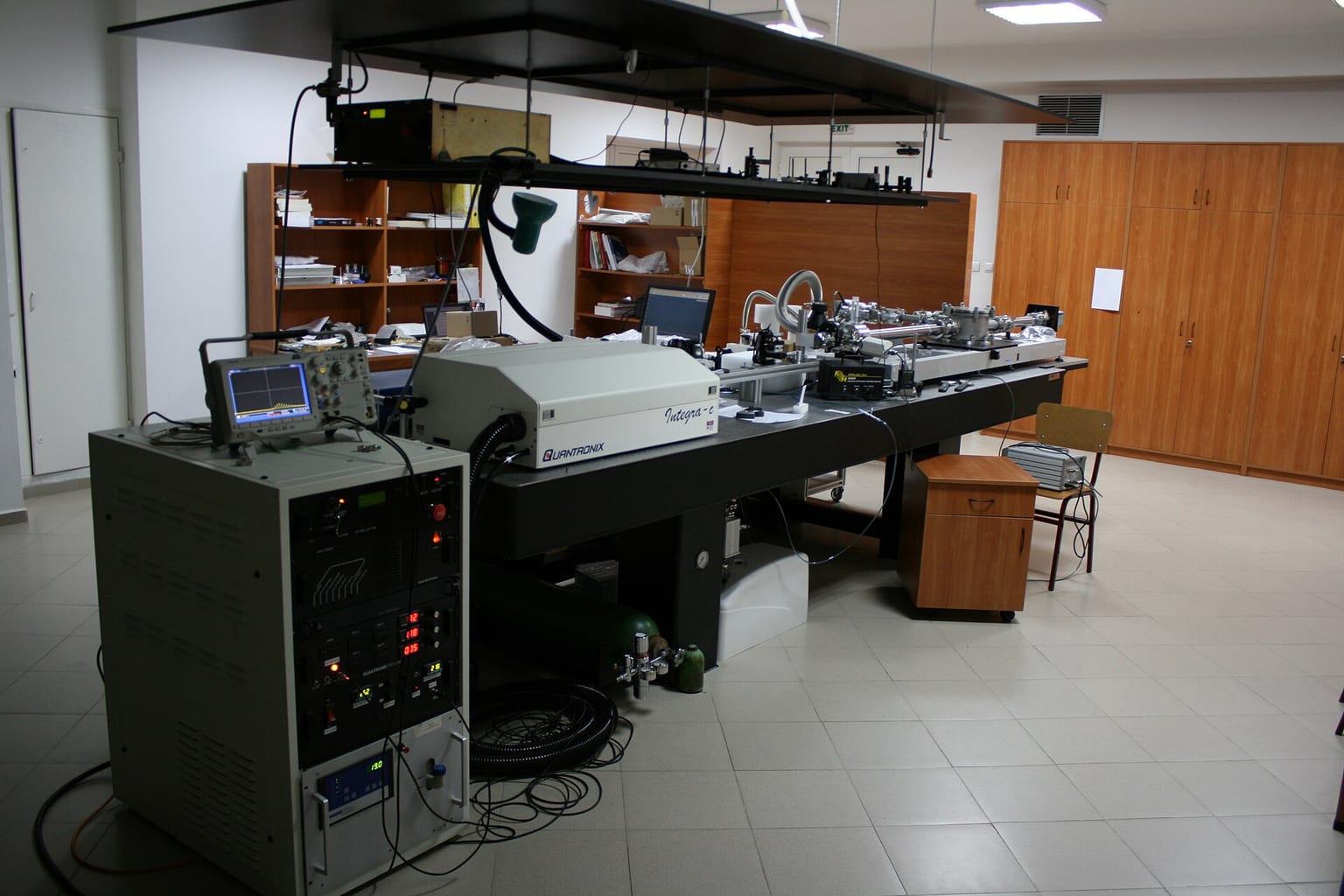
Light travelling down an optical fiber normally meets each vibration in the glass once and moves on. On that single pass, a strong exchange between light and vibration is extremely difficult to achieve. At the Max Planck Institute for the Science of Light and Leibniz University Hannover, the team led by Birgit Stiller has now achieved it inside a cooled fiber, for the first time, and the work is published in Nature Physics.
The term is “strong coupling”: a quantum exchange between two systems that happens faster than the noise destroying it. Information is passed on before it is lost to losses and decoherence, the drift that makes waves stop oscillating in unison. Until now, this regime had been reached only in optomechanical cavities, which the authors compare to racetracks, where light circles up to a million times and meets the same vibrations again and again. A fiber is a highway: the light crosses the vibrations once.
The interaction is stimulated Brillouin scattering, in which light in the fiber couples with the acoustic vibrations of the glass. The team cooled the fiber to 4 K and worked without any optical or mechanical resonator. Their proof is a gap in the spectral response. Laura Blázquez Martínez, first author of the study, says this gap, the clearest sign of strong coupling, is normally visible only in resonators. The new measurement technique makes it visible in a fiber, and the authors present it as a proof of concept.
What it changes, and for whom. Fibers already carry the bulk of the telecommunications system, and Stiller presents them as a platform for quantum measurements that is already installed. The team sees them as links between quantum computers and, in the future, as quantum processors themselves. No device, timeline or commercial partner is announced. The work is a step in the lab, and the researchers say so.
The limits are the setting and the scale. The measurement was made at 4 K, a cryogenic temperature, in a single pass through the fiber. The team does not say whether the effect has been reproduced outside its own experiment, or under conditions closer to those of a telecom network. The authors also point to the fiber's mass, far greater than that of the micro-resonators used so far, as a route to studying quantum properties of larger objects. That question is still open.
Comments
Loading the thread…
Sign in to leave a comment. Sign in