In lab, cheap nickel electrode cuts hydrogen catalyst cost 99%
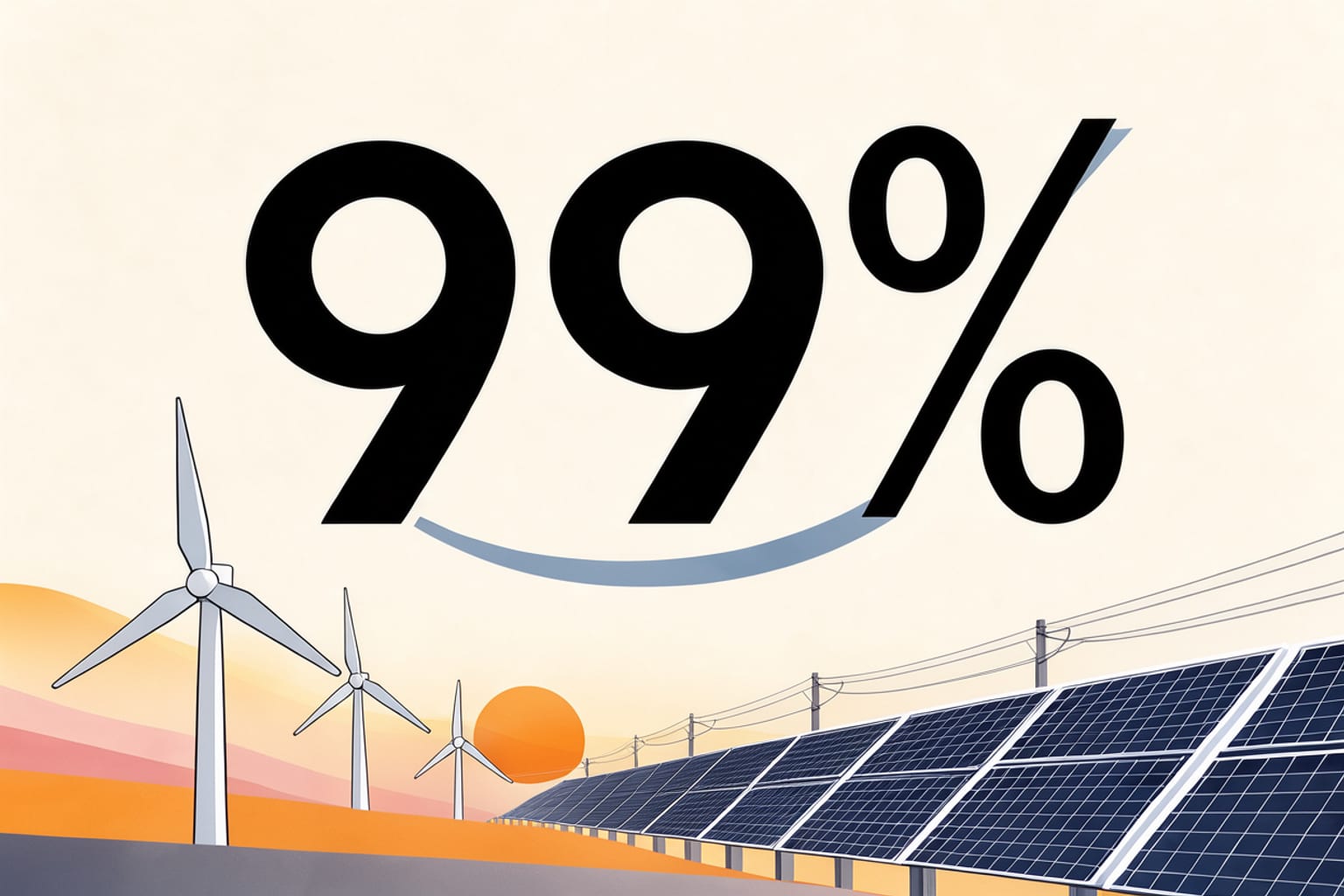
In a Korean laboratory, a sheet of nickel and cobalt is doing a job that platinum has done for decades. The electrode splits water into hydrogen and oxygen, and the team at the Korea Institute of Energy Research (KIER) says it does so for 99% less material cost than noble-metal electrodes. Dr. Kyung-Soo Kang and Dr. Hyun-Jun Lee lead the work, published in Advanced Science. By the researchers' own price figures, nickel costs about $0.02 per gram and cobalt about $0.05, against roughly $58 for platinum and $54 for ruthenium.
The problem being solved is slow chemistry. Alkaline electrolysis is the variant best suited to large plants because its equipment is comparatively cheap. But water splits more than 100 times more slowly under alkaline conditions than in acidic ones, so the reaction needs a catalyst. Platinum and ruthenium supply that speed, and their price is what has kept the process from scaling. KIER's answer is an electrode built from two layers of activity on one surface: nickel oxide, which speeds the breaking of water molecules, and a nickel-cobalt alloy, which helps the hydrogen form. The step that limits the whole reaction is water splitting, and the oxide targets that step directly.
The numbers are measured on the team's own equipment. The electrode delivers hydrogen output equal to a conventional platinum electrode at roughly 40% of the overpotential, the extra voltage a reaction needs beyond its theoretical minimum. The team says this places it among the best non-noble alkaline electrodes reported over the past three years. In an 8.7-centimetre unit cell, cell voltage was 11% lower than a cell with a conventional nickel electrode. After 600 start-stop cycles, performance stayed stable, a test meant to mimic a plant that runs on intermittent wind or solar power.
For a reader, the point is what this could change in the price of green hydrogen. The team says the technology could let South Korea source the core materials of alkaline electrolysis at home, since the sector has relied heavily on imports, and could lower production costs. Lee says the team has fabricated 40-centimetre electrodes and is optimizing the process for commercial mass production, with a next target of 5,000 cm² for megawatt-scale systems. The publication gives no dates for that step, and the figures so far come from the laboratory. A cell in a lab is not a plant running for years, and a 99% cut in material cost does not by itself mean a 99% cut in what the hydrogen costs to make. Those are the tests that still lie ahead.
Comments
Loading the thread…
Sign in to leave a comment. Sign in