In lab, stem-cell heart cells with doubled chromosomes beat harder
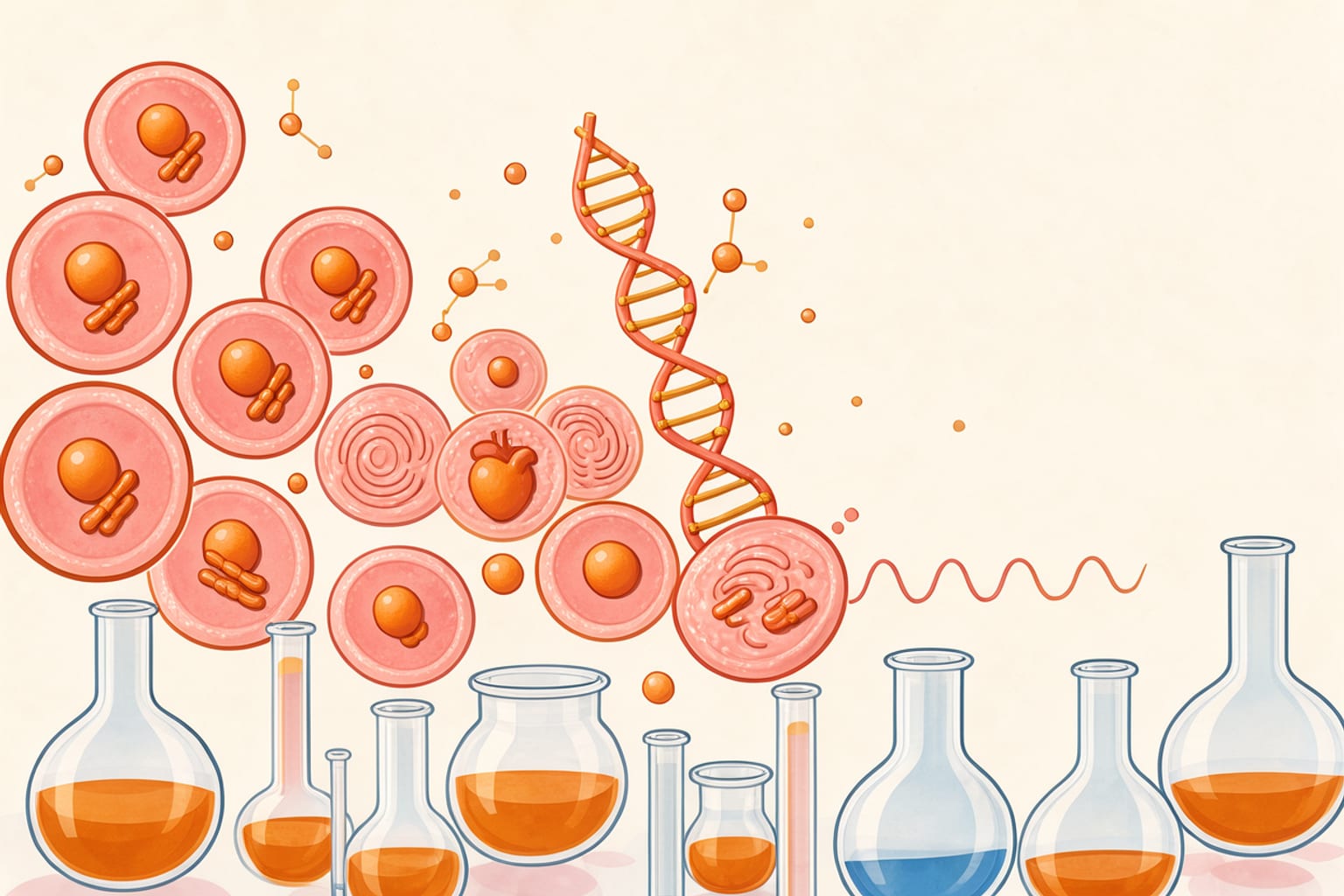
Heart cells grown in a dish from stem cells have stayed stuck in a fetal state. A team at the Tokyo Metropolitan Institute of Medical Science has found a way to push them toward maturity: doubling their chromosomes before they become heart cells.
iPS cells, for induced pluripotent stem cells, are made from adult body cells and can become almost any cell type. Normal iPS cells are diploid, with two copies of each of the 23 chromosome pairs. In the human body, however, heart cells undergo polyploidization as they mature, so that about 80% of adult cardiomyocytes are tetraploid, with four copies of each chromosome. Cardiomyocytes made from ordinary iPS cells mostly stay diploid and miss that step. The team, led by Yuichiro Miyaoka, fused iPS cells to create tetraploid iPS cells, then differentiated them into cardiomyocytes.
The result was measurable. Cells derived from tetraploid iPS cells were visibly larger, showed an increase in mitochondrial mass, and had enhanced mitochondrial function. Their beating, recorded by electrical impedance, showed higher peaks and a faster rise to those peaks, which the researchers read as stronger and quicker contraction. The study, with Ittetsu Nakajima and Mitsuyoshi Shimane of Nanion Technologies Japan K.K. among its authors, was published online in Communications Biology on August 17, 2026.
What changes is who can use these cells. The authors expect the approach to serve transplantation therapies for heart failure, the testing of efficacy and safety of new drug candidates, and disease models for studying how heart diseases develop. Transplantation with iPS-derived cardiomyocytes already has clinical trials underway, so cells that behave more like adult heart tissue would address the problem those trials have been running into. The study gives no timeline for when such cells could reach patients.
For now, the result stays in the dish. It shows that a maturation step missing from cultured heart cells can be restored inside the cells themselves, and that the restored step brings measurable gains in how the cells contract.
Sources — read the originals(Paris time)
Read next
Comments
Loading the thread…
Sign in to leave a comment. Sign in