In mice, first atlas maps blood proteins that enter the brain
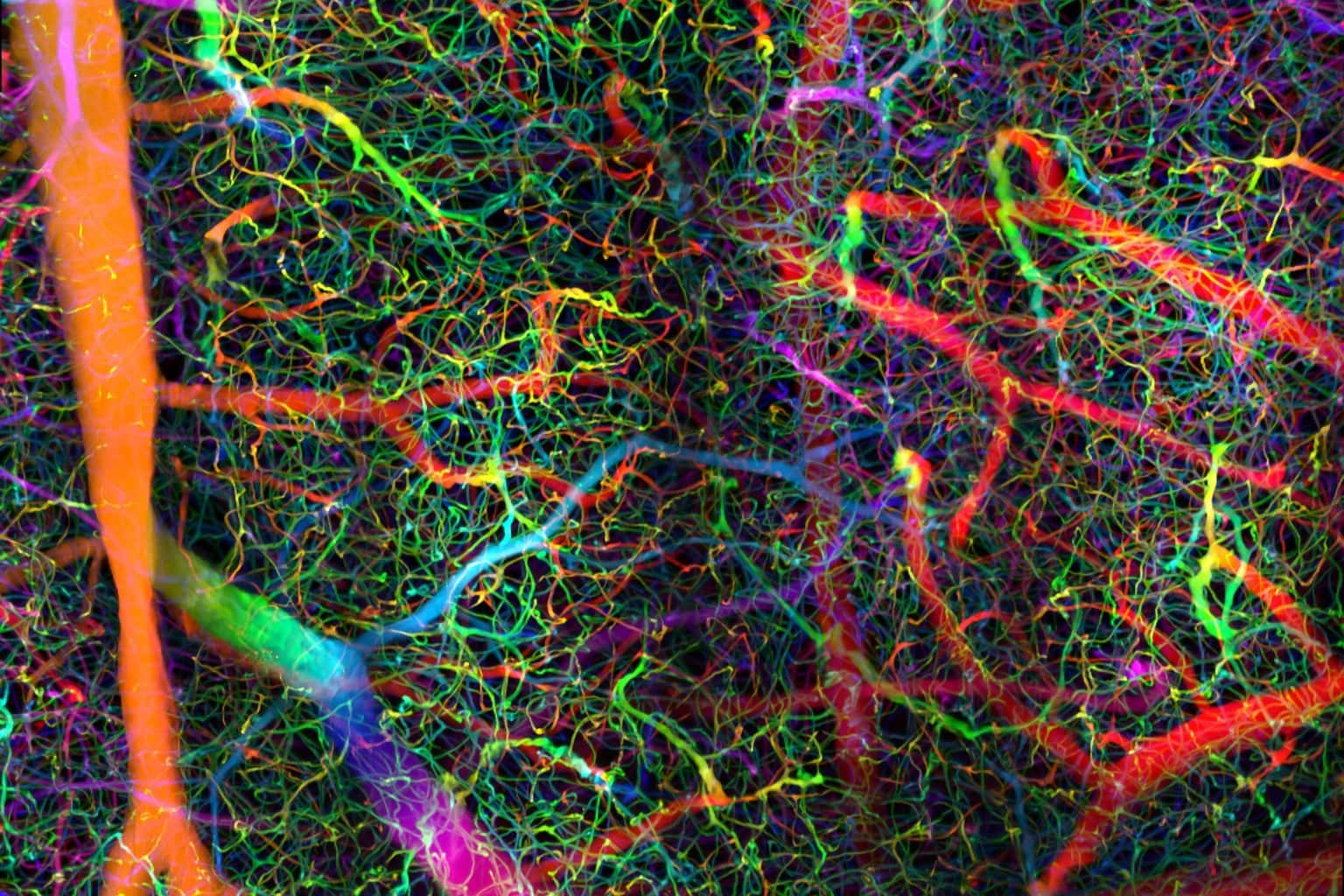
Your brain sits behind a wall made of the cells that line its blood vessels: the blood-brain barrier. For a century, Andrew Yang says, that wall was treated as a simple shield against toxins. His team at the Gladstone Institutes has now mapped something more selective. Reported in the journal Cell, the first atlas of these proteins lists 92 blood proteins that cross into the brain, identified in mice.
To find them, the researchers used a labeling method built on Nobel Prize–winning protein chemistry, which tags blood proteins without disrupting them. Older techniques were inefficient and risked interfering with the body's own processes. The team labeled the full set of mouse blood proteins, 861 in total, injected them back into the animals, and then checked which tagged proteins had reached the brain. Only 92 made it through. Most came from distant organs, especially the liver.
The team also found that each protein goes to a specific place. APOA1, or apolipoprotein A1, is made in the liver and travels to astrocytes, the brain cells that support neurons. Once there, it activates a pathway that keeps connections between neurons healthy. Haoyue Zhou, the first author, calls this a molecular ZIP code. Earlier work had already linked failure of this pathway to a higher risk of Alzheimer's disease, which suggests that signals from the rest of the body may matter for brain function.
In Alzheimer's disease, the barrier is known to break down late and leak harmful proteins into the brain. The Gladstone team found an earlier failure. In a mouse model of the disease, the barrier stopped importing protective proteins such as APOA1 before it started leaking, and that change came with eroded neuronal connections and behavioral changes. When mice were engineered to make extra APOA1 in the liver, more of it crossed into the brain and the animals showed fewer signs of the disease.
What changes now is the map and the hypothesis. The atlas gives researchers a list of 92 proteins to study, and the team suggests that the disease might be fought from outside the brain by restoring what the barrier has stopped delivering. But the work is in mice. Kantan News notes that its equivalence to human biology still has to be verified, and no human study or treatment timeline is reported. Zhou puts it simply: "That's just the beginning of the story."
Sources — read the originals(Paris time)
Pages consulted while writing
Read next
Comments
Loading the thread…
Sign in to leave a comment. Sign in