In the lab, a chip reads hidden stability in light waves
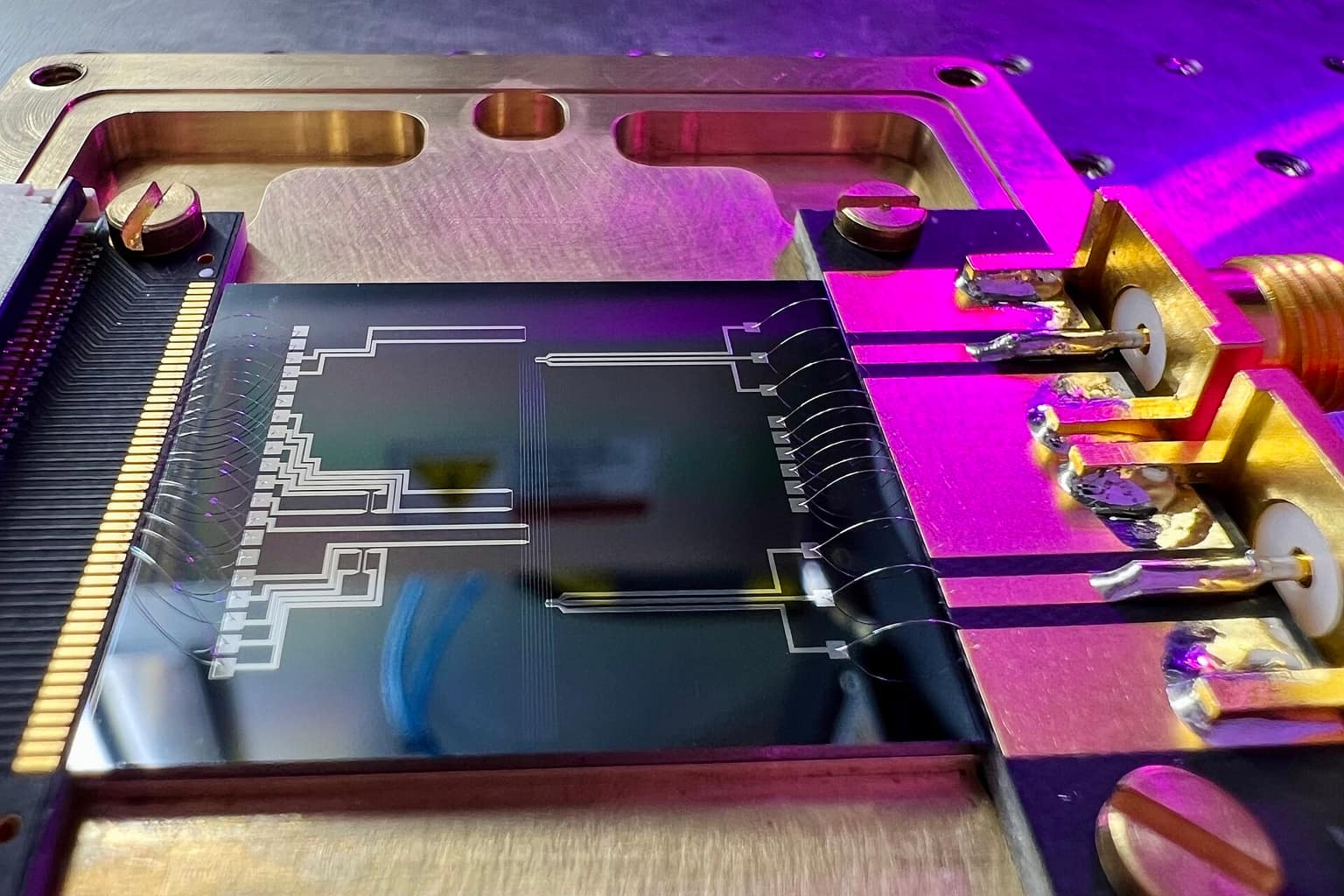
Stretch a knot in a rope, twist it, shake it: it holds until someone cuts the rope. That is how Ali Elshaari, an associate professor at KTH Royal Institute of Technology, explains topology to his students. A team at KTH, with doctoral student Andrea Cataldo as lead author, now reports a light-based chip that can read that kind of knot in the way waves move, in a study published in Physical Review Letters.
The problem is the imperfection of real hardware. Optical fibers, chips and other light-guiding devices are never flawless: minor defects scatter photons and push them off their path. Some wave behaviours survive such flaws. Physicists call these features topological properties, meaning wave features that do not change even when a system is altered. The catch is energy loss. As Cataldo puts it, “every system loses some energy”, and that loss can mask the very stability engineers are looking for. The question is how to study these properties under realistic conditions.
The team's answer is a programmable chip that imitates such lossy systems. Cataldo describes a “mathematical trick” that runs the lossy system on the chip without actually losing the signal. The researchers then compare the light against reference beams, an approach he likens to tuning an instrument against a reference note. In the experiments, the chip reliably distinguished the topological cases from ordinary ones. It also detected an exceptional point, a special condition where energy-losing systems behave in unusual ways.
The result comes with limits. The demonstration is a laboratory device, the study gives no figures on the chip's size or performance beyond the cases it tests, and no date is given for any practical use. The work also appears as an arXiv preprint alongside the journal version, which is how a reader can check the original text before it is cited elsewhere.
For engineers, the gain is speed. Because the chip is reprogrammable, many different scenarios can be tested on one device, instead of building a new setup for each. The authors say the method could speed up the search for new electronics and optical technologies and contribute to more reliable quantum devices. The first beneficiaries would be research groups designing materials and quantum hardware, not consumers. The study gives no timeline for when such work would reach a product.
Comments
Loading the thread…
Sign in to leave a comment. Sign in