In the lab, octopuses change tactics to fit through tight gaps
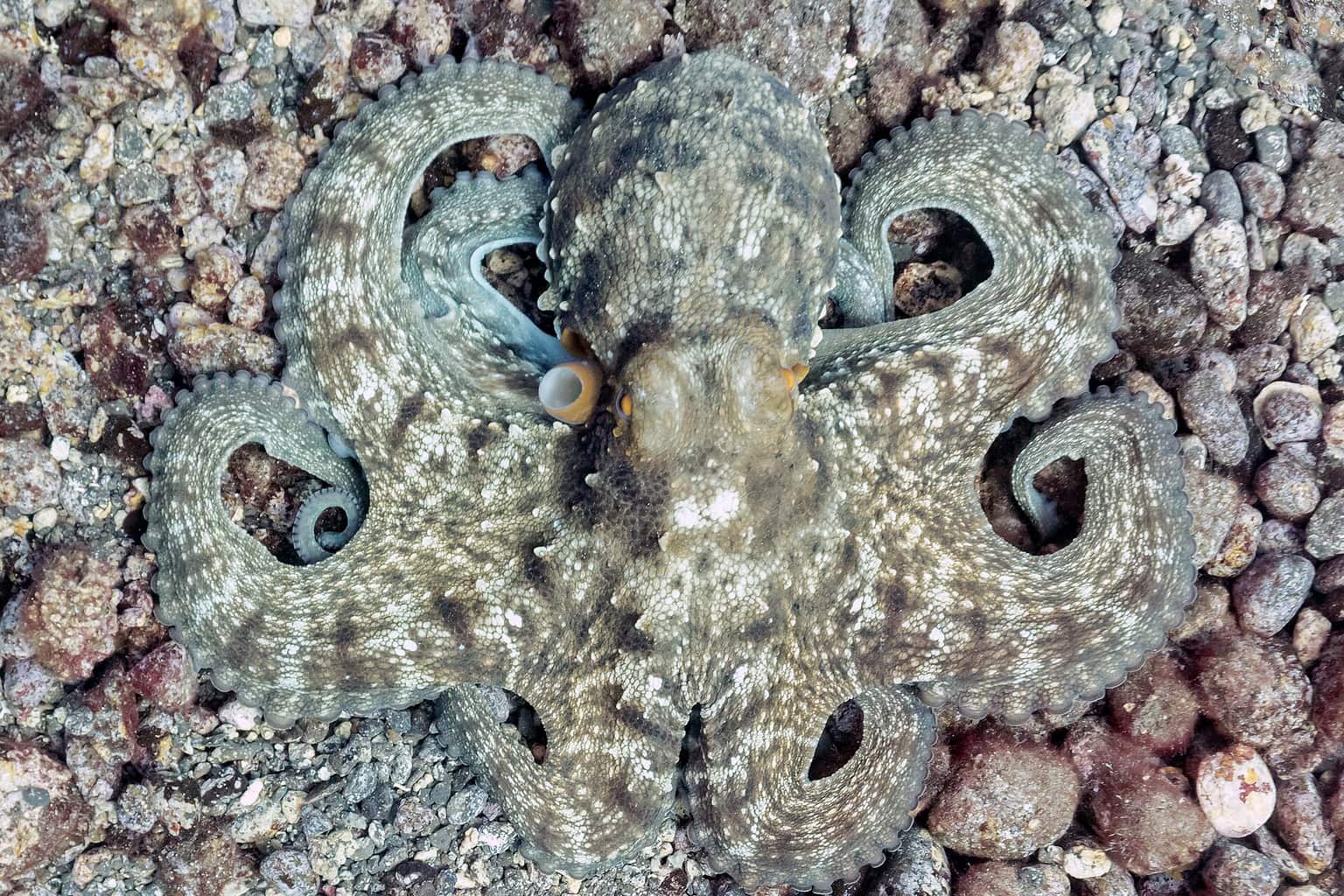
Most rescue robots that enter collapsed buildings are built like snakes: long, slender bodies that slide into narrow gaps. An octopus takes the opposite route. New research shows that common octopuses can slip through openings smaller than their own bodies, and that they change tactics depending on how tight the squeeze is.
The study, published in the Journal of Experimental Biology, was led by Wenci Xin of the National University of Singapore, with Michael Kuba of the University of Naples Federico II and Tamar Gunit and Daniel Abed-Navandi of Austria's Haus des Meeres-Aqua Terra Zoo. The team filmed young common octopuses and Mayan octopuses escaping from clear plastic boxes through holes of different sizes. Nobody had examined exactly how the animals manage gaps far narrower than their mantles.
To set the test, Kuba measured the distance between each animal's eyes, which ranged from 15 to 35 millimeters. That span is a good stand-in for the size of the stiff cartilage sheath that encases the central nervous system, which could set the smallest hole an octopus can pass. Xin then built boxes with a hole slightly wider than that spacing, and others 5 millimeters narrower.
In the roomier opening, each octopus first explored the edge with its arms, pushed one of its front left arms through, then threaded up to five more behind it. It reached back with two arms already on the far side, pressed their suckers against the partition, and used them to haul the remaining arms, head and mantle through. The whole move took about 20 seconds.
The tighter hole changed the routine. Common octopuses could thread only so many limbs through at once, so they split the final move into two stages: first pulling the remaining arms across, then slightly compressing the mantle and dragging it after. Xin said he was surprised, since the team had expected the same approach whatever the gap. Mayan octopuses behaved differently: they ignored the tight hole and sat in a corner, and when offered both openings they tried the small one, abandoned it, and left through the larger.
For robotics, the point is the body plan. Xin and Laschi want to turn these movements into soft-bodied robots that search disaster ruins and explore the open sea. Today's rescue robots must stay slender to fit through gaps, which limits the sensors and manipulators they can carry. A machine that can change shape, as Xin puts it, "almost like water", could pass where its size would otherwise block it. The study used young animals in boxes, so it does not show how adults or wild octopuses behave, and no date is given for such robots.
Sources — read the originals(Paris time)
Read next
Comments
Loading the thread…
Sign in to leave a comment. Sign in