In the lab, printed tetrapods stiffen silicone up to 12.8 times
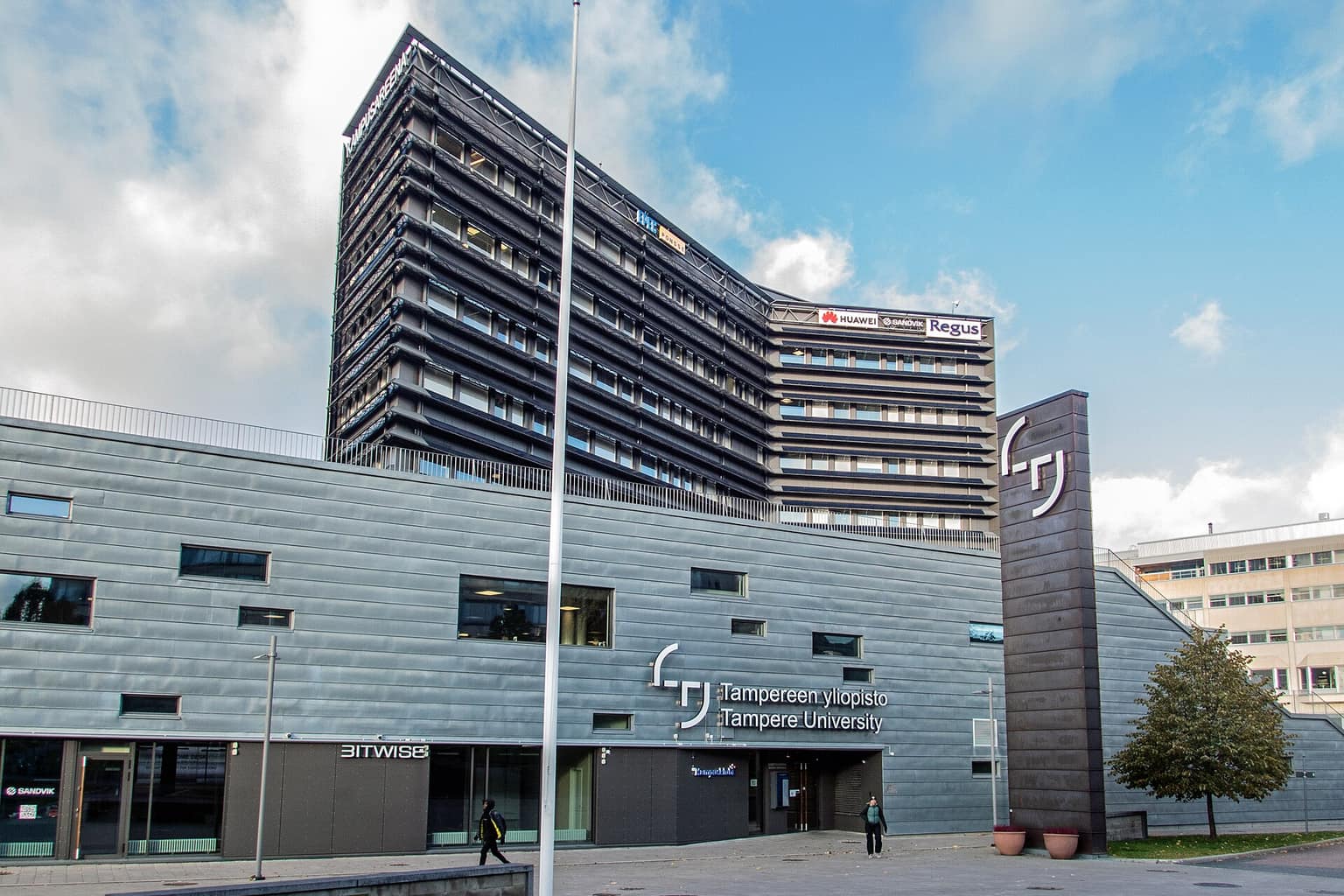
Four arms, each a fraction of a millimetre long, and a block of silicone that becomes up to 12.8 times stiffer. That is the result reported by researchers at Tampere University in Materials & Design. The team, led by postdoctoral researcher Adel Badria, used high-resolution 3D printing, known as digital light processing (DLP), to make large batches of identical submillimetre particles, cubes and four-armed tetrapods, and embedded them in silicone. Shape changed the outcome: the tetrapods reinforced the rubber more than cubes of matching size, even per unit of filler.
Fillers are particles mixed into a material to change how it behaves. Until now they have mostly come in simple forms, spheres, plates or fibres, determined by how they are synthesised or milled, and usually sold in a range of sizes. Complex shapes at this scale were hard to obtain: they are too big for chemical synthesis and too small for machining. As a result, their effect on composites had rarely been studied in a controlled, repeatable way.
The tests were compression tests on silicone composites. Tetrapods gave the strongest reinforcement. The largest cubes reinforced least, yet they were the only particles to show a reproducible stress plateau under compression, a behaviour no other geometry reproduced. A preprint version of the paper's abstract gives the tetrapod gain as 'up to 12-fold', while the published coverage gives 12.8 times.
The tetrapod advantage is not entirely new. An earlier study in PLOS ONE, from Christian-Albrechts University, tested tetrapod-shaped zinc oxide particles in silicone rubber and found that they improved stiffness significantly more than other fillers. What the Tampere team adds is the fabrication: shapes printed to specification, batch after batch, and a systematic method to compare geometries fairly, by normalising stiffness to the physical amount of filler and by describing how each composite fractures.
For engineers, the gain is in the design step. They can choose a shape as well as a material, and obtain different stiffness and deformation from the same base material. Badria expects the fundamental work to inspire applications in soft robotics, where components need tailored stiffness, in biomedical materials and devices with stiffness matched to tissue, and in printed scaffolds for tissue engineering. These remain lab results on silicone samples, and no timetable has been announced for those uses. For Badria, the question has changed: it is no longer only what a filler is made of, but what shape it should take.
Sources — read the originals(Paris time)
Pages consulted while writing
Read next
Comments
Loading the thread…
Sign in to leave a comment. Sign in