Junen Hybrid Battery Hits Mass-Production Standard for Robots
One premium humanoid robot priced at nearly 1 million yuan can run out of power within two or three hours. Full-size humanoid robots currently last 2 to 4 hours, and most products have battery capacity under 2 kWh. Unitree (宇树) H1 carries a 0.864 kWh battery and has static endurance of under 4 hours; Tesla Optimus Gen2 has a 2.3 kWh battery and dynamic endurance of about 2 hours.
Endurance is also undermined by joint power consumption. Robot joints mostly lack mechanical self-locking, so even just standing to maintain balance, the whole machine draws 200 to 300 watts. The torso is packed with joints, motors and controllers, leaving no room to simply enlarge the battery. The heavier the battery, the higher the center of gravity, and the harder dynamic balance becomes to maintain.
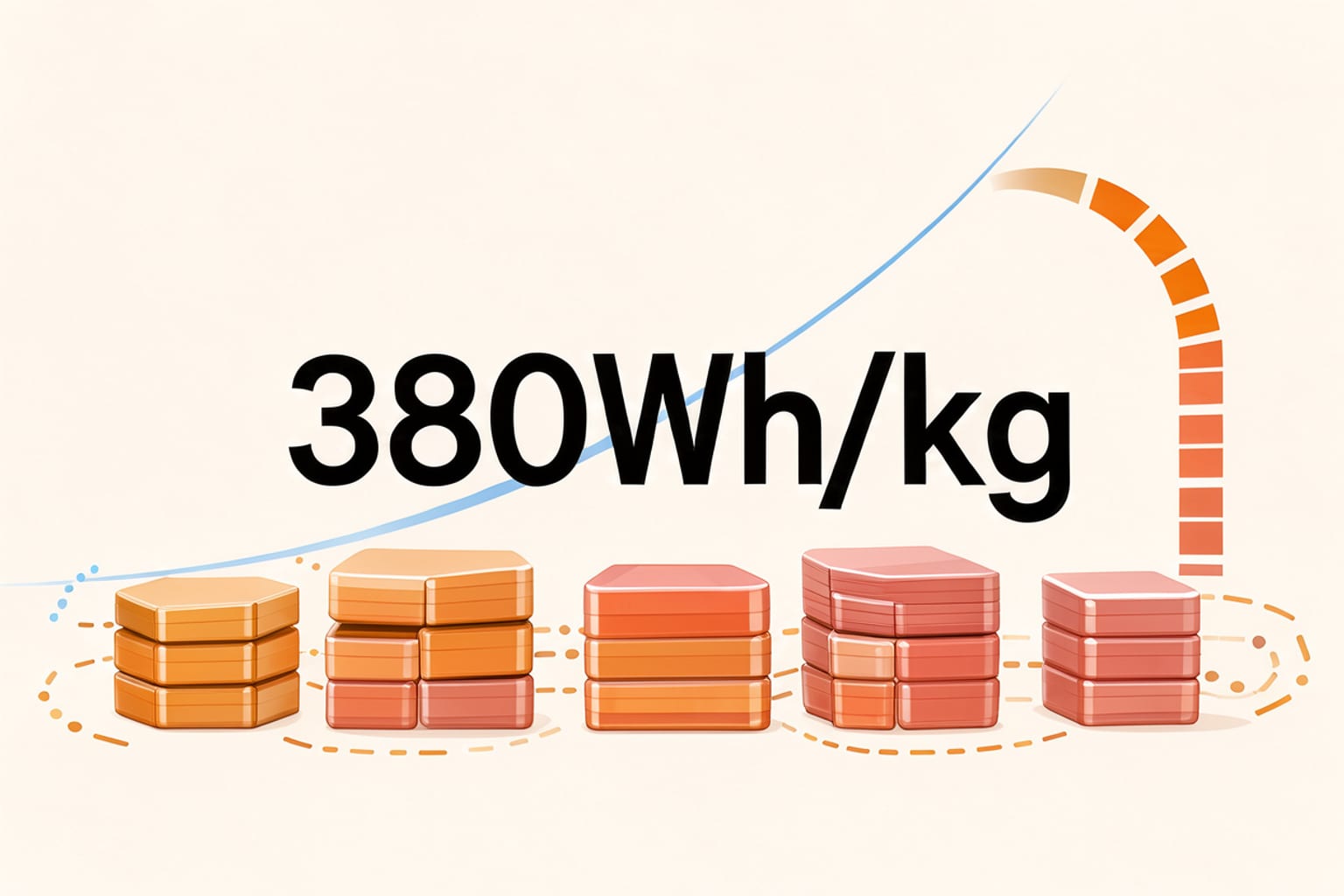
The solution lies in battery chemistry. In May 2026, Joyson Electronics (均胜电子) and Beijing Enli Power (北京恩力动力) jointly set up Junen New Energy (均恩新能源), which focuses on solid-state battery R&D and industrialization. Months later, it unveiled its first hybrid solid-liquid battery. The product uses a sulfide solid electrolyte route that reduces the share of liquid electrolyte, with energy density covering 300 to 600 Wh/kg. The company's typical figures are a cell energy density of 380 Wh/kg, overall endurance up about 60%, cycle life over 2,000 cycles, and a charge to 80% in 30 minutes. Drawing on Joyson Electronics' automotive-grade BMS technology, battery state estimation accuracy can reach 1% to 3%, two to three times better than conventional equipment. The pack can also issue thermal runaway warnings 30 minutes to 2 hours in advance. On high power, measured by C-rate, carrying objects or performing somersaults requires sustained discharge of around 3C, while instantaneous peaks during violent movements can reach 5C to 15C, and reach 20C in extreme cases. All these figures come from company disclosures.
Automotive suppliers are also moving. Bosch, Schaeffler, Valeo and Aptiv, among other automotive Tier 1 suppliers, have been pouring into embodied AI since 2025. Schaeffler set up an embodied-AI robotics company in China this February, planning to deploy several thousand humanoid robots in its factories worldwide by 2035. Bosch's joint venture has signed orders for 2,000 embodied robots in China. An unnamed institution expects demand for solid-state batteries from humanoid robots to exceed 74 GWh by 2035, an increase of more than a thousandfold compared with 2026.
For robot makers, extending endurance beyond two or three hours means a robot on the production line needs one fewer charging stop. According to the company, unified standards will speed up deployment and spread costs. However, standards are still being developed, and neither product pricing nor mass-production volume has been disclosed. There is no firm timeline for when the robots can be used at scale in factories.
Beneath the buzz lie lingering concerns. Goldman Sachs research shows that models can reach 80% to 90% accuracy in simulated environments, but often fall below 50% in real-world settings. Lighting changes, equipment vibration and material tolerances on production lines are training data that simulation struggles to replicate. By turning their own factories into robot training grounds, automotive Tier 1 suppliers both address the challenge of early commercialization and create a data loop. Data ownership, standardization, and yield and cost as production scales from small-volume supply to mass production remain to be tested.
Sources — read the originals(Paris time)
Read next
Comments
Loading the thread…
Sign in to leave a comment. Sign in