Korean team eyes chip process to fix anode-free battery lifespan
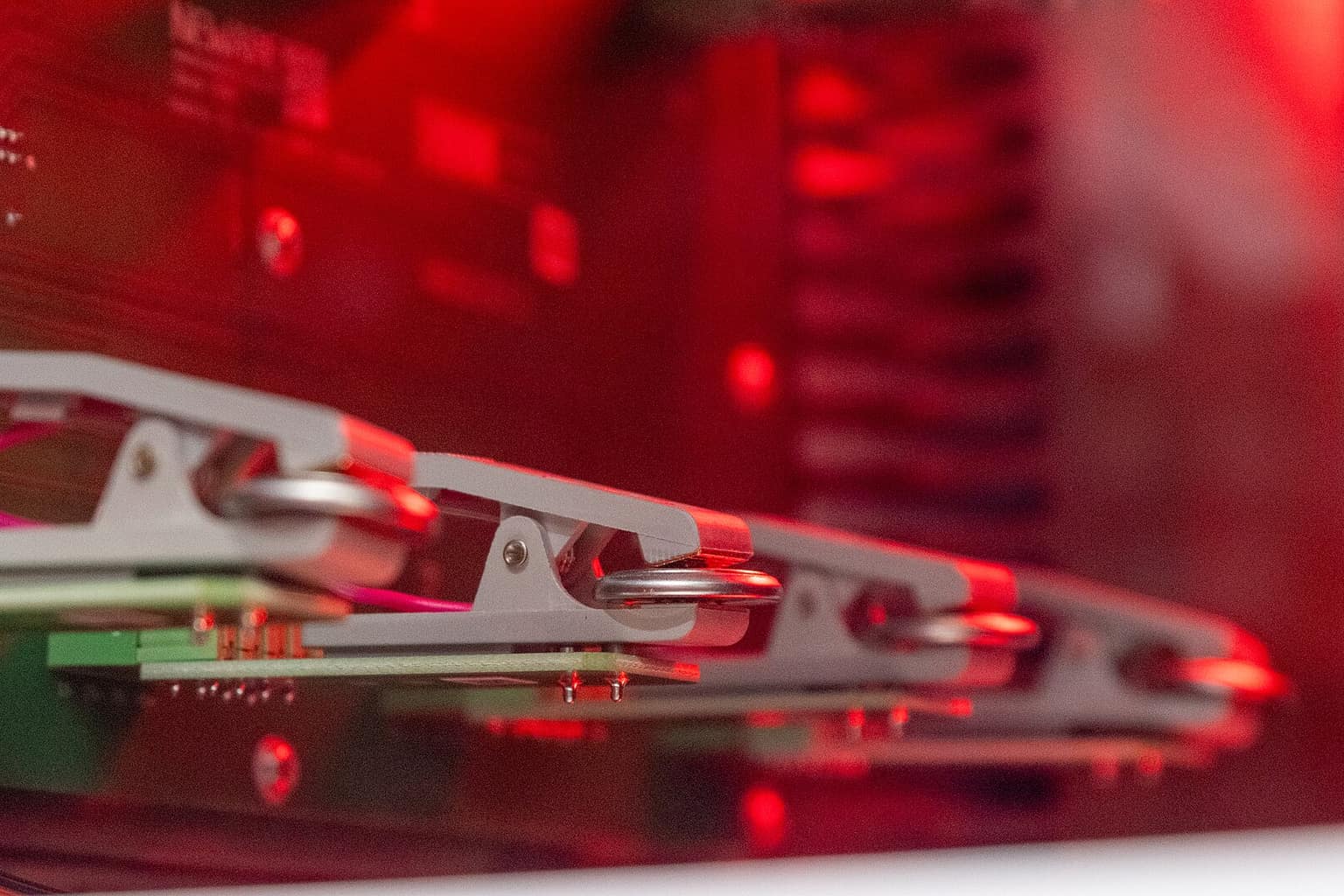
In anode-free batteries, lithium is no longer stored in a graphite anode but is deposited directly onto a thin layer of copper foil. This is what allows the batteries to be made smaller and lighter, and it is also why they have long been held back by lifespan issues that prevent large-scale commercial use. A joint research team at the Korea Advanced Institute of Science and Technology (KAIST) has announced that it has found a way to address one of the major flaws.
The problem arises during charging. Lithium does not spread evenly across the copper surface. Instead, it gathers into tree-like or needle-like structures known as “dendrites.” These structures interfere with battery performance, and the protective layer surrounding the lithium can also become unstable. Together, these effects accelerate performance decline. Previous approaches involved adding extra lithium or covering electrodes with thicker protective coatings. However, these methods introduced additional materials, and the added thickness and weight undermined the core advantages of anode-free batteries.
The research team drew its approach from chipmaking. Using secondary sputter lithography (SSL), a method widely used in the semiconductor industry, they created microscale tubular structures on copper foil, about 300 nanometers in diameter and about 150 nanometers high. These increase the surface area available for lithium deposition, allowing lithium to be deposited more evenly. According to The Cool Down, the team also applied a thin polymer layer through a chemical vapor process to precisely guide the flow of lithium ions. KAIST says the method requires no extra lithium and no thick protective coating.
For electric vehicles, the potential of this technology lies in the following: if lifespan issues can be controlled, the same space could hold more energy. Automakers would then not need larger, heavier battery packs to achieve longer range. However, this is still a potential rather than a measured figure. The study has not disclosed driving range, nor has it provided lifespan data usable for mass production. KAIST researchers said the technology could accelerate the commercialization of anode-free lithium-metal batteries for the next generation of high-energy batteries.
The work has been published in the journal Advanced Functional Materials. The research team hopes these findings will help speed up the development of high-energy anode-free batteries, including for future applications such as electric vehicles.
Sources — read the originals(Paris time)
Pages consulted while writing
Read next
Comments
Loading the thread…
Sign in to leave a comment. Sign in