Lab-built ion trap handles heavy ions for quantum simulation
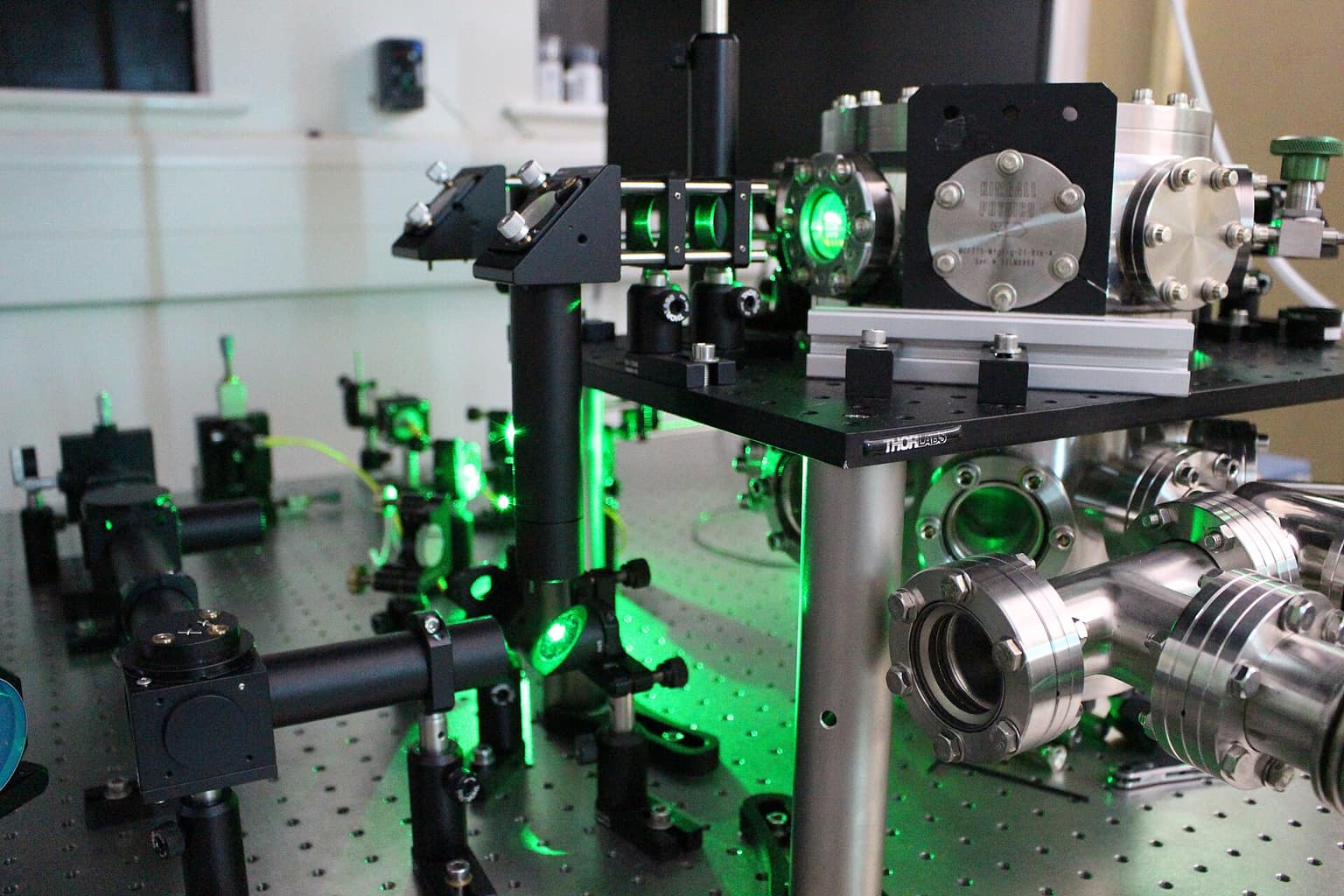
The first version of the device glowed. Built from a block of fused silica glass, it lit up in a vacuum once the high radio-frequency voltage was applied, a sign that heat and electricity were poorly managed. Abhishek Menon, a graduate student at Rice University and the study's corresponding author, called that first failure “promising and informative”. The trap became viable only in its third generation.
Trapped-ion simulators hold a row of charged atoms, or ions, in place with electric fields inside an ion trap. Lasers make the ions interact so that they mimic a quantum system chosen by the researchers, and the information the ions encode reveals that system's properties. This matters for systems so complex that even the most powerful supercomputers struggle to simulate them. Ion traps had long split into two camps. Blade-style traps offer high performance but are assembled by hand, which limits their geometric precision and makes them hard to reproduce. Microfabricated chip traps are precise and easy to reproduce, yet they perform less well in many ways. Monolithic three-dimensional traps aimed to combine the two, but until now they could only work with light ions such as calcium.
The team's design targets heavier ions such as ytterbium. The channels for the ions and the trenches for the electrodes were cut into the glass with lasers and chemicals, and the trap was then coated with sputtered gold. The trenches isolate the electrodes, which keeps them from shorting during coating and from suffering dielectric breakdown, an electrical failure, under high voltage in a vacuum. The third generation added a better heat sink to carry heat away, reduced the axial micromotion of the ions, and used a plasma-based surface treatment to help lower ion-heating rates. The hardest part was balancing wider spacing between ions, low voltage and acceptable heating without losing the qualities that make the trap useful in the lab.
The traps were tested individually in Pagano's lab and at Duke University. The team confirmed that they worked as intended and that their behavior agreed with earlier computer simulations. These are the team's own measurements, reported in Physical Review Applied; the report cites no independent group that repeated them.
The immediate beneficiaries are academic labs. Roman Zhuravel, a senior author and assistant research professor in Pagano's lab, said the monolithic trap makes trapped-ion simulators “more accessible to academic labs”. Researchers can simplify a hard quantum problem into one they can solve, then map the result onto the bigger problem. Pagano's example is charge transfer in photosynthesis. The report gives no timeline for wider availability and no price, and it names no commercial customer; Translume Inc. appears only as a collaborator.
Comments
Loading the thread…
Sign in to leave a comment. Sign in