Lab method lifts vesicle yield up to 3.3x in blood tests
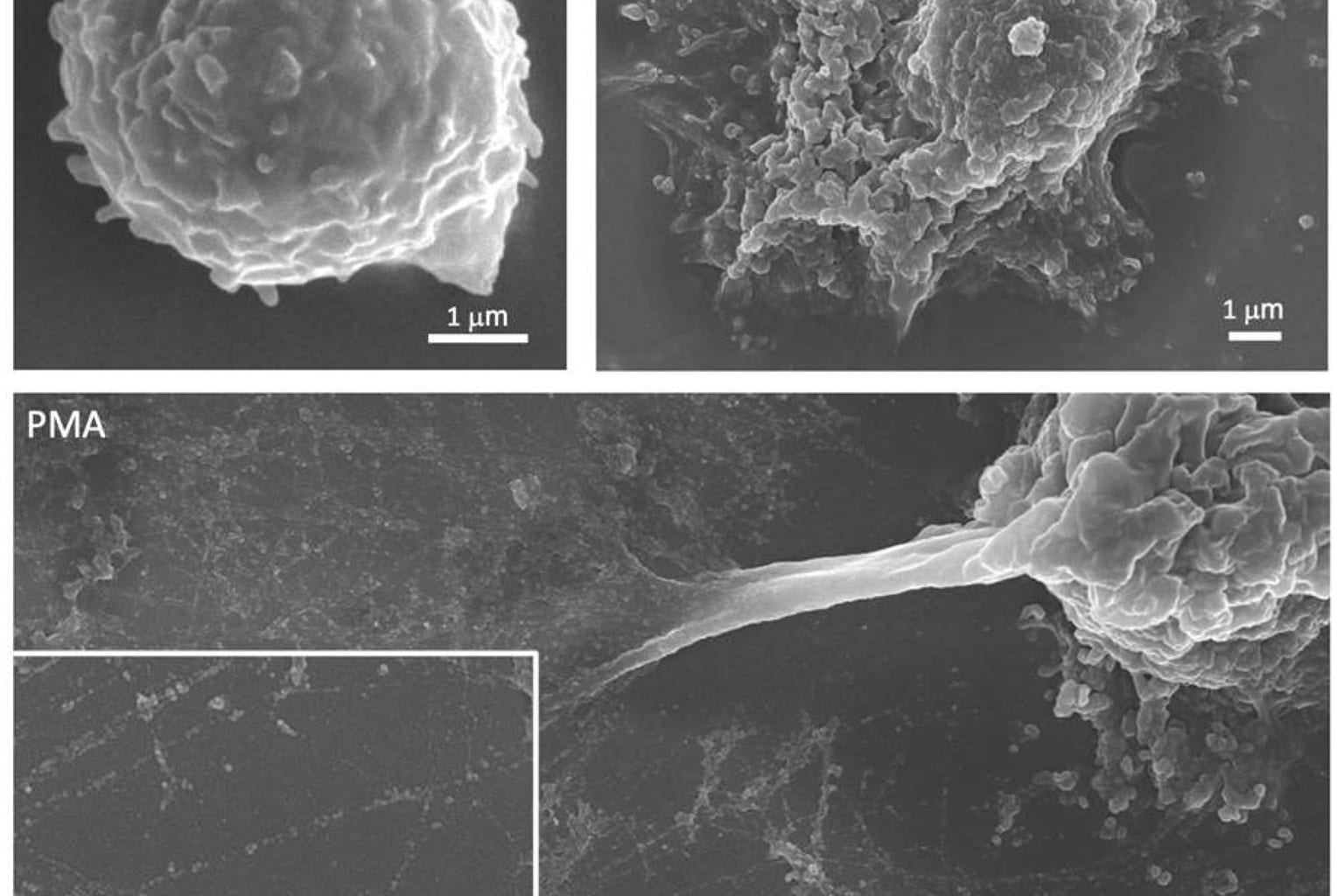
Doctors often have to take a tissue sample to see what is happening inside a tumor or another affected organ. At Tallinn University, biomedical scientist Danilo Mladenović is working to get the same information from a blood sample. In his doctoral dissertation, just defended, he reports methods that make the search easier: under optimal conditions, the number of extracellular vesicles in the sample rose by up to 3.3 times.
Every cell in the body sends tiny packages into the bloodstream. Some carry proteins, others carry fragments of genetic information about the cell they came from. If a cell falls ill, the packages it sends can be affected too. Detecting them in the blood and reading their messages would tell doctors what is going on in an organ they cannot see directly. The obstacle is the crowd: blood holds millions of different particles and molecules, so finding the right packages is like looking for one important letter in a mailbox full of newspapers and ads.
Mladenović's first approach uses controlled changes in the acidity of blood plasma, the liquid part of blood, to separate the packages from unwanted particles. The result was a sample where the packages stood out more clearly, and contamination by lipoproteins, fat-carrying particles, was reduced by over 60%. A second part of his work tackles the reading. He developed a method that identifies and measures the molecular markers of these packages, a question he says 'has not been fully resolved before'.
For patients, the gain lies in what a single draw can show. Mladenović argues that a biopsy gives information about one organ but not about the whole body, while a blood test could cover several parts of the body at once. Because a blood sample is relatively simple to take, it could also be repeated more often than a tissue sample. According to the research, this could help doctors detect diseases earlier, see whether treatment is working, and spot a cancer's return without repeated tissue samples. No timeline is given for any of it.
The method is still at the research stage. Thorough clinical trials are required before it can be put into practice. 'The findings of my doctoral thesis are a step closer to a future where a small blood sample could reveal much more about what is happening inside the body,' Mladenović says.
Sources — read the originals(Paris time)
Read next
Comments
Loading the thread…
Sign in to leave a comment. Sign in