Lab: one-atom glass thread conducts heat at 40% of quantum limit
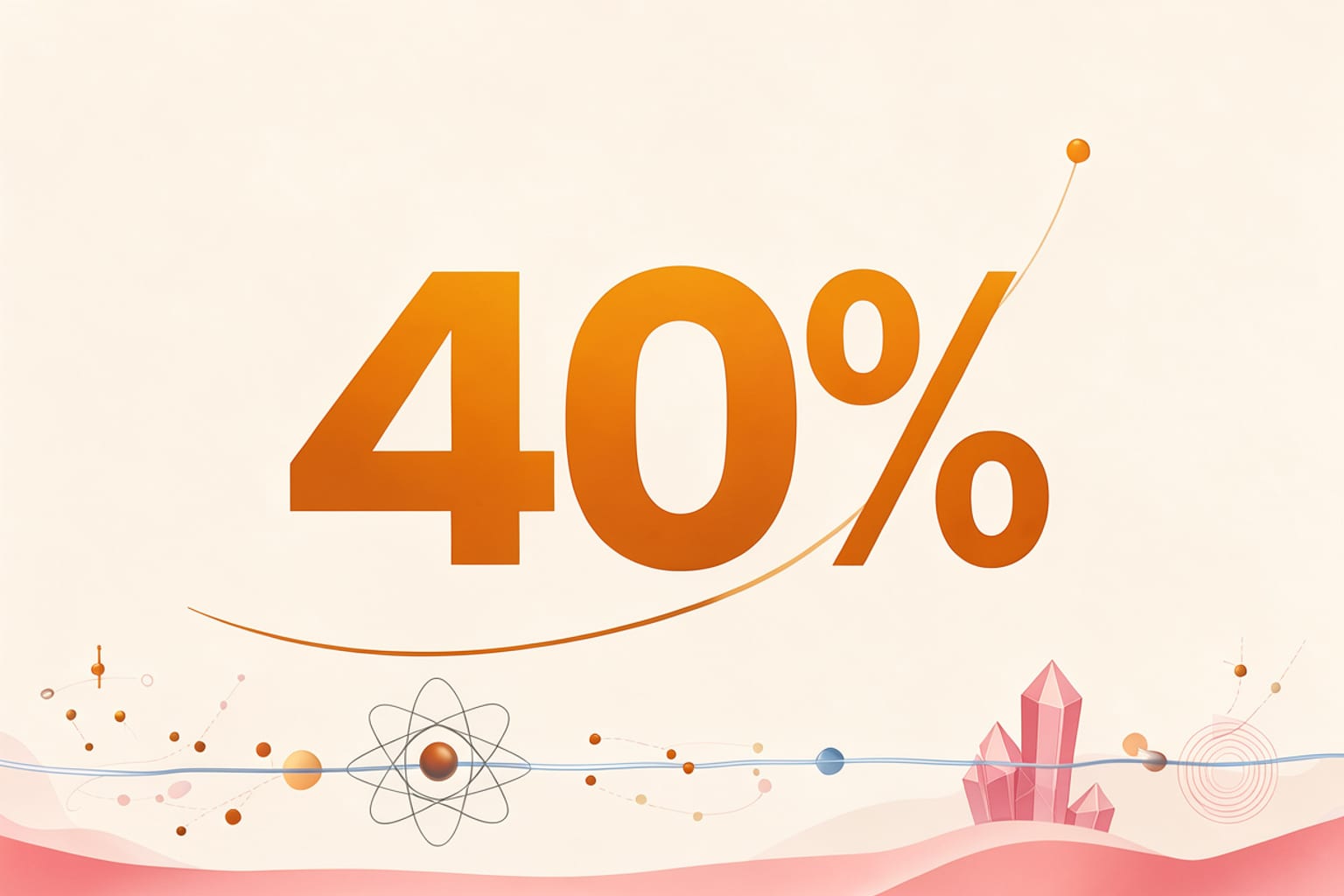
Pull two pieces of glass apart, slowly, and the contact between them narrows. Keep pulling and it becomes a thread one atom wide, which then snaps. At that moment, Longji Cui's team at the University of Colorado Boulder measured the heat flowing through it, and found something that breaks the usual picture of glass: the heat did not flow smoothly but in discrete steps, each 40% of the maximum a single channel can carry under quantum physics. The authors describe it as the first observation of such quantized heat flow carried by atomic vibrations.
Glass is the material of windows, chosen to keep heat in. In ordinary glass, the jumbled arrangement of atoms scatters the vibrations that carry heat, which is why it insulates. In a thread one atom wide, there is no room for that disorder, and the vibrations pass straight through. Guilherme de Vilhena, a researcher at the Materials Science Institute of Madrid and co-author, put it this way: stretched into that thread, glass ‘lets heat through with an efficiency we had never seen in an insulator’.
The measurement relied on a new instrument, a scanning thermal probe microscope, or SThM. Its tip is made of glass and carries a built-in thermometer, which lets it sense the motion of atoms and molecules and measure how heat flows through atomic-scale contacts. Cui compares it to a fingertip shrunk to the nanoscale: it reads the temperature and heat flow through a single atom.
The stakes are practical. As devices shrink, heat, electricity and energy have less room to flow, and Cui describes thermal management as a bottleneck for the next generation of electronic and photonic devices. Silicon dioxide, a form of glass, is used throughout today's chips as an insulating layer, so engineers designing smaller nanoscale electronics are the first to gain from a better picture of how it conducts heat. The paper gives no date for any such design.
The next step is the tool itself. Cui says the microscope can now be used to study virtually any material, metals and insulators alike, and expects ‘constant surprises’ from it. The materials he is most interested in are semiconductors, the building blocks of nanoelectronics, where the instrument could help explore energy efficiency and reliability. He also expects the same counterintuitive behaviour to appear in other materials, and wants to push the world record for thermal sensing.
Sources — read the originals(Paris time)
Read next
Comments
Loading the thread…
Sign in to leave a comment. Sign in