Lab-tested silicon battery keeps 83% capacity after 1,000 cycles
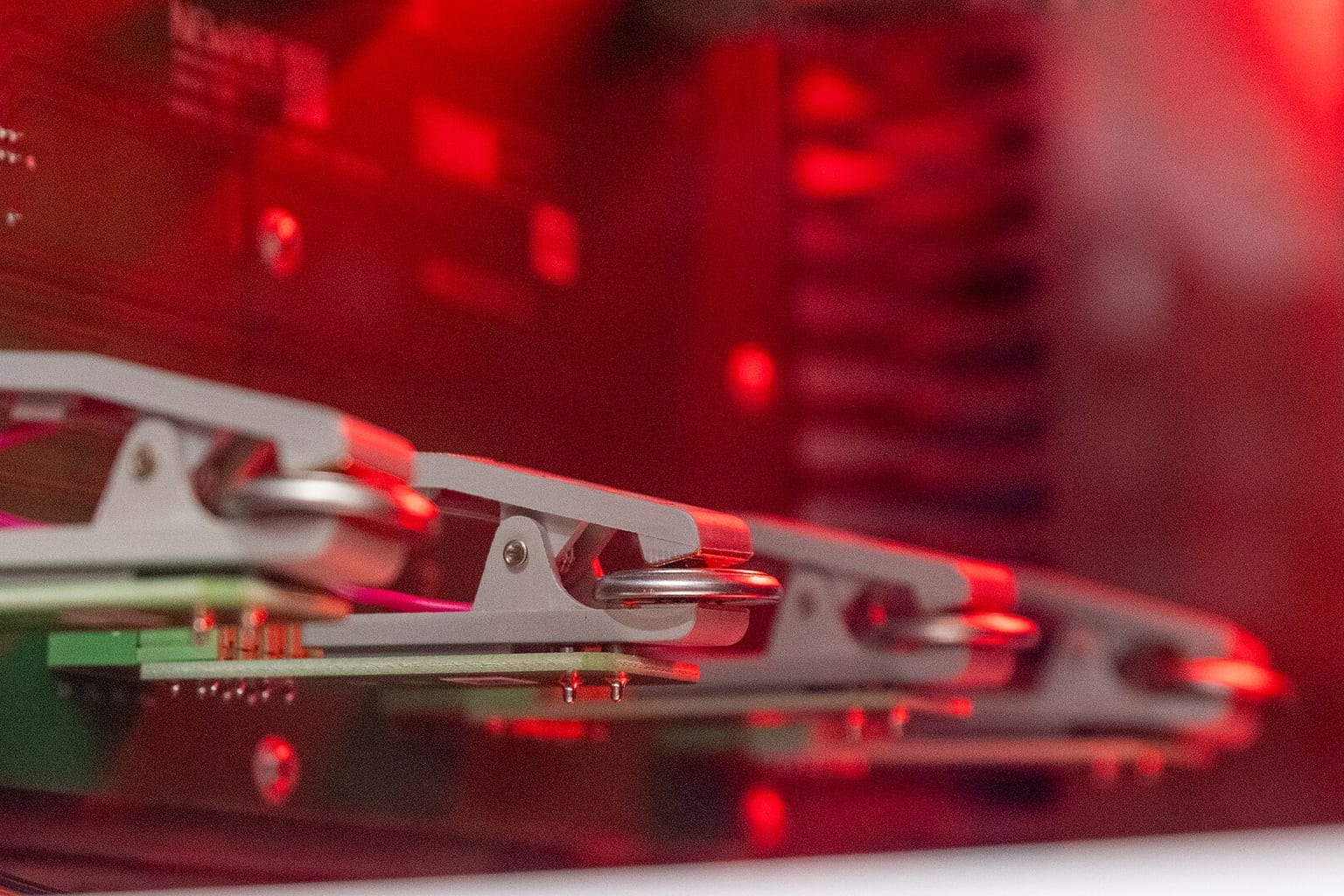
Charge, discharge, repeat: after 1,000 cycles, Fraunhofer ISE's silicon-rich pouch cells still held over 83% of their original capacity. The institute reports the result from 25 Ah cells built in its cleanroom in Freiburg, Germany, on a semi-automatic production line using commercially available electrode foils.
The cells pair a silicon-carbon and graphite anode with a nickel-rich nickel-manganese-cobalt (NMC) cathode. The silicon-carbon composite makes up 51% of the anode's active material. The anodes reached more than 1,000 mAh/g, a measure of how much charge the material holds per gram. Cycle life is the hurdle that has kept silicon out of mass production, and Lukas Dold, team leader for battery materials technology and scaling at Fraunhofer ISE, said that more than 1,000 cycles with at least 80% retention is considered an important performance target.
The cells reached 280 Wh/kg at cell level, a figure measured in the institute's non-optimized PrecISE research format. Dold said an industrially optimized pouch format is expected to reach about 330 Wh/kg. That is an expectation, not a measurement, and the institute gives no date for it.
Pressure turned out to matter. The cells were cycled at two axial contact pressures, 300 kPa and 1,000 kPa, and the 83% figure applies only to the 1,000 kPa cells. At 300 kPa, Marc Kissling, group leader for battery cell production and technology evaluation, said usable capacity fell significantly faster, especially during 1C operation, meaning charging or discharging the full capacity in one hour. Fraunhofer ISE did not publish a retention figure for those cells. It also found that, as the cells aged, capacity measured at low discharge rates drifted away from the capacity available during regular 1C cycling, which is why the institute says real operating conditions must be weighed alongside retention.
For carmakers, grid operators and aerospace firms, the promise is a battery that stores more energy in the same mass. The partners name stationary storage of surplus solar and wind power as a target, alongside electric mobility and aerospace. The StrOboBatt project, led by PCC Thorion with Fraunhofer ISE, Glatt Ingenieurtechnik, LG Chem Europe, E-Lyte Innovations and UniverCell Holding, is scheduled to run for three years and received €2.6 million in federal funding. Fraunhofer ISE also argues that silicon-carbon composites could reduce global dependence on graphite and move part of the raw-material value chain toward the European Union. Those benefits depend on the 330 Wh/kg industrial format arriving, and on the cells holding up outside a cleanroom, which the institute has not yet shown.
Comments
Loading the thread…
Sign in to leave a comment. Sign in