Liber-0 robots reach 36% success on new tasks in company tests
On a bench, a robot arm has to slide a pen into a pencil case. It is one of 60 tasks that LiberAI, a Beijing startup, used to test Liber-0, a world action model it has just introduced. The model was pretrained on more than 2.2 million hours of human experience, and it has never been trained on robot demonstrations recorded for those specific tasks.
Robot manipulation has long depended on demonstrations recorded on one specific robot for one specific task, usually by a person steering the machine remotely. That data matches the real job closely, but it is slow and expensive to gather, especially each time a new task or robot platform appears. Human activity is far more plentiful, and much of it is already on video. The obstacle is that human video does not translate directly into robot commands: cameras sit in different places, hand poses estimated from video are noisy, and human bodies move differently from robots.
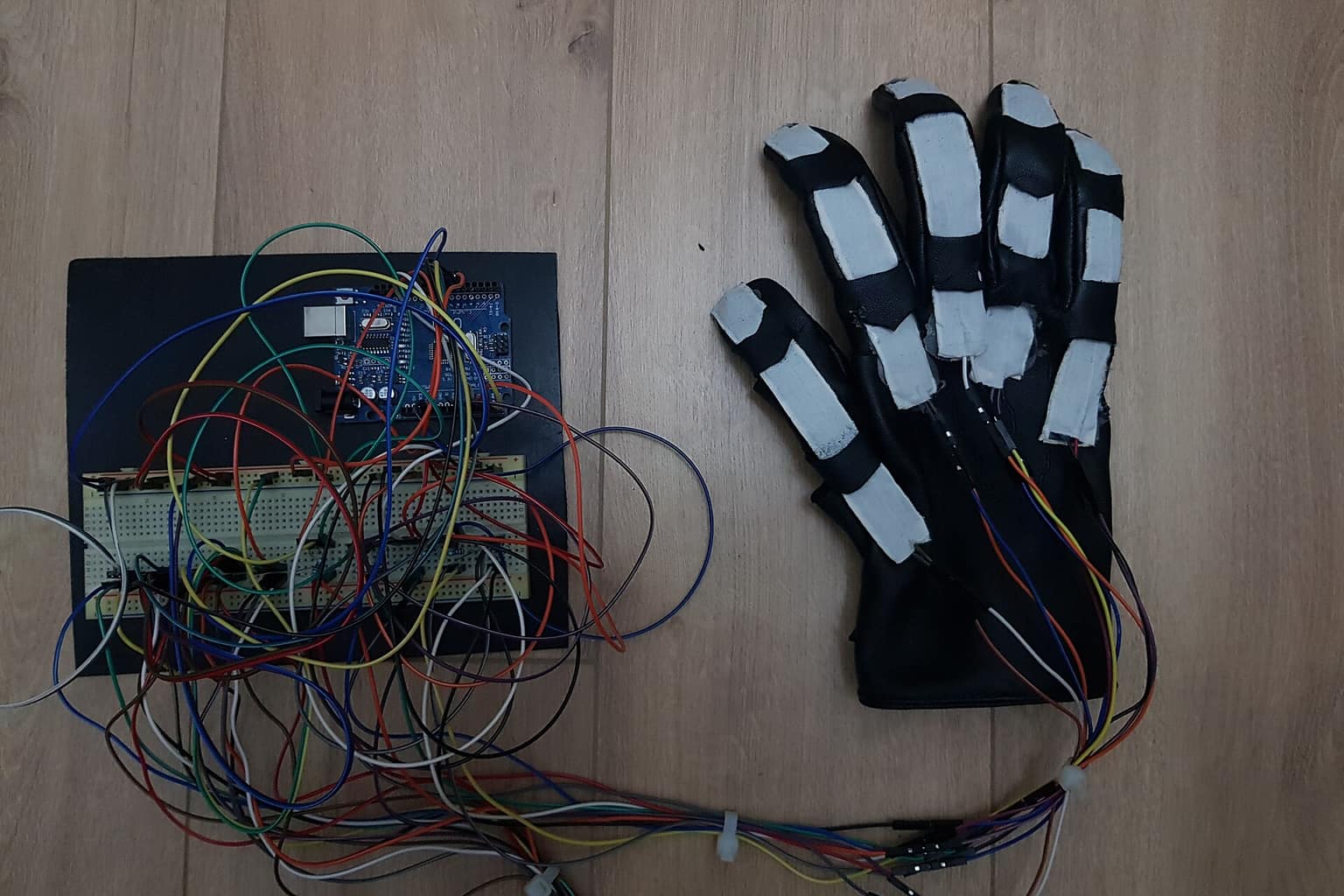
Liber-0 bridges that gap in three ways. The LiberSense Glove records hand movements directly, which helps link a video to the motions behind it. LiberAI's robot platform uses camera views and hand, wrist and waist movements closer to those of people. A Unified Embodiment Representation gives the model information on body shape and joint movement, so it can adapt actions to the body performing them. The model also predicts future video frames and actions together, which lets it learn from ordinary videos without action labels, alongside glove and robot recordings that include measured motion.
In the 60-task suite, which is separate from the model's internal benchmarks, Liber-0 reached 63.5% success on 20 pick-and-place tasks, 34.0% on 20 other manipulation tasks, and 10.5% on 20 challenging, long-horizon tasks, for an overall 36.0% across 600 trials. In a controlled experiment, glove data taught robots actions missing from their own training: a policy trained only on robot pick-and-place reached a progress score of 2.2 on other manipulation tasks, rising to 47.5 once glove recordings of those actions were added, and to 54.6 when the glove set also covered pick-and-place. A policy trained on robot demonstrations of every action scored 56.3.
For robot builders, the most concrete change concerns cost. In an eight-task evaluation on LiberAI's platform, a policy trained on 25% of the robot demonstrations plus the full glove set reached a progress score of 75.6, against 72.8 for a policy trained on all robot demonstrations. The company describes this as 75% fewer robot demonstrations for comparable performance, though the mixed policy still drew on the full glove pool. These results come from LiberAI's own benchmarks and tests, and the 36% figure measures a narrow case, since pretraining still included robot data. Its interactive simulation, which lets users upload their own objects, was trained on 100 hours of simulated teleoperation data.
Sources — read the originals(Paris time)
Read next
Comments
Loading the thread…
Sign in to leave a comment. Sign in