MIT's AI learns to 'see' 3D crystals in a research study
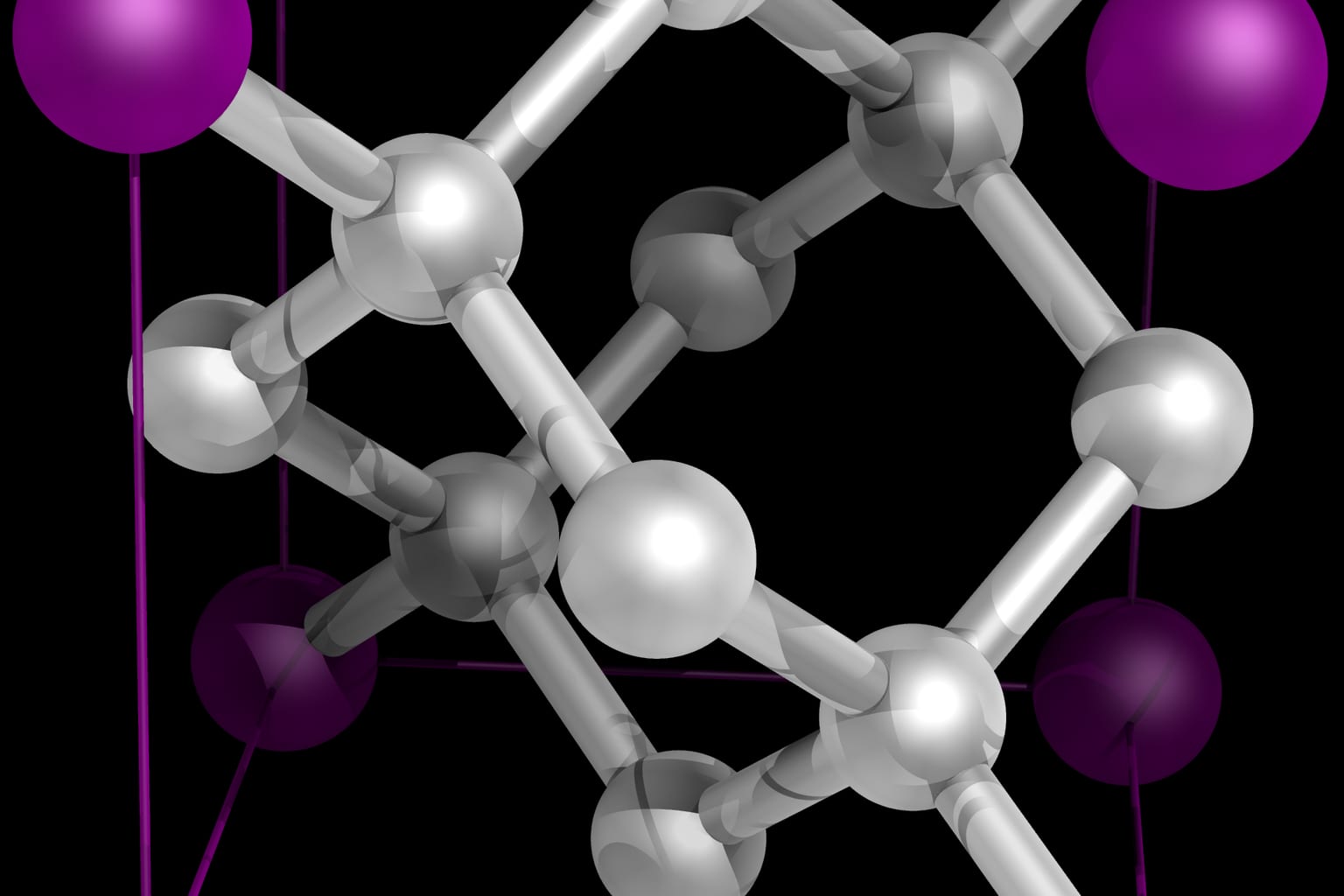
Ask today's large language models for a material suited to a battery and they answer from text alone, without any picture of the atoms involved. A team at MIT has built a model meant to close that gap. In a paper in Nature Communications, the researchers describe a system that is shown the three-dimensional arrangement of atoms in a crystal and learns to describe it in words. It identified better material designs than models trained on text alone.
Most solid materials on Earth are crystals, meaning their atoms sit in highly ordered, repeating three-dimensional patterns, and more than 90 percent of solid materials are of this kind. Large language models, however, learn mostly from published papers and books, and many possible crystal structures exist only in computational databases. The experimental literature is also heavily concentrated on a few popular classes of crystals, so AI outputs tend to skew toward those same materials. The MIT team's answer was to pair each structure with a rich description covering composition, properties, processing and possible uses, then train the model with contrastive learning: it compares matching and mismatched pairs of structures and texts until the two align.
The comparison with a text-only version is the clearest test in the paper. The researchers trained two models, one on AI-generated descriptions and one on text from papers only. Only the first learned to align geometric structures with text. Asked to find materials for solid-state lithium-ion battery electrolytes, the model's top results included materials that other researchers had independently identified as promising candidates. Given a natural language query describing a property, it identified crystalline materials with that property and outperformed a baseline. Ju Li, the MIT professor who leads the work, compares it to AlphaFold, the model that linked protein structures to their function and helped advance biological research and drug development.
For materials scientists, the immediate change is a search that starts from the property they need instead of from a compound they already know. A researcher looking for a better solid electrolyte could describe the behaviour wanted and receive candidates to examine, a task that today depends on reading papers and running experiments. Olivetti, one of the authors, puts the hope plainly: “I hope this can be one of those step changes.” The researchers expect the approach to work across many crystalline materials, and they hope other scientists will use it. The reported results are the team's own, and no date has been given for a version other groups can use.
Comments
Loading the thread…
Sign in to leave a comment. Sign in