Montreal tests: home energy forecast error falls from 80.7% to 4.3%
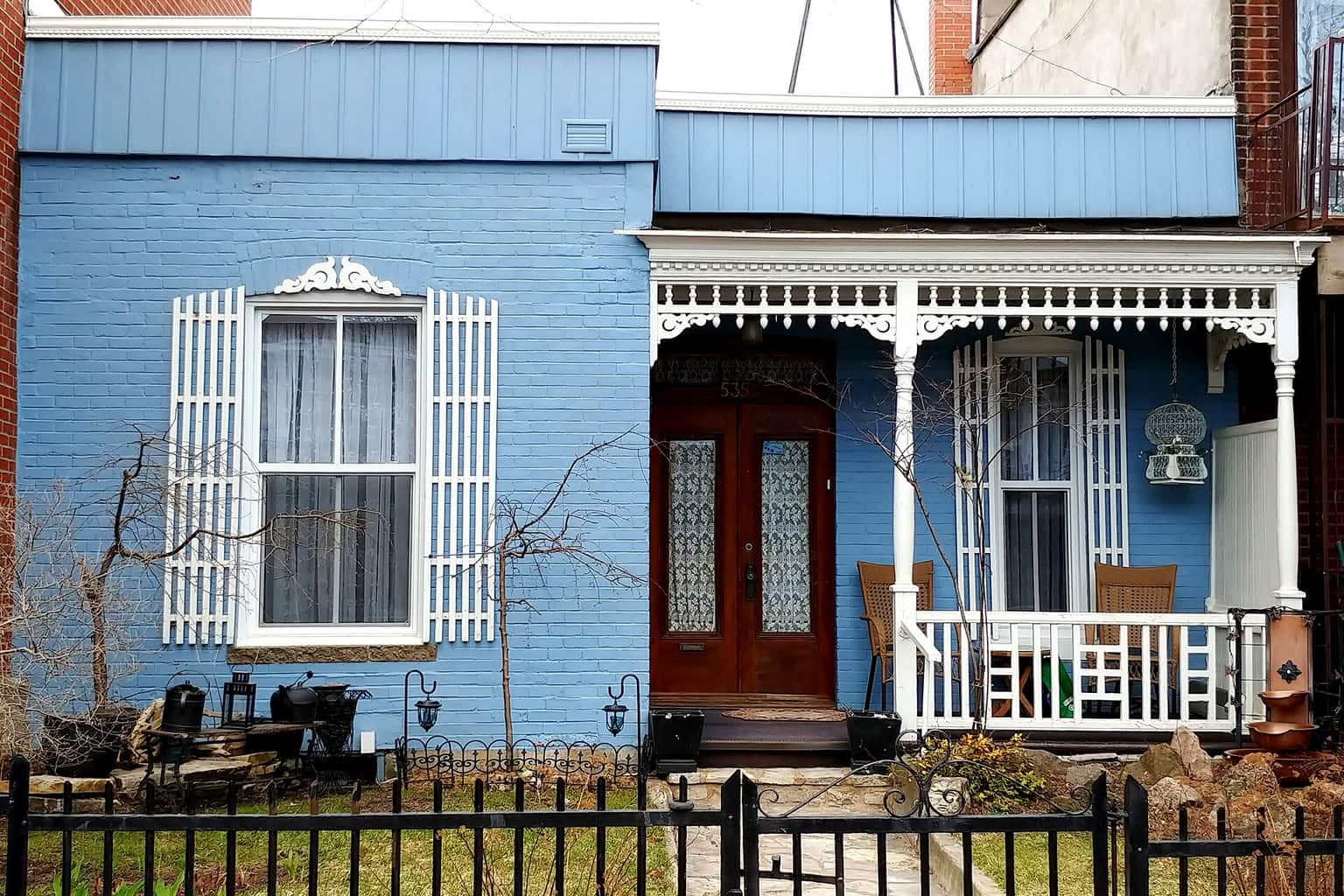
Ask a city how much electricity its houses use, and the answer is often a rough average. Models that try to fill the gap group homes into broad categories, usually by age, and overlook differences in size, construction and energy performance. In a test on 100 randomly selected detached houses in Montreal, all heated by electric baseboards, a new method developed by Concordia researchers with colleagues at McGill University, Natural Resources Canada and the National Research Council Canada cut the average error in predicting each home's annual electricity consumption from 80.7% with existing methods to 4.3%.
The method, called Three-Layer Filtering, refines the representation of each building in steps. First it narrows the analysis to comparable buildings, so that fundamentally different types of homes are not compared. Then it groups houses on several traits (construction year, floor area, number of stories, volume and estimated energy performance) rather than on age alone, into seven clusters, each one representing an archetype. That grouping alone brought the average error down to 23.3%.
In the last step, the model is adjusted for each house according to its archetype. Machine-learning tools identify which characteristics weigh most on consumption, while a simplified version of the model learns from detailed energy simulations to estimate consumption quickly under different parameters. After this individual calibration, 83% of the houses had predictions within 5% of their measured annual electricity consumption. In a test on one representative house, the simplified model ran almost 22 times faster than conventional simulations, with comparable results.
For a municipality, the gain is that building-level estimates no longer require a separate, resource-intensive model for each property. That could make detailed estimates practical for cities with large housing stocks, which would otherwise be limited to small samples or broad neighborhood averages. The researchers say such estimates could eventually help identify homes with high consumption, set priorities for retrofits and plan the shift to more efficient buildings. “With our model, urban planners can do a speedy and accurate analysis of specific areas and determine which retrofit scenario is most appropriate,” says lead author Wei Zhou, a PhD candidate at the Centre for Zero Energy Building Studies (CZEBS).
The study remains a proof of concept, and its figures come from the team's own paper in the journal Energy & Buildings. Zhou says the approach can scale to other cities, building stocks, heating systems and climates, a claim the study does not yet test. The next test is whether the same accuracy holds beyond Montreal's baseboard-heated houses.
Sources — read the originals(Paris time)
Read next
Comments
Loading the thread…
Sign in to leave a comment. Sign in