New AI method independently confirms 2019 black hole image
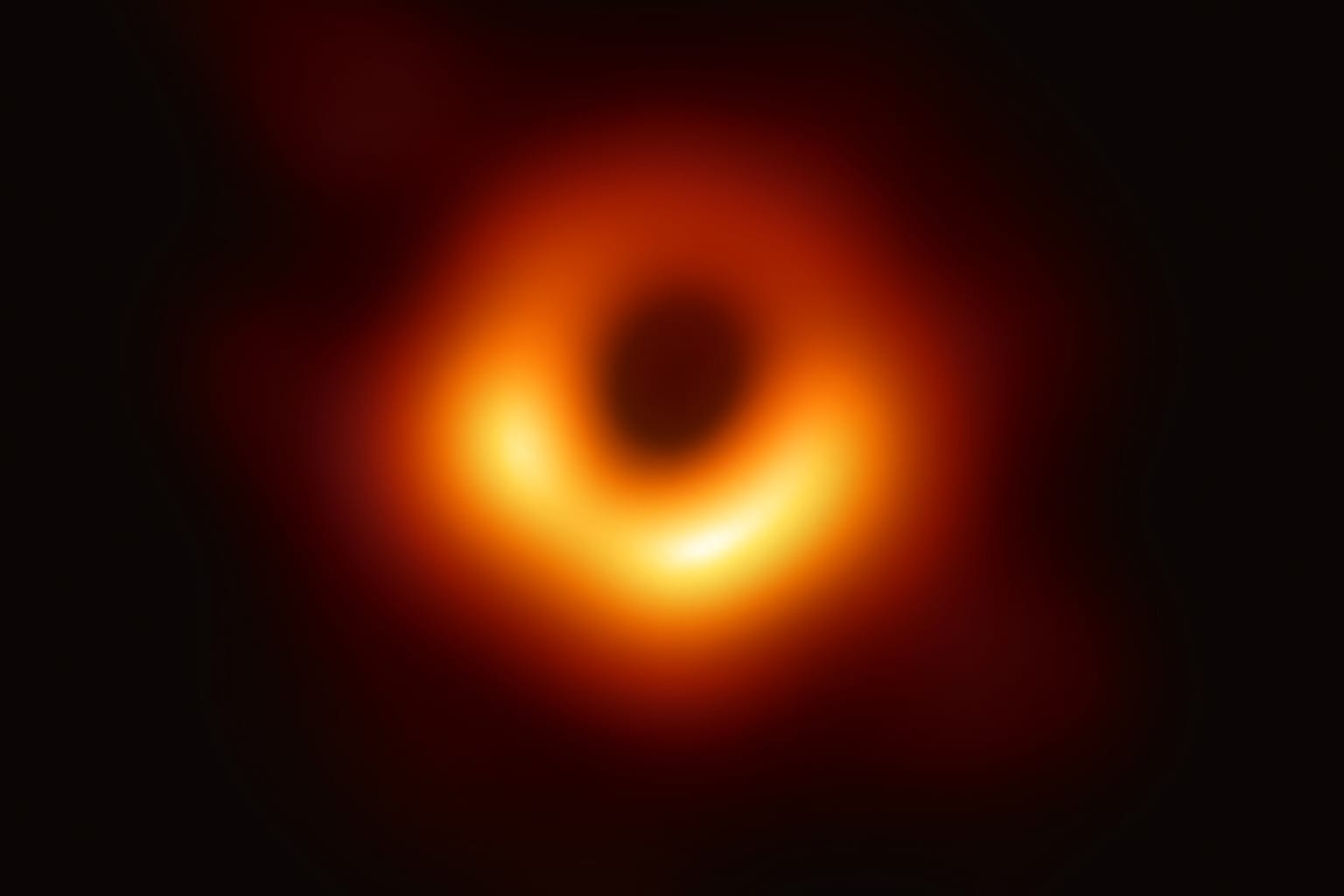
Standing in your backyard and trying to photograph a doughnut on the moon. That is how CSIRO astronomer Samuel Lai describes the job the Event Horizon Telescope (EHT) collaboration faced when it published its 2019 image of the black hole at the center of the galaxy M87. In a paper published in Nature in November 2026, Lai's team of four from CSIRO, Australia's national science agency, reports a different way of reading the same EHT data, and finds a black hole almost identical in size and shape to the historic picture.
The 2019 image was an exercise in stitching. The EHT links telescopes around the globe to act as one dish, a technique called very long baseline interferometry. The telescopes capture only sparse measurements, so the picture has to be reconstructed by software. Scientists have questioned how much that processing shaped the final image, and whether the ring is a feature of the black hole or an artifact of reconstruction.
The Australian answer has two parts. The first is a machine-learning model that, according to Lai, captures the structure of the black hole while filtering out atmospheric interference. The second is a change in what the model compares. Instead of pairs of telescopes, it combines triplets of telescope measurements, a combination that Thyagarajan says eliminates the errors that pairs can introduce. Thyagarajan, the project leader, brought the approach from his work on similar problems in synchrotron experiments. When the model was applied to the original EHT dataset, Lai said, “our model had no idea what a black hole looked like.”
EHT director Laurent Loinard welcomed the work as independent validation. He said the method “recovers the ring structure of M87 across several years, in excellent agreement” with the collaboration's published results. Two caveats belong here. The team itself notes that no ground-truth reconstruction exists for M87, so agreement with the EHT is the yardstick, not proof of the true shape. The study also comes from one small team, and its validation tests included imaging a wide range of non-ring structures, which is how the team tested the method beyond the ring it was looking for.
For astronomers, the outcome is a second route to the same picture, one that does not rest on a single set of processing choices. Thyagarajan also sees uses beyond astronomy, pointing to medical imaging and the mapping of earthquakes, but he gives no timeline. A separate arXiv preprint, “Towards independent event horizon imaging of the supermassive black holes in M87 and the Milky Way,” lists the aim of presenting independent analyses of both black holes.
Sources — read the originals(Paris time)
Pages consulted while writing
Read next
Comments
Loading the thread…
Sign in to leave a comment. Sign in