One CRISPR infusion keeps blood fats low in monkeys for three years
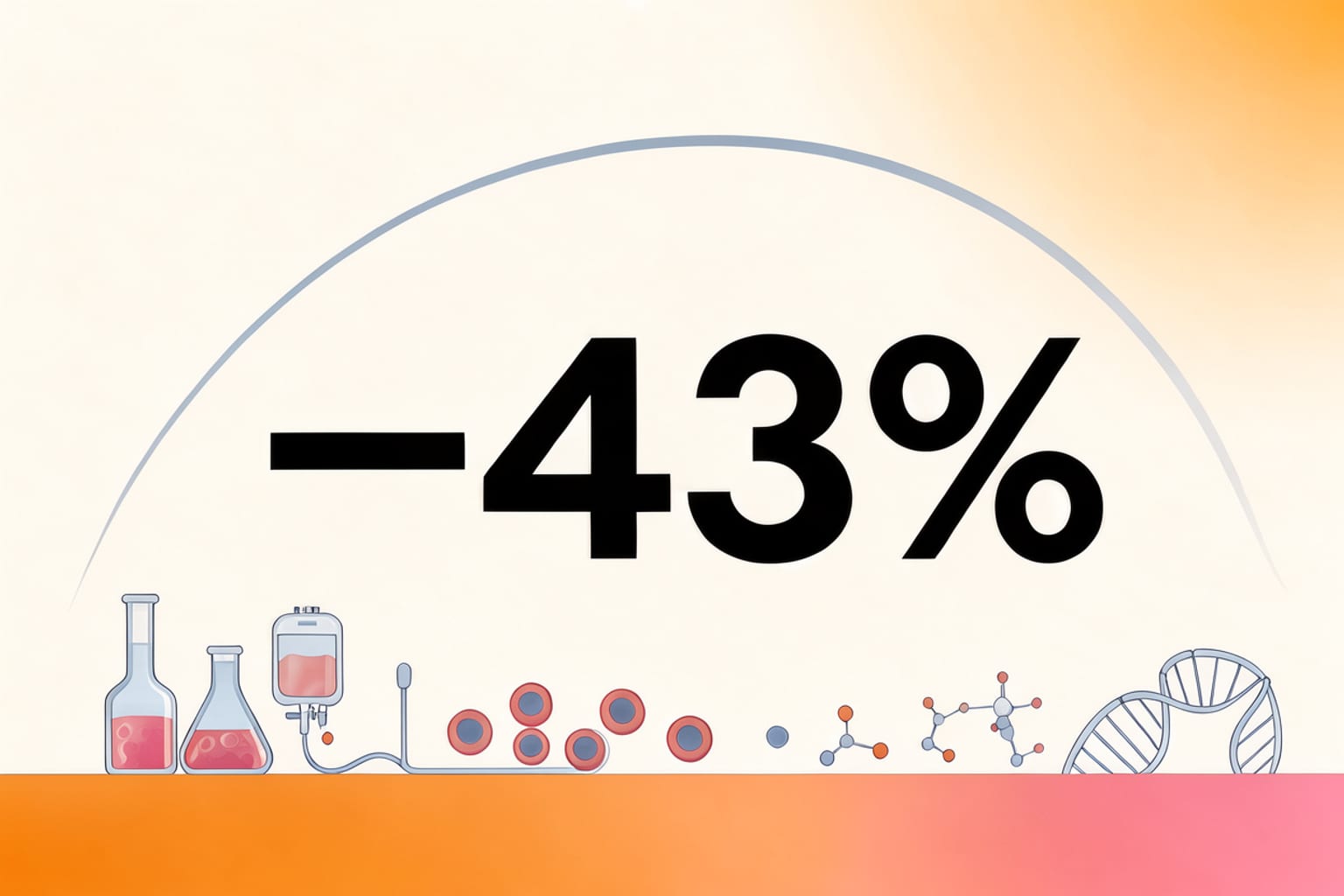
In monkeys, one infusion was enough to keep blood fats low for three years. The study, published in Nature on 6 November 2026, comes from researchers at Verve Therapeutics, an Eli Lilly subsidiary that funded the work. After three years, triglycerides in the treated animals averaged 43% lower, a result the authors say supports controlling blood fats with a lasting DNA change, potentially replacing daily doses of medication.
The target is a gene called ANGPTL3. It instructs the liver to make a protein that slows the clearance of fats from the blood, so reducing it lowers both triglycerides and LDL cholesterol. A drug already blocks that protein, evinacumab, but it is given by infusion every four weeks for a severe inherited cholesterol disorder. The team's approach uses a base editor, a tool that changes one letter of DNA. It travels in tiny fat-based particles together with a guide RNA that steers it to ANGPTL3. Those particles and their RNA are largely cleared after treatment, while the DNA change is designed to remain.
In the durability study, ten monkeys with normal blood lipids received one infusion of the treatment, and the follow-up ran for three years. ANGPTL3 protein levels averaged about 94% below pretreatment levels, and liver samples showed similar editing at seven weeks and at three years. LDL cholesterol fell by a more modest 13%. Most authors are Verve employees, and several hold Lilly shares or are named on related patent applications.
The team also tested four monkeys lacking working LDL receptors, the proteins that normally pull cholesterol out of the blood and that are largely missing in a rare inherited disorder. Their particles carry a sugar-based molecule that opens a different entry into liver cells. In these animals, average LDL cholesterol fell from 458 to 247 milligrams per deciliter after 35 days, a 46% drop. That experiment was short and does not show years of lowering in animals with receptor deficiency. Liver enzymes rose temporarily in the treated monkeys and returned to baseline within two weeks, and follow-up tests found no lasting liver toxicity. In cultured human liver cells, the human version produced no detectable unintended edits at roughly 3,000 candidate DNA sites, although that targeted search cannot rule out every unwanted change.
For people who take daily medication for their blood fats, the promise is a one-time treatment, if it holds in humans. The next step is clinical: VERVE-201 is being evaluated in an early trial, a phase 1b, in people whose blood lipids remain inadequately controlled. The researchers write that the hope is to alleviate the burdens of chronic lipid-lowering treatment, and whether a lasting edit can safely deliver that benefit will now be tested in people.
Sources — read the originals(Paris time)
Pages consulted while writing
Read next
Comments
Loading the thread…
Sign in to leave a comment. Sign in