One violin lesson changes beginners' brain waves, study finds
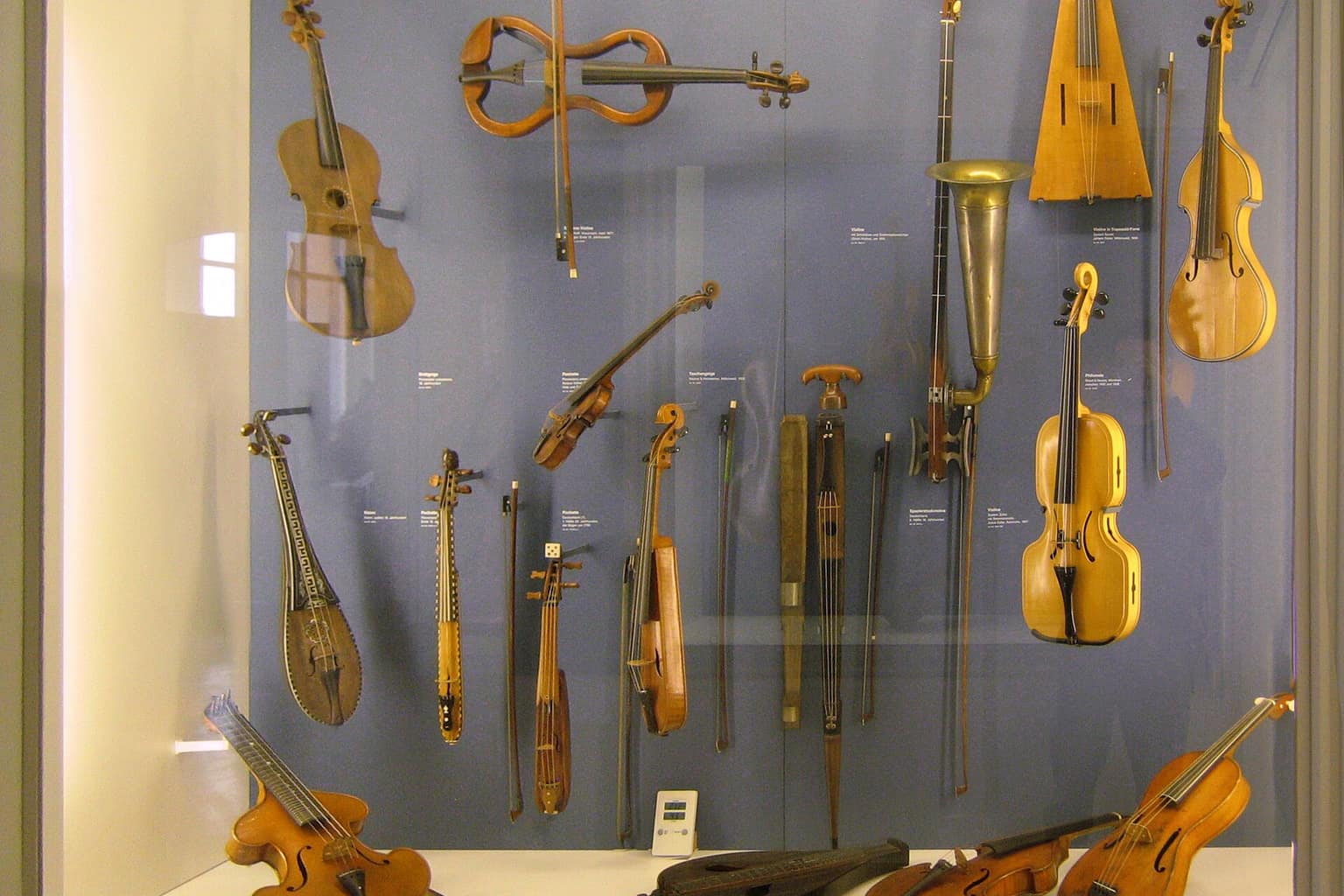
Alan Kirby had to take every piece of metal out of a standard violin. The scanner used in this study measures very small magnetic fields produced by the brain, and it only works if the instrument is completely metal-free. So Kirby took a standard violin and replaced all its metal parts with pieces he crafted himself, producing an all-wooden instrument. The players who sat down to learn on it wore something just as unusual: a lightweight helmet, with a control unit on a backpack, that picks up the brain's electrical signals while they play.
The scanner, called OPM-MEG, was developed in Nottingham. The researchers focused on beta waves, rhythmic bursts of activity across groups of neurons that are thought to signal whether our actions lead to the outcomes we expect. As Joe Gibson, a PhD researcher in the School of Physics and Astronomy, explains, a violinist's brain predicts the sound of each note, and it receives a signal either way: "if I play the expected note, my brain receives information that the outcome matched its prediction; if I hit an unexpected note, it receives information that it did not." For the first time, Gibson says, these signals could be measured in real time while the instrument was being played.
The design was simple. Twenty-two novice players first watched a video of Kirby playing "Twinkle Twinkle Little Star", then attempted the tune on the violin while their brain activity was recorded. After a single violin lesson taught by Kirby, they repeated the same scanned attempt. The beta-wave patterns changed significantly between the two sessions, and the participants whose beta waves changed most also showed the greatest improvements in their playing.
For now, the gain is in understanding how the brain learns a physical skill. Matthew Brookes, who has led the development of OPM-MEG in Nottingham for over 10 years, said the results "provide a greater understanding of motor learning". He also pointed to a longer-term possibility: some of the effects measured are among those that can be affected by disorders like dementia, and he hopes this kind of study will shed light on disease as well as healthy brain function. That is a hope, not a finding of the study. Brookes gives no date for any clinical use.
The result has limits that matter. It involves 22 people, one lesson, and a single instrument, and it is a laboratory study of how the brain changes during learning. What it changes today is the way researchers can watch that learning happen while a person is doing the task.
Sources — read the originals(Paris time)
Read next
Comments
Loading the thread…
Sign in to leave a comment. Sign in