Open-source firmware turns ESP32 into radio scanner
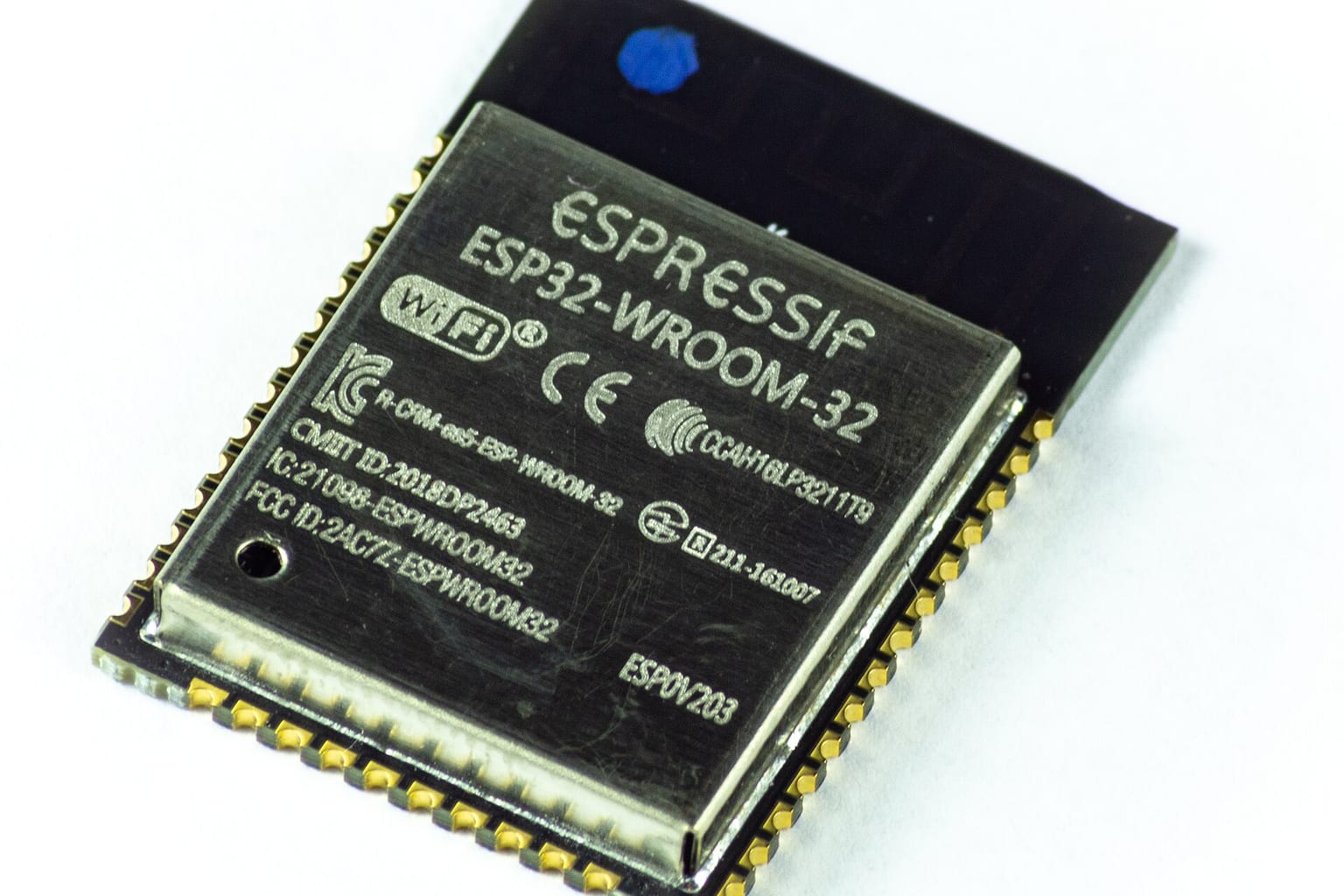
The trail led to a function in Espressif's test library librftest. The developers, who had already made Wi-Fi signals visible with the ESPARGOS One antenna array, had an AI analyze how this function configures the radio section. Espressif probably created the path for testing during chip production, the team writes. The function was first made public by a Reddit user with the handle h0m3us3r, who published source code for the ESP32-S3 and, using an additional FPGA, a freely programmable chip, continuously pulls 80 million readings per second out of the chip. According to the Stuttgart team, it had been working on the problem independently for several months.
According to the project description, ESP-SDR “turns the Wi-Fi and Bluetooth radio section of an ordinary ESP32 board into a pure receive-only SDR.” Supported are the classic ESP32, the S3 and the C6, as well as the C5, which covers 5 GHz in addition to 2.4 GHz. The limit lies in transmission: because the chip cannot pass its readings on via USB, most variants are limited to brief snapshots. The ESP32 is therefore better suited as a spectrum analyzer, showing what is transmitting in the band and how strongly. It does not replace an RTL-SDR stick costing around €30, which also receives FM radio or aircraft data.
In the four weeks since release, the community has already built further. The C5VRX project uses an ESP32-C5 and six resistors to receive analog 5.8 GHz video from FPV drones, meaning aircraft with a live camera feed. It does not yet work reliably over longer distances. Transmitting is not part of ESP-SDR: a developer with the handle marble used custom firmware to have two ESP32s communicate with each other in the 2.4 GHz band, and radio amateur Jochen Hammes (DA2JH) transmits voice in an amateur radio band around 2.4 GHz. Anyone who transmits with third-party firmware must comply with fixed requirements for transmit power and signal shape in the Wi-Fi range. The Stuttgart team deliberately avoids building a transmitter, because it could be misused to jam other radio links. What cheap SDR technology can do was shown in April by a case from Taiwan: a student eavesdropped on the railway's TETRA radio and then used a handheld radio to stop four trains. The ESP32 does not cover such frequencies. The developers see no backdoor, since the mode requires custom firmware. Espressif has not commented so far.
The pattern is not new. In the early 2010s, tinkerers discovered that Realtek chips in cheap DVB-T sticks could be used as SDRs, which led to the RTL-SDR. Its popular V4 version was discontinued in May because the tuner chip it uses is no longer manufactured. For anyone who owns an ESP32, the function now works without new hardware: a browser-based installer flashes the firmware onto most ESP32 boards, and the ESP-WebSDR web interface shows a live spectrum.
Sources — read the originals(Paris time)
Read next
Comments
Loading the thread…
Sign in to leave a comment. Sign in