Optical AI framework cuts computation
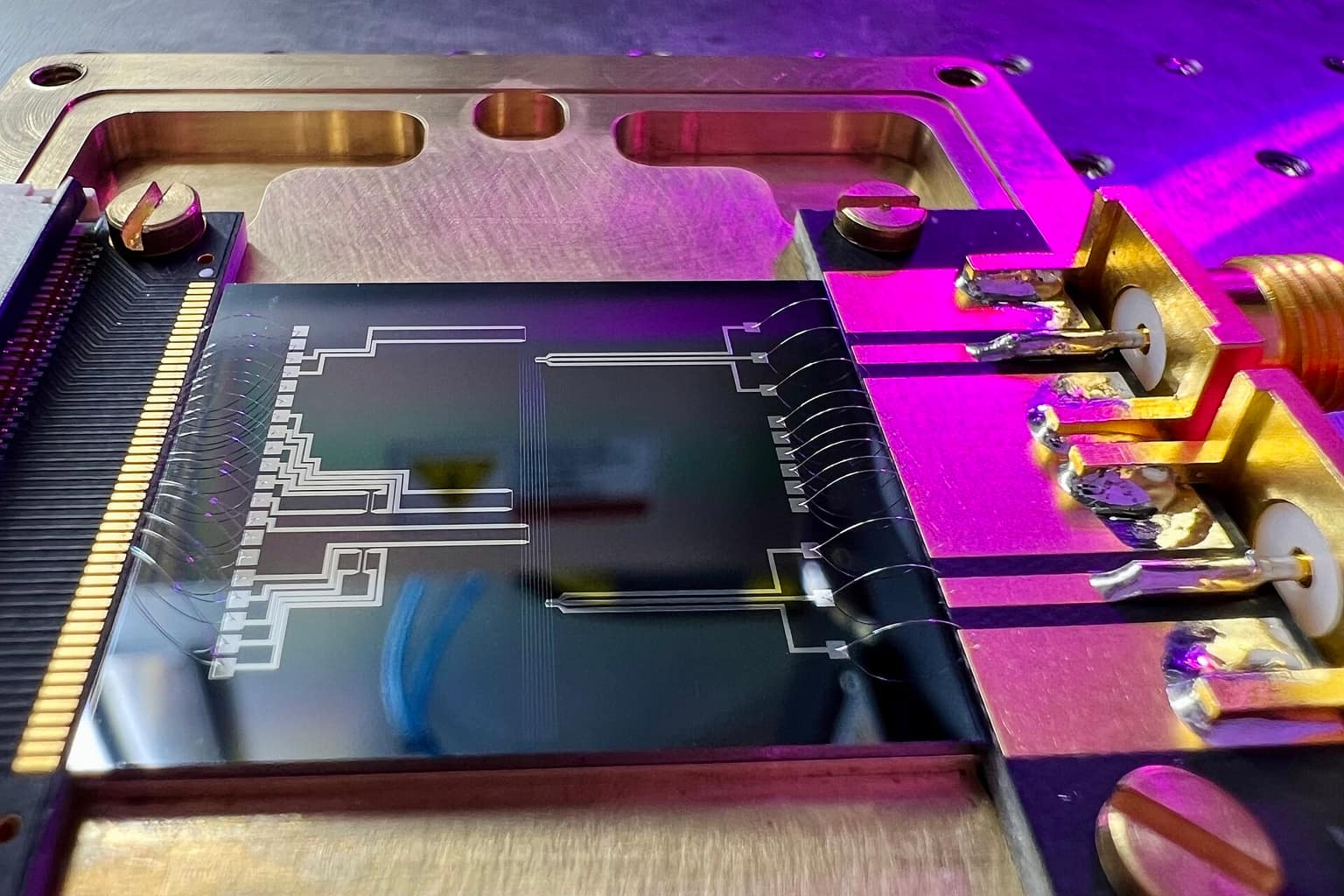
A 200-meter optical fiber loop and a handful of electronic components: that is the hardware on which a University of Tokyo team has just run an artificial intelligence method. Information enters as light, travels around the loop, and leaves as an electrical signal for analysis. The experiment shows that AI calculations can be done this way with far less computation than conventional methods require.
The problem the team set out to attack is well known. AI systems keep growing, and training them can consume vast amounts of energy. Researchers have been looking for ways to make them more efficient rather than simply making them bigger. One option is to hand some of the calculations to physical systems that process information through their natural behavior. Ordinary chips do their work with electrical signals passing through large numbers of transistors, which consumes energy and produces heat. Light can carry information quickly and carry several signals at once, which makes optical computing a promising platform. But running conventional AI methods on such hardware is technically demanding and can require considerable measurement, control and data storage.
Associate professor Kohei Nakajima of the Laboratory for Intelligent Systems and Informatics and his team, including NTT researchers, therefore changed the learning process itself. Their training method, called SS-DFA, avoids recording most of the system's intermediate states. Conventional training tracks how the system evolves, then works backward to find what to change. The new method instead uses the final error, together with information about the system, to guide learning. Paired with a simpler network design, the single-map framework, in which many units follow general rules instead of complex internal connections, it reduces the measurement, data storage and computation needed. "We wanted to rethink the learning process itself so that physical systems can perform computation much more naturally," said graduate student Yongbo Zhang.
The result is that the simplified design matched, and in some tests outperformed, more complex neural network architectures. The team has so far integrated the approach into several relatively basic modern networks, and performance improved while computation fell. Those results come from computer simulations and from experiments on the optical system. The team has not yet tested it on today's largest AI models, particularly language and so-called multimodal models, which it names as an important direction for future work.
For data centers, the stakes are concrete. If the framework scales, it could reduce the computing demands of AI while relying on optical systems that generate little heat. The team says this could lower the energy needed for both computing and cooling, and reduce water consumption as well. The framework is modular and can be inserted as a computational block into existing networks, which the team presents as a possible route toward larger scales. Nakajima also raised the idea of miniaturizing the system and integrating it onto a chip. The team has not announced a timetable for either step.
Sources — read the originals(Paris time)
Read next
Comments
Loading the thread…
Sign in to leave a comment. Sign in