Palladium catalyst reused for up to five cycles
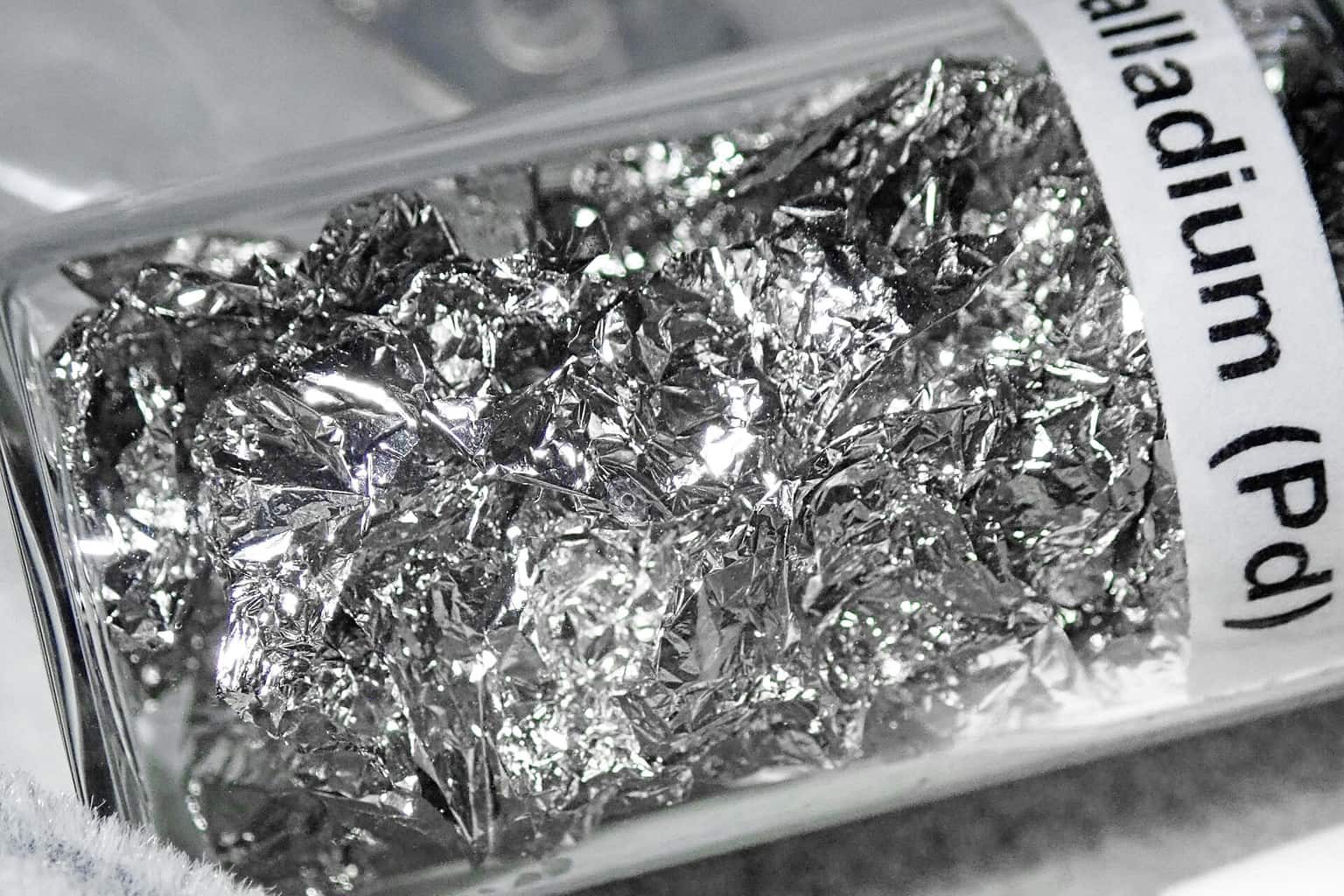
At the end of a reaction, the palladium is usually lost along with the waste. A team at EPFL and ETH Zurich has built a palladium catalyst that can be taken back out of the reaction by simple filtration and used again, for up to five cycles.
The reaction in question is C–H functionalization. It modifies the carbon–hydrogen bonds already present in a molecule, instead of first attaching the chemical "handles" that make molecules reactive, which means fewer steps and less waste. Until now, the approach depended on large amounts of precious metals such as palladium, which could be neither recovered nor recycled. The new catalyst keeps palladium atoms isolated from one another on a solid support, so each atom stays active while the solid can be recovered.
The team tackled three problems in turn. First, stability: palladium came loose from many solid supports and was lost mid-reaction. Carbon nitride, a cheap organic support, was the one that held the metal. Second, activity: the stable catalyst was sluggish, until adding a small amount of a phosphine compound activated it without loosening the metal, with yields reaching up to 83%. Third, recyclability: activity dropped sharply after the first run. X-ray absorption spectroscopy performed at the Paul Scherrer Institute showed that iodide was binding strongly to the palladium atoms and blocking their catalytic sites. Washing treatments designed from that finding restored reactivity for up to five cycles. The team measured a cumulative turnover number, which counts how many product molecules a single catalyst molecule generates, of above 200, against 20 for the current best catalyst.
The limits are stated by the researchers. The catalyst cannot be reused indefinitely, and repeated regeneration changes the support. The work is a proof of concept: single-atom catalysts can carry out demanding C–H functionalization reactions while keeping the precious metal, and understanding how they lose activity points to practical ways to regenerate them. "The work was very long and complex," says Jérôme Waser. "It was possible only by combining the expertise in organic reactions of the EPFL group with the expertise in heterogeneous catalyst design of the ETHZ group."
For teams that build complex molecules, the gain is a route with fewer steps and a palladium charge that can be filtered back out rather than discarded. The study does not give a cost, and it does not set a timeline for industrial use. What it establishes is that a precious metal can be kept in a reusable form in a reaction that, until now, was not considered sustainable for chemical production.
Sources — read the originals(Paris time)
Read next
Comments
Loading the thread…
Sign in to leave a comment. Sign in