Prostate cancer drug cuts tumor activity, pain in phase 1/2 trial
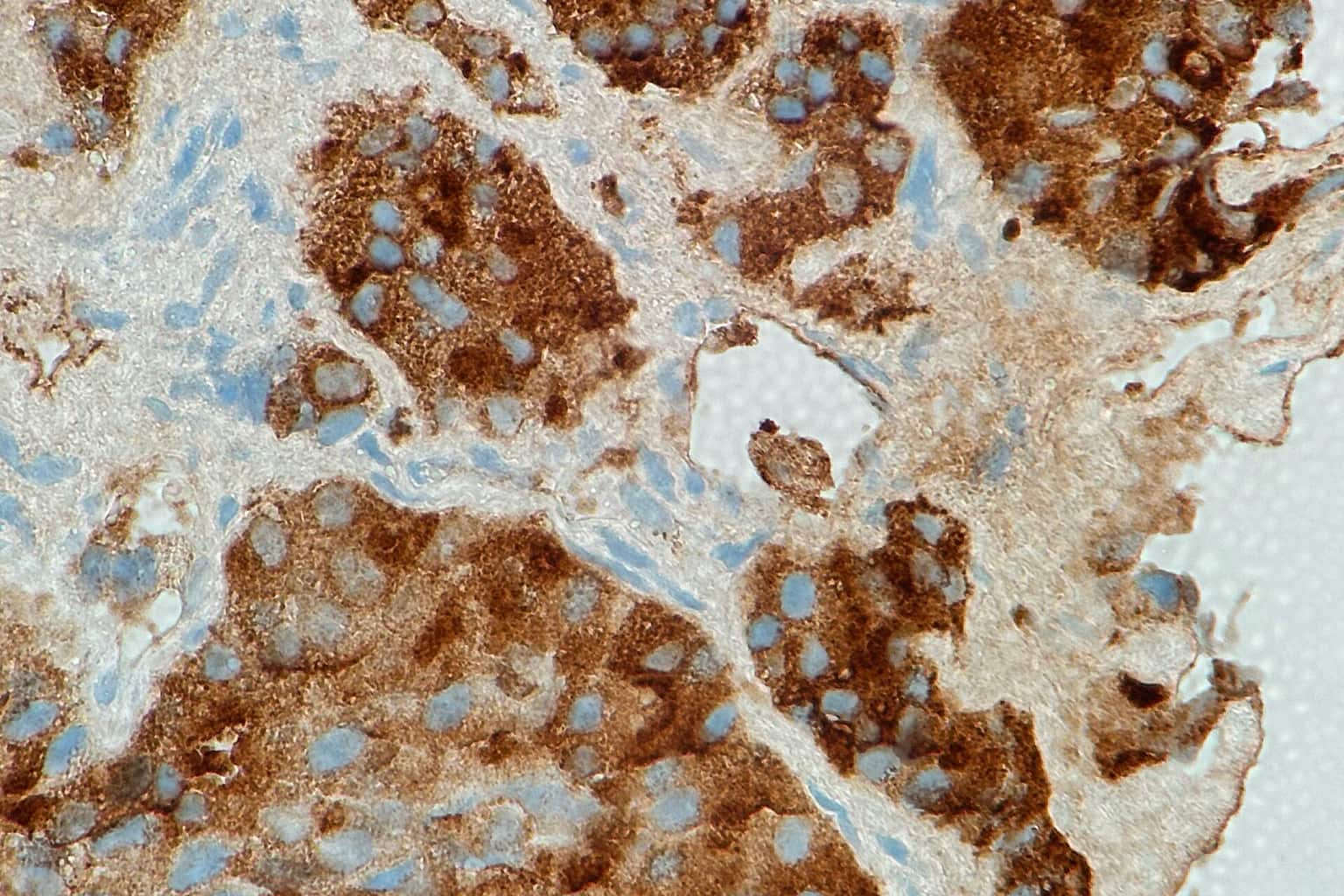
Daniel Petrylak, a professor of medicine at Yale School of Medicine and senior author of a new study, puts it plainly: "This is a first-in-class drug for prostate cancer." The trial behind that claim is a phase 1/2 study, published on October 9 in the Journal of Clinical Oncology, in men whose metastatic castration-resistant prostate cancer (mCRPC) had already been treated.
Doctors usually treat prostate cancer by starving it of testosterone, which halts its growth for a time. In mCRPC, the cancer keeps growing even when testosterone is limited, and the disease is incurable. "More than 35,000 men will die from mCRPC in the United States this year," Petrylak says. "It's the most advanced form of prostate cancer."
The drug, bavdegalutamide, belongs to a class called PROTACs. They use proteolysis, the natural process by which a cell breaks down proteins to recycle their parts, to degrade disease-driving molecules. Bavdegalutamide is the first PROTAC androgen receptor degrader to be tested in patients. It targets the receptor that testosterone activates and that controls prostate cancer growth, and it was designed to work where other hormone therapies have lost their effect. PROTACs were pioneered by Yale researcher Craig Crews, whose work also led to the first PROTAC approved by the U.S. Food and Drug Administration, for breast cancer.
In phase 1, the researchers found that a 420-milligram daily dose was safe for patients already treated for mCRPC. In phase 2, they measured prostate-specific antigen (PSA), the marker of mCRPC, before and after treatment. PSA fell, soft tissue lesions regressed and pain improved. "These are the parameters that indicate a positive response," Petrylak says. The effect was greatest in cancers carrying the T878 and/or H875 mutations of the androgen receptor, where PSA dropped further. The authors point to this as a sign that PROTACs could serve as precision medicine, treatment matched to a tumor's genetic profile. These are early results from a trial still in clinical testing.
For men with mCRPC, the study opens a new therapeutic route, and for those whose tumors carry the T878 or H875 mutations, it points to a drug suited to their cancer. The next step is already under way: the same team is testing a second PROTAC, ARV 766, in phase 1 and phase 2 trials. It is active against a broader range of androgen receptor mutations than ARV-110. No timeline for approval has been given.
Sources — read the originals(Paris time)
Read next
Comments
Loading the thread…
Sign in to leave a comment. Sign in