Purdue Drone Tracks People Through Forest Without GPS
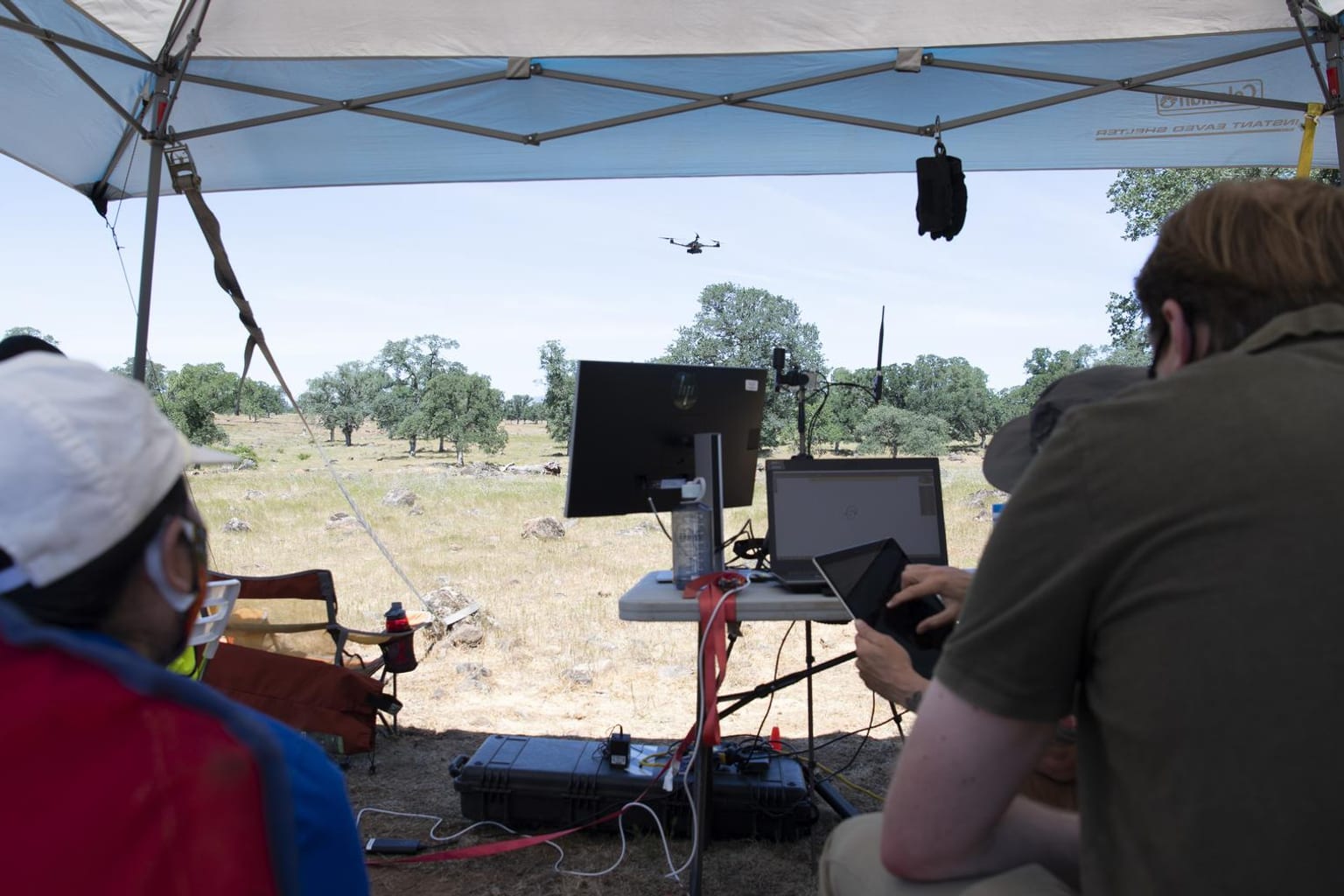
On Friday, October 23, in the evening, Professor Aniket Bera of Purdue University's Department of Computer Science posted a video of 44 seconds on LinkedIn. It shows a drone weaving narrowly between trees while keeping a walking person within the frame. The drone is a quadcopter with four propellers, and it flies autonomously without human control. It also does not use GPS (Global Positioning System), the satellite navigation signal.
While flying, the drone determines its own position and surrounding obstacles in real time, and it calculates a path around branches on its own. The calculations are handled not by an external server but by a computer onboard the aircraft. When the person passes behind trees, the drone predicts their direction of movement and plans a path toward where they will reappear. The top speed in the video is about 3 meters per second, roughly the pace of a jogger.
In a forest, the challenge is simple. When the aircraft turns sharply around thin branches, it has no time to wait for a server's reply. In his post, Bera stressed that not using the cloud is important, meaning decisions must be made inside the aircraft.
The source of the technology needs clarification, however. The telemetry screen in the video displays the names of SUPER, a motion planner from the MaRS Lab at the University of Hong Kong, and FAST-LIO, a localization software. Bera's post does not mention the University of Hong Kong. In a later explanation, Bera confirmed that the team used open-source tools. The Electronic Times reported that the researchers developed the core perception and path-planning algorithms themselves. It has not been disclosed which parts were modified by whom. The demonstration was conducted under specific conditions, and full test results have not been published.
The first to benefit from this demonstration is the team researching autonomous flight. The video shows that an aircraft can judge its position and obstacles on its own in forests where GPS signals are weak or absent. Some have pointed out that the same capability could also be used for tracking and surveillance. No timeline for practical deployment has been set. The next step is the publication of the paper under review, at which point the test conditions and results can be examined in more detail.
Sources — read the originals(Paris time)
Pages consulted while writing
Read next
Comments
Loading the thread…
Sign in to leave a comment. Sign in