Red mud concrete cuts carbon footprint 67.8% to 79.8%
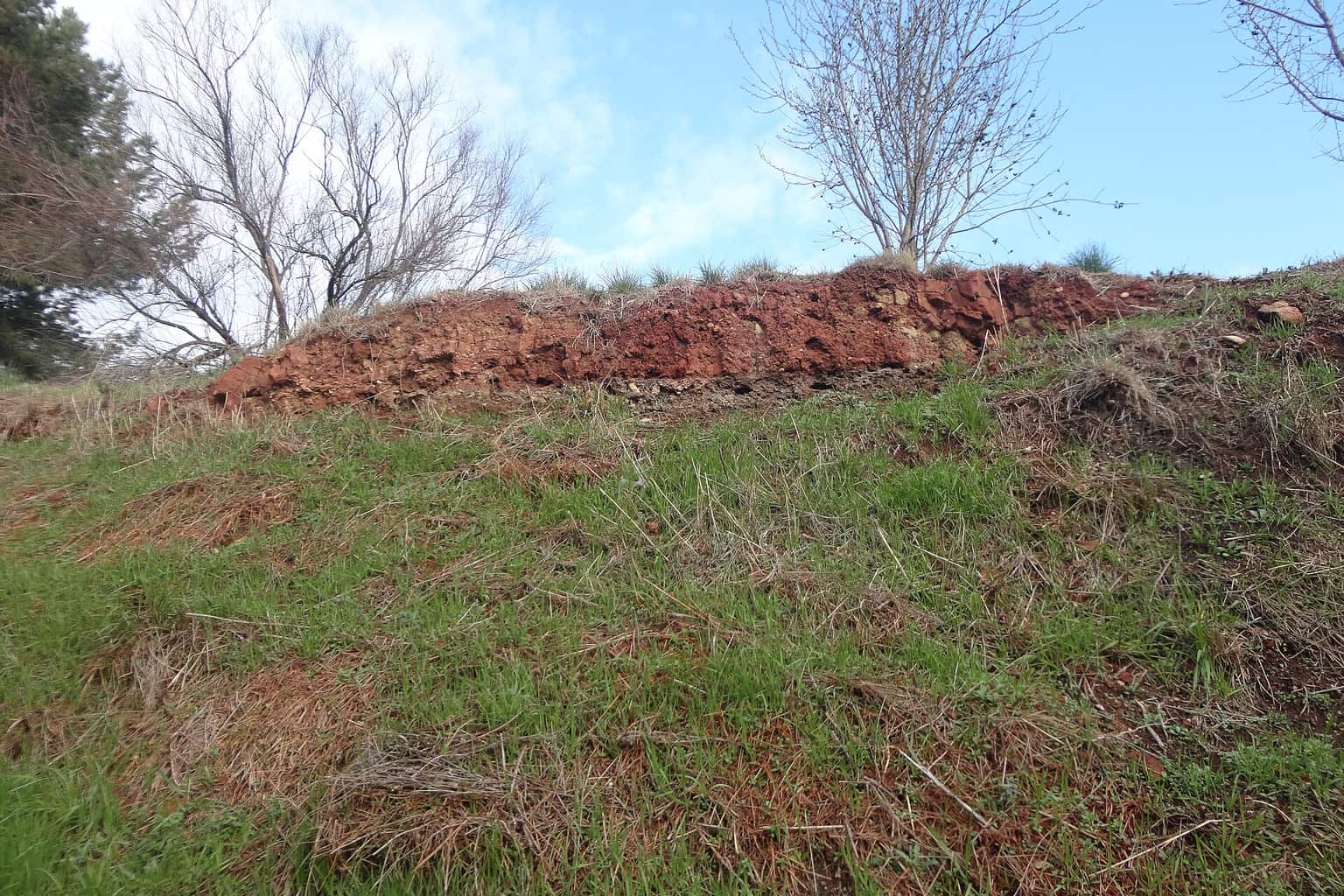
For years, the red mud left over from alumina production has been a waste problem. At Trinity, a team led by professor Sara Pavia is now trying to turn it into a structural building material, and the project has moved from laboratory development to real-world industrial trials. Red mud, or bauxite refining residue, is the main waste of alumina production.
The team is exploring two routes. The first uses the residue as a supplementary cementitious material (SCM), a partial substitute for cement. In laboratory testing, replacing 20% to 30% of portland cement with bauxite residue achieved a compressive strength comparable to standard reference concrete. The second route is more ambitious: a “one-part geopolymer”, a dry binder that combines the residue with other sustainable ingredients. Mixed with water and aggregates, it runs through existing batching equipment, the machines that measure and mix concrete, without additional chemical additives.
The carbon figures come from the Trinity team's own assessments. They put the geopolymer formulations at a 67.8% to 79.8% reduction in carbon footprint compared with standard CEM II-A/L cement, across raw material supply, transport and manufacturing. The durability results also come from laboratory conditions. Under sulfate exposure, repeated wetting and drying and frost action, the residue-based geopolymer “consistently matched or even exceeded” conventional concrete. After 56 freeze-thaw cycles, it kept 109.7% of its 28-day strength. In other words, it became slightly stronger, not weaker, under repeated freezing.
What changes for the industry is the test itself. Gannon Eco and McGrath Quarries are running the material through their own batching equipment, and this has exposed problems that laboratory work alone could not reveal. Padraic McGrath, industrial lead at McGraths Limestone (Cong) Ltd., says the geopolymer “can run through our existing batching equipment”, which means producers would not need new machines to adopt it. The open issues are workability during transport and placement, set times, and the cost of geopolymer activators. The researchers are refining additives and developing lower-cost activators made from waste.
For concrete producers and for the alumina sector, the appeal is a waste stream that could become a product, with a carbon gain the team estimates at up to nearly 80%. The road to market is still long: the upcoming phases cover long-term performance validation and regulatory qualification. The team has not announced a price, a commercial timetable or a client, and it has not given a date for supply.
Sources — read the originals(Paris time)
Read next
Comments
Loading the thread…
Sign in to leave a comment. Sign in