Resting brain scans flag Alzheimer’s risk years ahead, in a study
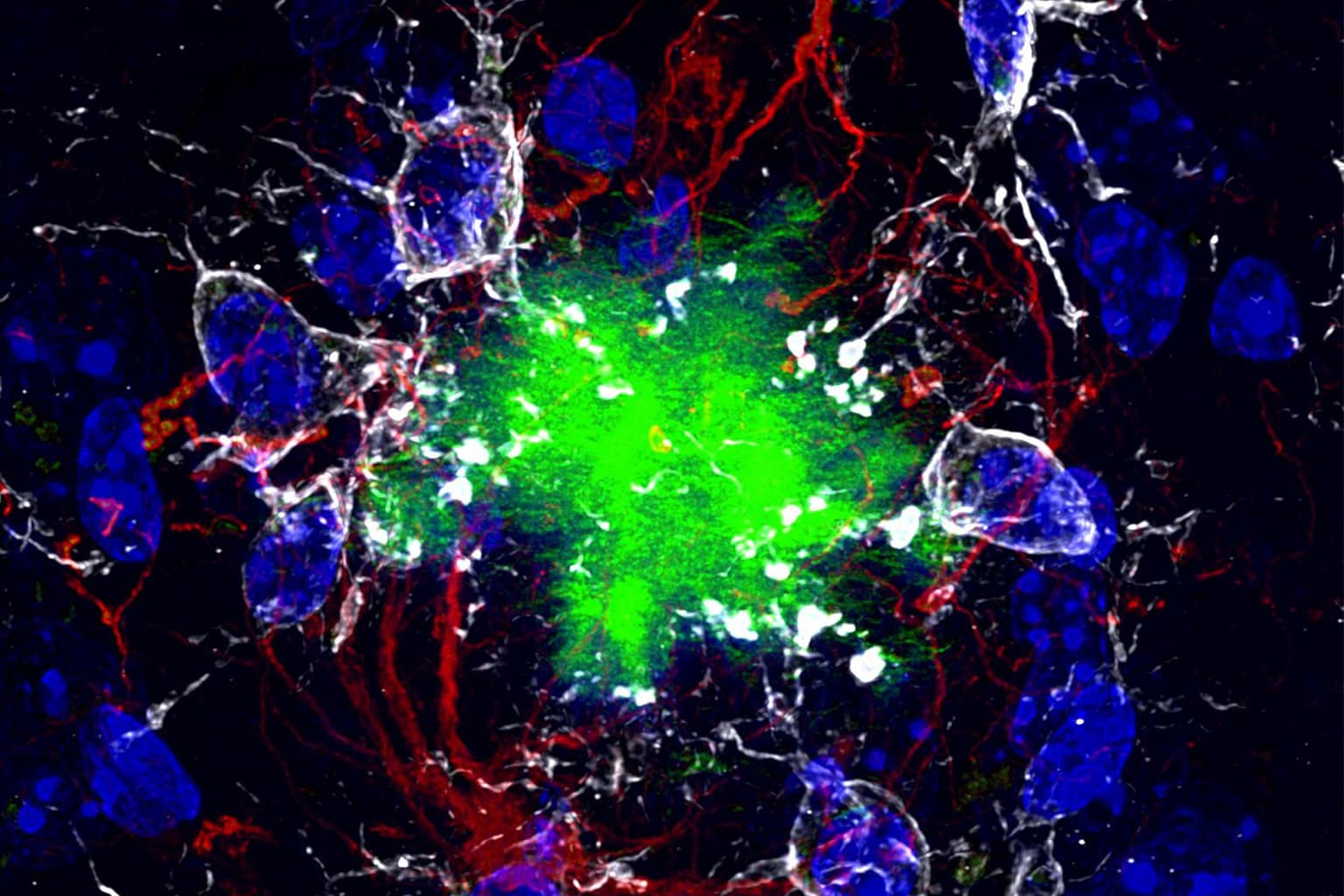
Some adults who test normal on memory tasks already show brain-activity patterns that point toward Alzheimer’s disease years before memory slips or plaques appear. The finding comes from a team led by Stanford Medicine, published Nov. 4 in Science Advances. Yu Zhang, an assistant professor of psychiatry and behavioral sciences and the study’s senior author, described the goal: find markers that detect decline earlier than the ones used today.
The usual markers, amyloid-beta and tau, “are observable at relatively late stages of the disease,” Zhang said. His team used resting-state functional MRI, which records brain activity while a person lies still in a scanner. The researchers first compared 180 super agers, people over 75 whose memory resembles that of someone 45 years old, with 110 people diagnosed with Alzheimer’s. Their scoring system, the ARC score, separated the two groups with roughly 85% accuracy. Comparing super agers with typical older adults had been the norm, but Zhang argued that such peers are too varied underneath: some already carry early signs of amyloid plaques.
The ARC score was then applied to more than 1,300 people aged 55 to 70 with no sign of cognitive impairment. Their scores fell along a spectrum: lower scores meant brain activity closer to super agers, higher scores closer to Alzheimer’s. At the time of the scan, there were no clear cognitive differences between the groups, but over time they diverged. Higher scores were linked to a greater likelihood of decline, amyloid-beta plaques and an Alzheimer’s diagnosis within 12 years. According to the study, the score predicted decline better than demographics, amyloid-beta and tau biomarkers, and genetics. Most of the follow-up data covered five to six years, with the longest reaching 12.
The ARC score is still a research result. Super agers make up about 10% of older adults, depending on the criteria used, and the predictions come from research datasets, the Open Access Series of Imaging Studies, the Harvard Aging Brain Study and the Alzheimer’s Disease Neuroimaging Initiative. Zhang’s hope is that interventions such as transcranial magnetic stimulation or cognitive training could one day move a person’s brain patterns toward the resilient end. Transcranial magnetic stimulation has been shown to alter brain activity in depression, but it has not been tested for cognitive decline, and whether shifting these patterns would redirect the disease is not known.
What the study changes is the target. The lead author, postdoctoral scholar Kanhao (Alex) Zhao, and Zhang argue that knowing which brain region to address, and how to change it, requires a reference pattern for healthy resilience. The super-ager signature is meant to supply that reference. No calendar for clinical use has been announced.
Sources — read the originals(Paris time)
Read next
Comments
Loading the thread…
Sign in to leave a comment. Sign in